
Robert De Niro: The Man Behind the Mask — A Journey Through Fire
Inspirational story

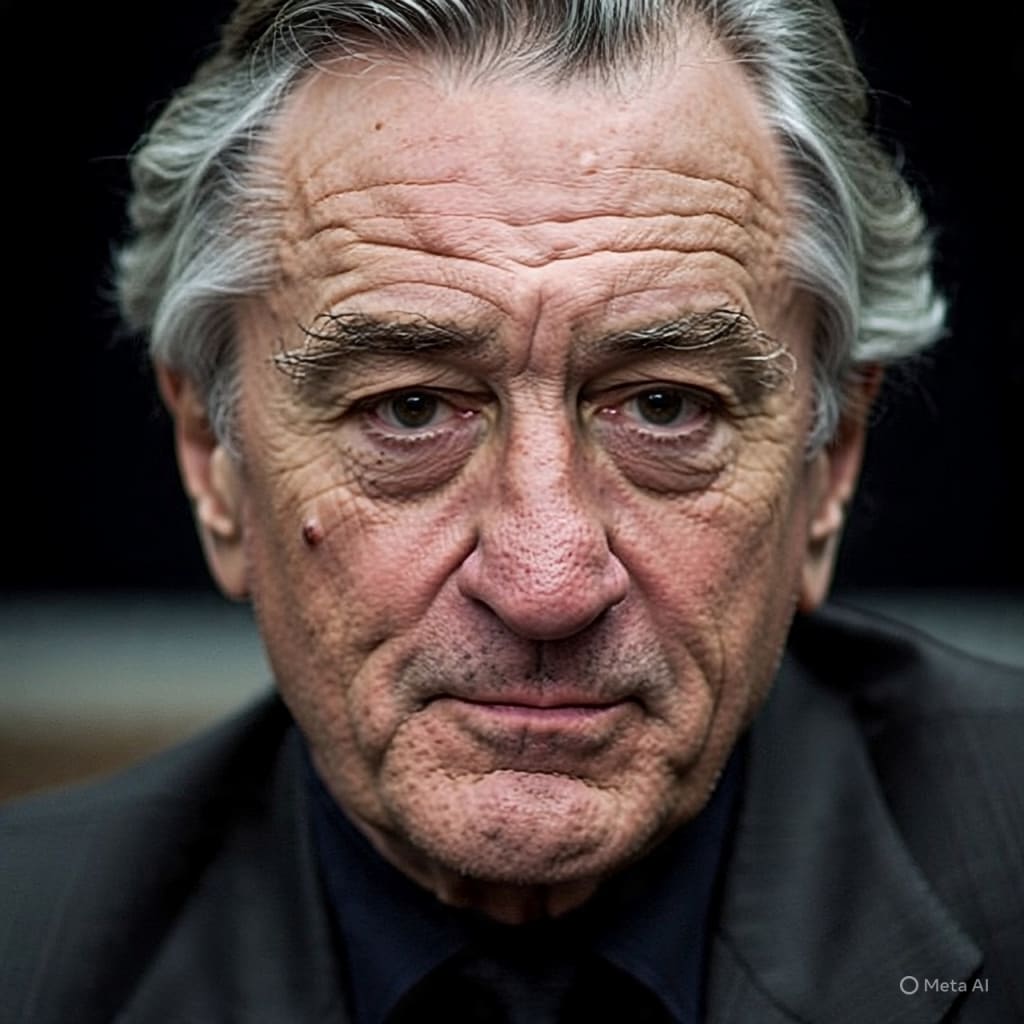
“Talent is cheap. Dedication is expensive.” — Robert De Niro
There are actors — and then there’s Robert De Niro.
A man whose silence could speak louder than thunder, whose eyes carried the weight of entire lives, and whose dedication to his craft became a blueprint for generations of dreamers.
But long before “Taxi Driver,” long before “Raging Bull” or “The Godfather: Part II,” there was a quiet, awkward boy walking alone through the streets of Manhattan — a boy who didn’t fit anywhere. His story isn’t one of easy fame. It’s a story of rejection, loneliness, relentless discipline, and one man’s unshakable belief in truth — the truth of art, the truth of life.
The Boy Who Spoke Through Silence
Robert Anthony De Niro Jr. was born in 1943 to two artists — painters who lived and breathed creativity but struggled with its cost. His father, Robert De Niro Sr., was a talented abstract expressionist; his mother, Virginia Admiral, was an equally devoted artist. But when De Niro was just two, they separated — his father came out as gay.
The young Robert grew up between two small apartments in Greenwich Village and Little Italy. Life was quiet but uneasy. He didn’t talk much. People called him “Bobby Milk” because of his pale skin and shy nature. He was terrified of crowds, hesitant in speech — but observant. He watched everything.
That habit — watching life unfold in silence — would become the foundation of one of the greatest acting careers ever known.
His mother nurtured his love of the arts. At 10, Robert landed his first acting role as the Cowardly Lion in a school play. When the audience laughed and clapped, something clicked. For the first time, the shy boy felt seen. That feeling — of connecting with people through performance — would become his purpose.
A Dream Shaped by Discipline
In his teenage years, De Niro dropped out of high school to pursue acting — a terrifying decision for a boy with no connections and little confidence. But he studied relentlessly. He trained under Stella Adler and Lee Strasberg at the Actor’s Studio, two giants who preached “method acting,” the idea of living your character until it becomes you.
It wasn’t glamorous. He worked side jobs, lived in cramped apartments, and struggled to pay rent. There were nights he had to choose between food and subway fare. But every rejection became fuel.
He would stand in front of a mirror, studying his expressions for hours — joy, pain, rage, despair — mastering silence, subtlety, and control. He believed that acting wasn’t about pretending. It was about becoming.
By his early 20s, he was auditioning for every small role he could find — but the doors rarely opened. Hollywood didn’t want another quiet, serious face. They wanted charm and smiles. Robert De Niro had neither.
Yet he never gave up. “Every ‘no’,” he once said, “just meant I was closer to the right ‘yes.’”
---
The Friendship That Changed Everything
That “yes” came through a young filmmaker named Martin Scorsese.
In the late 1960s, both were struggling artists in New York — outsiders who shared the same obsession: truth in storytelling. Their partnership would redefine cinema itself.
Their first major collaboration, Mean Streets (1973), was raw, chaotic, and unforgettable. De Niro’s performance as the reckless Johnny Boy shocked audiences — and critics. He wasn’t acting; he was the character.
Then came The Godfather: Part II (1974).
As the young Vito Corleone, De Niro spoke mostly in Sicilian, yet his performance transcended language. The role earned him his first Academy Award and cemented his place in film history.
From there, his rise was unstoppable — Taxi Driver, Raging Bull, The Deer Hunter, Goodfellas, Cape Fear, Heat, Casino — each role a transformation, each one pushing the limits of what acting could be.
But with fame came deeper struggles.
Fame, Loss, and the Battle Within
De Niro’s success couldn’t shield him from life’s blows. In 1998, his father passed away — a quiet, devastating loss. Robert had always admired his father’s artistry and sensitivity, and he carried that creative flame in his own heart. In interviews, he rarely talked about it, but friends said it haunted him for years.
He also faced health scares, including a battle with prostate cancer in 2003, which he fought privately and survived through sheer resilience.
Behind the calm eyes of the movie star was still that boy — shy, watchful, fighting insecurities. De Niro once said, “The hardest thing isn’t acting. It’s living up to your own expectations.”
He remained devoted to his craft — often disappearing for months to prepare for a role. For Raging Bull, he gained and lost over 60 pounds, trained as a professional boxer, and pushed his body to exhaustion. That film would win him his second Oscar and become a symbol of artistic sacrifice.
But he also gave back — founding Tribeca Productions and later the Tribeca Film Festival to revive downtown New York after 9/11. His vision wasn’t just to make films but to rebuild community through art.
---
The Man Beyond the Screen
Off-screen, De Niro was private, even mysterious. He never chased the spotlight. When others courted fame, he avoided it. He valued work, not applause.
His life wasn’t without pain. His marriage to actress Diahnne Abbott ended in divorce. He faced public scrutiny, business challenges, and later, the heartbreaking loss of his grandson, Leandro, in 2023.
Yet through it all, he remained steady — never bitter, never broken.
He learned that fame doesn’t protect you from grief, that success doesn’t erase loneliness. But it can give your life purpose — and that purpose, for him, was truth.
De Niro believed that art must come from honesty. “If you fake it,” he said, “the audience knows.” And maybe that’s why his performances felt like confessions — because they were.
---
The Wisdom of an Artist
Today, in his 80s, Robert De Niro continues to work — not out of necessity, but out of love. Acting, to him, is a way of breathing. He never stopped learning, never stopped evolving.
He sees the younger generation chasing fame on social media and says, “You don’t chase the light — you earn it.”
He mentors rising actors, often reminding them that success isn’t about talent alone — it’s about patience, humility, and obsession with the craft.
He knows time is finite, but art is eternal. And in that truth, he finds peace.
---
His Message to Dreamers
> “If you ever feel invisible,” De Niro once told a group of film students,
“remember that invisibility can be your greatest gift. In silence, you find yourself.”
He spoke about how life doesn’t move in straight lines — it’s messy, unpredictable, and often cruel. But it’s in that chaos that character is born.
He urged dreamers to stop fearing failure.
“Failure is the rehearsal for greatness,” he said.
“Every fall teaches you the rhythm of standing up.”
He never wanted to be worshiped — only remembered as someone who worked hard and stayed true. His message is simple yet eternal:
> “Be honest in what you do. Be patient with what you want. And never, ever stop learning.”
Legacy of Fire
Robert De Niro’s story is not just an actor’s biography — it’s a roadmap for resilience. From a lonely boy called “Bobby Milk” to one of the most revered figures in cinema, he built his legacy brick by brick, performance by performance, truth by truth.
He didn’t chase fame. He earned respect.
He didn’t seek comfort. He embraced struggle.
And through every scar, he left a lesson for the world:
“Greatness is not what you achieve. It’s what you become while chasing it.”
About the Creator
Frank Massey
Tech, AI, and social media writer with a passion for storytelling. I turn complex trends into engaging, relatable content. Exploring the future, one story at a time
Keep reading
More stories from Frank Massey and writers in Motivation and other communities.
She Stayed When Everyone Left
At 22, Mia didn’t look like someone building a business. She worked a full-time administrative job in a gray office building where the highlight of the day was a fresh pot of coffee. Her paycheck covered rent for a small studio apartment, groceries, and just enough savings to feel slightly responsible... but not secure.
By MIGrowth8 days ago in Motivation


Comments
There are no comments for this story
Be the first to respond and start the conversation.