
Quote of the Day by Socrates: “By all means, marry. If you get a good wife, you’ll become happy; if you get a bad one, you’ll become a philosopher.”
What this timeless quote reveals about love, wisdom, and the human experience.

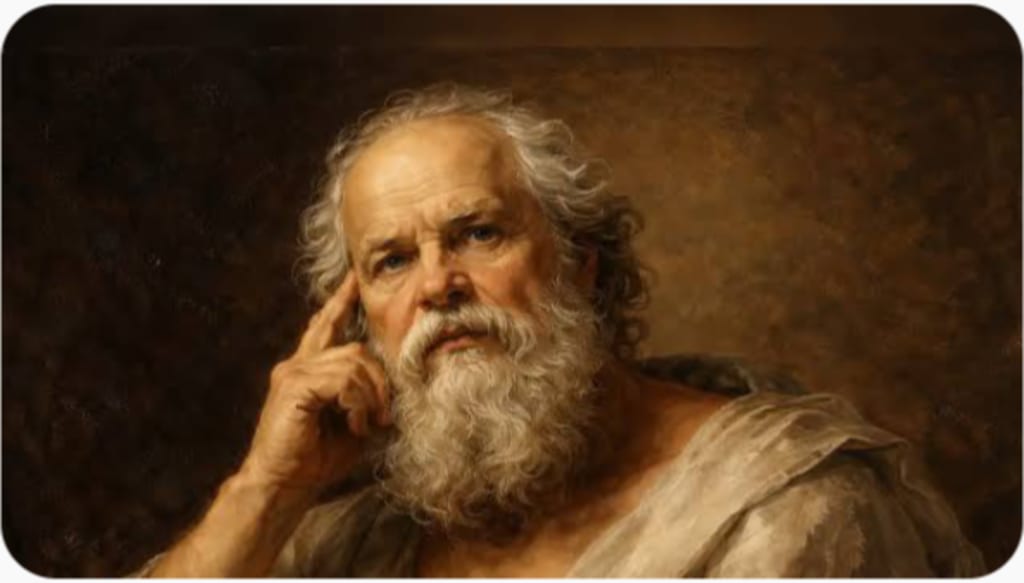
Introduction: Humor Wrapped in Ancient Wisdom
Few philosophers are quoted as often as Socrates, and even fewer manage to blend humor with deep truth as effectively as he did. One of his most famous sayings — “By all means, marry. If you get a good wife, you’ll become happy; if you get a bad one, you’ll become a philosopher” — continues to circulate centuries after his death.
At first glance, the quote sounds playful, even sarcastic. But beneath its wit lies a deeper reflection on relationships, personal growth, and the nature of wisdom. Socrates was not merely joking about marriage; he was highlighting how life’s challenges, especially those within close relationships, shape character and provoke philosophical thought.
Marriage as a School of Life
Socrates viewed life as a constant pursuit of understanding. Marriage, in this sense, becomes one of the most intense classrooms a person can enter. It exposes individuals to companionship, conflict, compromise, and emotional vulnerability.
If one finds harmony in marriage, happiness often follows. Shared goals, mutual respect, and affection can bring stability and joy. But when marriage brings struggle, misunderstanding, or disappointment, it forces deep reflection. Questions arise: Why do people hurt one another? What is love? What is justice within a relationship? How should one live?
In Socrates’ view, suffering is not meaningless. It becomes a catalyst for inquiry. A difficult marriage, rather than destroying a person, can sharpen their mind and push them toward philosophical awareness.
Why Philosophy Is Born from Pain
Philosophy does not usually emerge from comfort. It grows from discomfort, doubt, and contradiction. When life goes smoothly, people rarely question its meaning. But when faced with emotional turmoil, humans naturally begin to analyze their situation.
A troubled relationship can lead to profound self-examination:
What are my expectations of others?
What is my role in conflict?
Is happiness something given or something cultivated?
Socrates believed that wisdom begins with recognizing one’s ignorance. Struggles in love can humble a person, stripping away illusions and forcing them to confront their flaws and assumptions. In that way, a “bad marriage” becomes a philosophical training ground.
Humor as a Teaching Tool
Socrates was famous for using irony and humor to provoke thought. This quote is not an insult to marriage but a clever way to emphasize that every life path contains lessons.
By presenting only two outcomes — happiness or philosophy — Socrates suggests that no experience is wasted. Either you enjoy love or you gain wisdom. Both outcomes have value. The joke hides a serious point: adversity can be transformed into insight if approached with reflection rather than resentment.
This perspective encourages resilience. Instead of viewing hardship as failure, Socrates reframes it as education.
The Role of Choice and Responsibility
Another layer of meaning lies in personal responsibility. The quote implies that while we cannot control every outcome, we can control how we respond. A good partner may bring happiness, but a difficult one can bring understanding — if one chooses to learn rather than despair.
Socrates did not blame fate alone. He believed humans must examine their decisions and motives. Choosing a partner is not merely romantic; it is philosophical. It reveals values, priorities, and character.
In modern terms, the quote suggests that relationships mirror who we are. They expose our strengths and weaknesses and challenge us to grow.
Modern Relevance of an Ancient Thought
Though written in ancient Greece, the quote feels surprisingly modern. Today, relationships are still among the greatest sources of joy and distress. Marriage continues to be a powerful emotional commitment that shapes identity.
In a world of dating apps and social media portrayals of perfect relationships, Socrates’ words feel refreshingly honest. They acknowledge that love is unpredictable and that disappointment is part of the human story.
Many people today turn to therapy, self-help books, or spiritual teachings after relationship struggles — essentially modern forms of philosophy. They seek understanding, meaning, and peace after emotional pain. Socrates predicted this long ago: heartbreak creates thinkers.
Happiness and Wisdom: Two Forms of Fulfillment
Socrates’ quote also raises an important question: which is more valuable — happiness or wisdom?
Happiness brings comfort and joy, but wisdom brings depth and clarity. A person who becomes a philosopher through suffering may not be cheerful, but they gain insight into life’s complexities. They learn patience, humility, and empathy.
In this sense, both outcomes are forms of fulfillment. One is emotional, the other intellectual. One satisfies the heart; the other strengthens the mind.
Socrates seems to suggest that either path leads to growth. Marriage, regardless of outcome, becomes meaningful.
Misinterpretations and Balance
Some interpret the quote as cynical or dismissive of women. However, such readings miss the broader message. Socrates was not blaming wives but using marriage as an example of life’s unpredictability. The same logic could apply to any deep commitment — career, friendship, or leadership.
The lesson is not about gender but about human relationships. Whenever expectations clash with reality, philosophy is born.
A Lesson in Perspective
Ultimately, the quote teaches perspective. It encourages people to see both joy and suffering as valuable teachers. Instead of fearing wrong choices, one can accept that every experience contributes to personal evolution.
In a society obsessed with success and happiness, Socrates reminds us that wisdom is just as important. Pain does not mean failure; it can mean growth.
Conclusion: A Timeless Reflection on Love and Learning
Socrates’ witty observation about marriage endures because it captures a universal truth: relationships shape us more than any other aspect of life. They either grant us happiness or provoke us to think deeply about who we are and how we should live.
His words do not discourage marriage but elevate it. They suggest that love is not merely a romantic pursuit but a philosophical journey. Whether through joy or struggle, marriage teaches lessons that no book alone can provide.
In the end, Socrates offers a comforting idea — no matter the outcome, life is always instructive. If love succeeds, we gain happiness. If it fails, we gain wisdom. And perhaps, in time, wisdom itself becomes another form of happiness.
About the Creator
Sajida Sikandar
Hi, I’m Sajida Sikandar, a passionate blogger with 3 years of experience in crafting engaging and insightful content. Join me as I share my thoughts, stories, and ideas on a variety of topics that matter to you.
Keep reading
More stories from Sajida Sikandar and writers in Motivation and other communities.
Facing a New Day
Every new day arrives quietly, without ceremony, yet it carries the weight of possibility. The sun does not ask permission to rise, and time does not wait for us to feel ready. Still, each morning places a question in front of us: How will you show up today? For some, facing a new day feels like stepping into opportunity. For others, it feels like lifting a heavy curtain after a restless night. Between these two extremes lives the shared human experience of waking up and choosing—consciously or not—how to meet what lies ahead.
By Sajida Sikandar8 days ago in Motivation
One Hard Thing
Stop me if you’ve heard this one before: You have the number, you know your schedule- you’ve even picked out the perfect day and time to make this appointment. Shoot, you’ve even picked out alternative days and times just in case their schedules can’t accommodate you!
By Taylor Rigsby17 days ago in Motivation
When True Love Never Questions Your Soul
“And she’s going to learn that this life will hit you, hard, in the face, wait for you to get back up, just so it can kick you in the stomach but getting the wind knocked out of you is the only way to remind your lungs how much they like the taste of air.” — Sarah Kay’s Poem — If I Should Have a Daughter
By Chantal Christie Weiss4 days ago in Humans




Comments
There are no comments for this story
Be the first to respond and start the conversation.