
Proud to be Pollyanna
Combating the Negativity Bias


A Tale of Two Passions
Where to begin?
It was the best of times it was the... nope, that’s not it.
Maybe start with a joke?
Knock, Knock,
Who’s there?
You are?
You are who?
I am unrelentingly upbeat and in love with stories… Hmmm, closer, but still not it.
Just start at the beginning with a personal story…
Where it all Began
I think I watched the movie Pollyanna one time as a kid; if I did, I don’t really remember doing so. What I do remember is listening to the sound recording. We had a little, square, plastic record player; I want to say that it was off-white and had a handle like a little suitcase, but my memory is hazy.
What is crystal clear is lying on my back on the living room carpet, watching dust motes float in the shafts of late afternoon sunlight and hearing stories come alive.
We only had a handful of records. One was a collection of silly, western-inspired, folk-tale songs called Cowboys and Clowns. The rest were sound recordings of movies; my favorites were My Fair Lady (I liked that it was a musical and that he said Damn repeatedly toward the end) and Pollyanna.
What drew me to Pollyanna was her impact on the people around her. It made a lot of sense to me, as a kid, that you went around helping people feel better about themselves and the world, and then when you were down, they returned the favor.
Pollyanna became one of a host of literary and movie childhood heroes; another important one was Shirley Temple. What did these two and most of my other story friends have in common? They were FAHCKD Up.
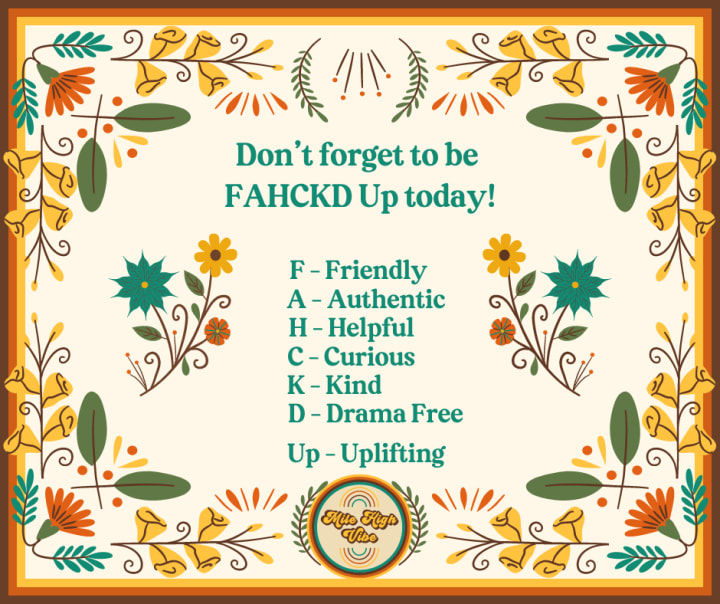
Being FAHCKD Up
Friendly – They were open to seeing new people as potential friends.
Authentic – Their perspective on life fed an authentic joy within themselves, starting a self-sustaining cycle of positive interactions.
Helpful – They were always looking for ways to be of service to others, even if it was just the lessening of another’s pain with their presence.
Curious – They had an insatiable curiosity about people and how things work, so they were constantly learning.
Kind – They treated others as they would like to be treated because of an awareness that all humans share the same desires to be happy and loved.
Drama-free – They gave others the benefit of the doubt instead of interpreting their actions as having negative motivations.
Uplifting – They actively encouraged others to become the best versions of themselves, knowing that such actions increase their own happiness and the happiness of others.
These heroines and the stories they inhabited became the basis of a life-long obsession with stories and optimism and created a road map of the type of person I wanted to become.
Nuggets of Wisdom
I grew up without access to broadcast or cable television but with many books and surrounded by oral storytellers. The adults around me modeled breaking stories down into small pieces and examining the meaning, constantly asking, “What is the point of this?” and “How can this be applied to how you live your life?”.
I absorbed this perspective completely, and throughout my love affair with stories from books to movies to television, I was always on the lookout for nuggets of wisdom that I could use to help me become the best version of myself.
This approach has served me well in my life, allowing me to appreciate artful storytelling on a deeper level and by turning a solitary activity, such as reading a book, into a group activity, it taught me to create an informed opinion and to share that opinion with others.
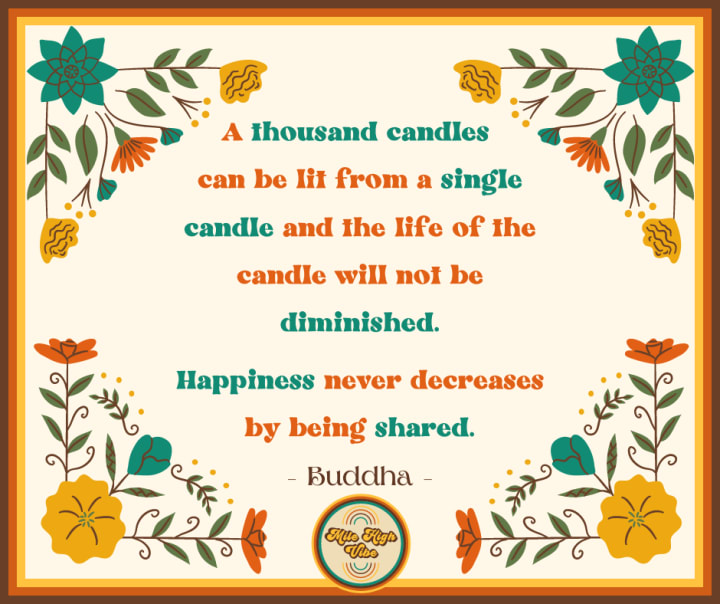
Sharing Happiness
My husband laughs at me because I often talk about how much I miss Blockbuster. The very few times I watched movies as a child, we had to go to a movie rental store, rent a VCR and a movie and then bring them home and try to troubleshoot hooking everything up to the tiny square monitor.
All the while, my anticipation would grow until the room darkened and the screen would light up with a roaring lion, or a castle, or a rainbow made of stars, finally letting me know that a magical adventure was about to begin.
When I grew older, my first job was at a movie theater, and at one point, I worked at the theater and Blockbuster at the same time.
My favorite part about these jobs, aside from an abundance of free movies, was the connection it offered me as a shy teenager, which was a rather common affliction among my coworkers. Movies allowed all of us to connect through a shared language of movie quotes and gave us the opportunity to share our views of life through the conversations we had around the newest releases.
But working at Blockbuster gave me an even greater opportunity to connect. I got to suggest movies to our customers.
“I don’t know what to watch next,” they would say, “What do you recommend?”. I loved these moments and never passed on the chance to turn people on to storytellers and the films they made that were beautiful and interesting.
Blockbuster was a curated movie experience; its shelves were filled with classics past and present, and I was able to understand the full breadth of movie history by working there and making good use of my five free movies a week.
Although I am still happy to suggest movies or stories of any kind, free of charge, my dream is to curate artistic experiences for others, allowing them to connect with life-affirming stories of all kinds.
Are Optimism and Intelligence Mutually Exclusive?
While I was a manager at my movie theater, one of my coworkers invited me to lunch to meet his friend. As I walked up to the table where the two men were sitting, my co-worker introduced me to his friend by saying, “This is Megan, she’s an optimist and (with an air of astonishment) she’s smart!
My friend’s introduction opened my eyes to a common misconception of our modern world that intelligence and optimism are often seen as mutually exclusive ideas. Some even see cynicism as a sign of intelligence.
If you ask people whether they are an optimist or a pessimist you will find that many pessimists will respond that they are not pessimistic, they are realistic. But is that true? Is it more realistic to be pessimistic?
The basis of this misconception is something known as negativity bias. Our brains pay more attention to negative stimuli than they do to positive stimuli. This makes absolute sense in dangerous situations. If not paying attention to a possible danger means your probable death, then you should absolutely pay attention.
But how often in the average person’s life is it a matter of life or death? Is it possible that, in a modern world, a negativity bias is more a hindrance than a help?
What is Optimism?
Before we proceed any further, let me take a moment to define optimism as I see it. Optimism is not an expectation that life will have nothing but happy moments or that feeling any emotion is intrinsically bad. Both ideas are more likely to make us feel worse, not better.
Most human suffering comes from wishing things were different than they are. It is certainly an understandable perspective, but we tend to make things that are already bad enough, even worse, through resisting them.
Life is change. Life without change isn’t life; it’s death. It’s the trying to hold on, to go back to a time before the hardship arrived, that hurts so bad because returning isn’t possible.
We are afraid to let ourselves feel the pain of the situation, so we try to avoid negative feelings. But avoidance will only create a situation you can’t escape. If we can understand that life has hard moments, but it doesn’t mean that good will never come again, then we can be free of the fear of feeling negative things so deeply that it never stops.
So, in essence, optimism is knowing that the sun is still there behind the clouds even when it is raining and also knowing that rain and sunshine are both necessary to grow.
What Difference Does it Make?
My mother and I used to argue when I was a teenager, and felt the need to argue with my mother, about the necessity of stories, particularly fiction. I was always arguing for fiction being very important, which led to this dramatic little quote...

Turns out, I was right. Humans have been using stories as a way to educate themselves and others about the world for millennia. The stories we tell as individuals and societies about the world shape the people and the world of the future.
When Sputnik launched, and subsequently JFK swore to put a man on the moon, that changed the destiny of humanity, but it also changed what we told stories about; suddenly, a whole new world where humans could move beyond the limits of one planet captured the imagination of a generation.
My mother would have argued that these events were fact, not fiction. My response would inevitably have been that what Sputnik represented and what JFK said inspired fiction stories like Star Trek that had an unprecedented cultural impact. Yes, perhaps the words of one man helped inspire it, but the stories of so many others cemented the idea into our culture.
Negativity Bias and the Media
In light of the importance of shared stories and the effect of negativity bias, is it a surprise to find that the rates of depression and anxiety are increasing in humans of all ages?
In a world where human attention is a commodity, it makes sense that media, and storytelling in general, is becoming more weighted toward the negative; this begins a self-fulfilling prophecy of sorts, we pay more attention to the negative, so we are fed more negativity.
If a culture’s future is defined by the stories its people tell themselves, then we would all have some justifiable cause for concern in a world dominated by dystopian futurescapes and media that actively promotes a cynical view of our fellow people in pursuit of more clicks or more votes.

And Yet Hope Remains
I had to take one last class the summer after I graduated from high school. I had failed a class freshman year and needed to make up a credit to graduate. The class I choose to take was Art History, and I really enjoyed it.
One of the things I learned is how art comes in movements, and these movements are often a reaction to, and a rebellion against, what came before.
During one art movement, and when I say art, I mean everything humans do to express themselves, from painting to storytelling, there are usually outliers who push against the norms and inspire others to do the same.
These artists become pioneers of the next movement and so art continues, each generation adding their perspective to a conversation that has been continuing throughout human history.
All this to say that even now, there are stories out there that show us what humans are capable of becoming, stories that amaze and inspire us, stories that provide a positive vision of the future, and I think these stories should be highlighted and shared until they become a wave that carries us into a better world.
The Gift of Neuroplasticity
If you were to have a large, seemingly life-changing emotional event, such as being laid off, research shows that you would return to your baseline of emotional wellbeing around three months later.
Does this mean that people are incapable of change regardless of what happens to them? No, it does not, but what it does show is that we don’t change overnight because of large circumstances. We change slowly over time with small, consistent modifications.
The reason the slow but steady approach works is a little thing called neuroplasticity; our brains are constantly making new connections, and the things we choose to do or think about repeatedly actually strengthen the connections in our brain to the point that our brain physically changes over time.
The best analogy I know to explain this concept is water rolling down a hill. The first time the water goes down the hill, it can choose any path to take but if it chooses the same path over and over again it changes the topography of the hill. It carves a little riverbed for itself so that the water that comes later will take that same route much easier and with much less choice at the beginning.
So, it would seem that a positive perspective, just like any other aspect of a person, can become an automated response to the situations in our life.
Teaching others to set up a life where finding meaning and happiness becomes the default mode is something I am passionate about sharing with the world.
The 3:1 Ratio
When investigating the negativity bias, many scientists have sought to figure out how many positive events balance out a negative event. For the most part, the answer seems to be around three positives to one negative, especially in relationships.
That is quite an imbalanced equation and should make those of you who have a positive perspective already feel pretty good. Because to have that opinion, you are probably experiencing three times as much good as bad in your life.
For those of you with a less rosy perspective, it should offer hope because, in all likely hood, you are still experiencing more good than bad, and with a few minor tweaks, you could also be living a life of considerably more ups than downs.
The Importance of Environment
If we were to try to improve our baseline of happiness and our optimistic perspective, what one change could we make to our lives to ensure success?
The answer is changing our environment.
When people look at their inability to change their bad habits, they often make what is called an attribution error. This means that they see the problem as an inherent problem with who they are instead of a problem made more likely by their environment.
Let’s take the example of quitting smoking; a person says they will quit smoking on Monday, and then they try and fail. They are likely to say I am just a person who has no willpower; but if their environment is full of smokers and they have created a habit of handling negative emotions with smoking, and their whole routine is built around smoking, it doesn’t matter how much willpower they try to exert unless they deal with their environment they are almost certainly doomed to fail before they ever start.
Changing your environment to support more positivity is a surprisingly simple undertaking and only requires a series of small steps that can and should be taken slowly over time.
A few of these steps are to start your day in a positive mindset, surround yourself with stories of people living meaningful lives, not sabotage your efforts by letting yourself get too tired or hungry, get some exercise, and spend time with like-minded people.

Meet Mile High Vibe
So, here is my idea for a one-stop shop for all your positivity building needs.
A Daily Newsletter – I want to send every subscriber a "Start Your Day off Right" newsletter. The email would have an upbeat song to get your body moving and your endorphins flowing, a word of the day with a positive meaning to build your happy vocabulary, and a quote of the day to help promote a positive mindset. For those of you keeping track that is three positives to start your day with a positive balance in your perspective bank. The email would also include links to the most recent articles from the Mile High Vibe blog.

A Blog – I would publish articles from across a range of topics, including books, movies, and TV recommendations and reviews, recipes for go-to foods that are good for you and recipes for sometimes foods that are just so very tasty, exercises to make being active convenient and stress-free, tips to understand yourself better so you can build better habits, insights into building positive relationships and stories of people that are making a difference in their lives and the lives of others.
A Podcast – I would create a podcast that covers the same topics as the blog but is more accessible for those who don’t have as much time to sit and read.
Digital Products – I would create worksheets and courses that help people to implement better life-building strategies step by step.
Coaching – I would offer one-on-one or group coaching sessions for those struggling to reverse a lifetime of negativity and cultural conditioning.
Inspirational Gifts – I would offer a catalog of inspirational and positive gifts to bring a smile to the faces of your friends and family and spread the love around.
Community – I would offer a space of connection for those who want to talk about how to build a better future for themselves and others through the combination of active hope and collaboration, or who simply want to share gratitude for all the good things in life from reading a powerful story, to spending the day with your family, to getting a really great parking spot at the store.
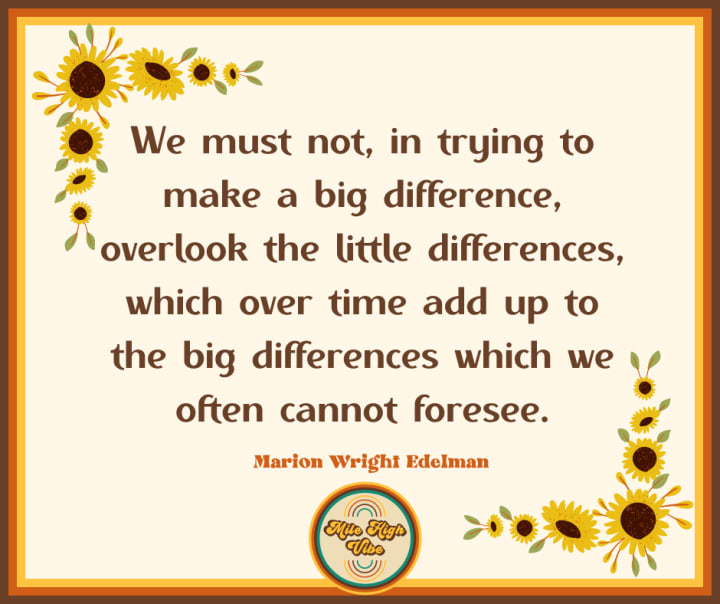
Why it Matters
Could all this positivity really make a difference in the world? I think it could, on a micro scale and a macro scale.
On the level of individual influence, seeing the positive has a huge impact on those around you. The human brain has special cells called “mirror neurons” that actually allow us to feel the emotions of those around us.
Have you ever been having a wonderful day, and then suddenly you are in a room with someone who is very upset, and you felt all that good energy suddenly fade like a popped balloon? There is a reason for that. Our emotions and perspectives impact those around us.
We could see that as a burden, that we should always be positive so as not to negatively impact others, which is an impossible standard to meet, but instead, I’m suggesting that we make minor changes to pursue a positive perspective with purpose, so that we could over time end up spreading the good stuff to those we love most.
And on a macro scale, I think we can all agree that our society and our world are facing unprecedented challenges. Challenges that require imagination and creativity to find solutions.
Research shows that focusing on negative outcomes is helpful when we are making small obvious decisions, for example, “should I wear a seatbelt?’. But for situations where a long-term strategy must be created from scratch, a positive perspective will allow for flexibility and innovation.
The world of the future will require humans to learn to work together more effectively, as well, and a positive perspective of others changes our view of them from potential competitors to potential collaborators.
Am I naïve enough to say that everyone becoming more like Pollyanna could save the world?
Yes, yes, I am.
If you enjoyed this article, please give it a heart or a share!
To follow Mile High Vibe on Facebook go to: https://www.facebook.com/milehighvibe
To sign up for the “Start Your Day off Right” daily email, which will be starting this summer, visit our website at https://www.milehighvibe.com
About the Creator
Megan Irwin Harlan
Writer, reader, artist, cook, singer, dancer, friend, wife, daughter, sister, aunt, mother of two, music fiend, TV junkie, movie lover, life-long learner, and unabashedly high-vibe.
Keep reading
More stories from Megan Irwin Harlan and writers in Motivation and other communities.
Full Moon
There are days when it feels like my body is arguing with itself. Multiple sclerosis already demands negotiation. Fatigue shapes my energy. My legs can feel unreliable. Sensations appear without warning. Some days they feel heavy. Other days they feel like they are vibrating from the inside, a constant electrical hum that no one else can see.
By Millie Hardy-Sims7 days ago in Motivation
The Hollywood Star Who Invented Wi-Fi: The Hidden Genius of Hedy Lamarr
Right now, as you read these words, invisible waves of energy are pulsing through the air around you. They are bouncing off walls, passing through glass, and connecting your device to a vast, infinite global network. Whether you are using a smartphone, a laptop, or a tablet, you are relying on a technology so fundamental to modern human existence that we panic the moment we lose it: Wi-Fi.
By Frank Massey 6 days ago in Motivation
Who is your "Person"?
It's important to recognize that you cannot go through life as easily on your own. My name is Elizabeth and I'm a survivor of child abuse and horrific trauma. Healing from trauma is not a quick fix and recognizing that it will take time, is part of the struggle.
By Elizabeth Woods5 days ago in Psyche




Comments
There are no comments for this story
Be the first to respond and start the conversation.