
One Brick, One Dream, One Prayer
"Building a Better Tomorrow, One Step at a Time."

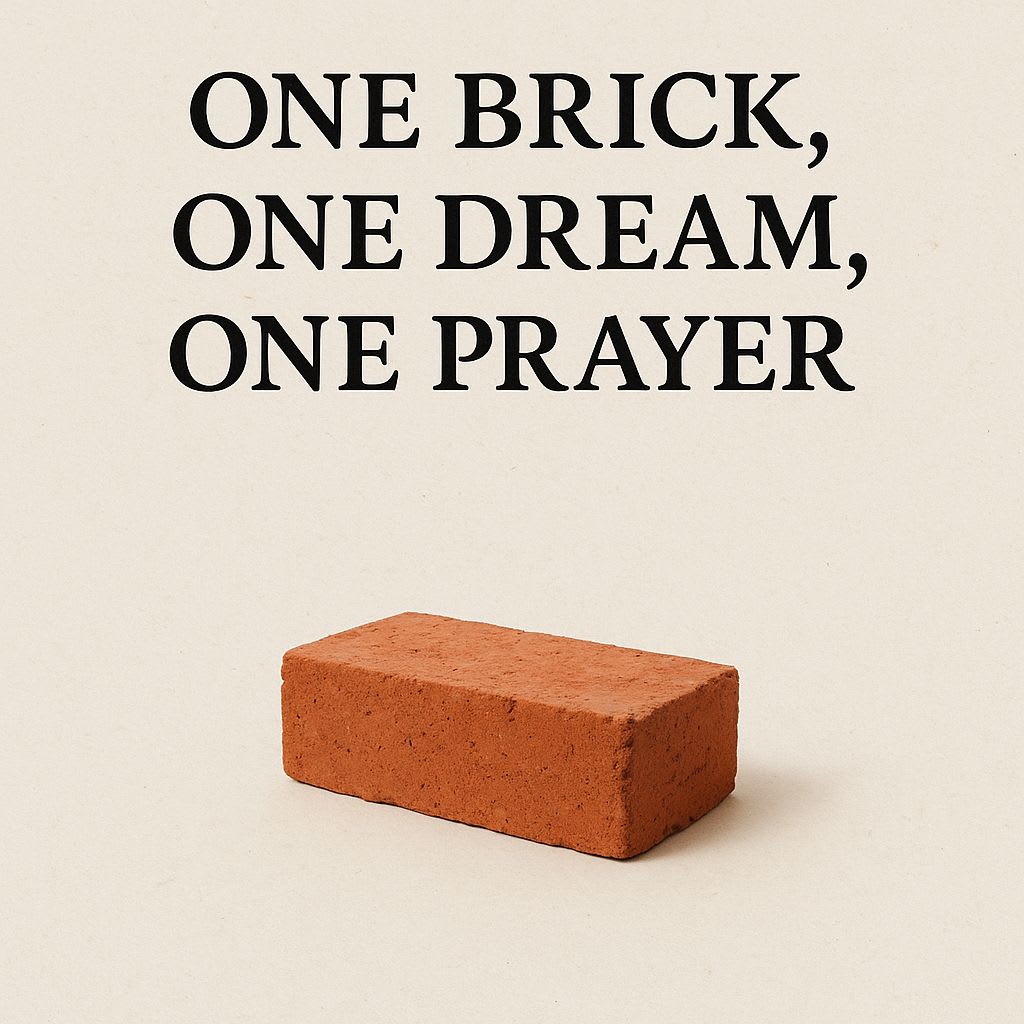
One Brick, One Dream, One Prayer
The sun rose over the city in a dull, patient sort of way, as if it were waiting for something sturdier than the morning news and the smell of stale coffee. The bricks of the old factory district, arranged like an ancient code, absorbed the light and glowed a brick-red that felt almost speakable. In the heart of this neighborhood stood a tumbledown building with a faded sign: Covington & Sons Masonry, Est. 1924. The storefront windows showed nothing but the tired reflections of passersby—three old men arguing about the best way to cut limestone, a woman with a stroller who kept glancing at a flyer on the glass, a kid with a bike who kept pedaling in circles as though trying to chase the morning away.
Inside, the building breathed with the scent of cement dust and rain that had fallen in a week of monsoon-like mornings. The air was thick with ambition and grit—an aroma you could bottle and sell to dreamers if you could figure out what to call it.
This is where we meet three people, three lives braided together by a single purpose: to lay the first brick of a new life, to lay a foundation not just for a wall, but for a future.
First is Rosa Kim, the project manager with a memory as sharp as a trowel edge. She wears a bright scarf that looks like a sunset trapped in fabric, a gift from her grandmother who had learned to build a life out of sparse resources and boundless hope. Rosa’s job is unusual for a city that adores the spectacle of grand declarations: she’s tasked with restoring the old neighborhood library and turning its crumbling annex into a community hub, a place where people can learn, exchange ideas, and—most importantly—dream out loud without fear of being laughed at.
Rosa believes in the quiet power of small acts. A single brick, she often tells the workers, is not just a piece of a wall but a vote for possibility. Each brick says, I belong here. When a city forgets its children, she thinks, it forgets its future. So she’s careful to listen to the children in the neighborhood as if they were the city’s conscience, which, in her experience, they often are.
Second is Mateo Alvarez, a muralist with paint-stained gloves and a backpack full of color stories. He has an eye for symmetry and a heart for the overlooked. His walls tell you who the city was and who it could become—the way a red fox might gleam through an alley if there were enough streetlights to tell the animal’s tale. Mateo learned the craft on cracked sidewalks and under a bridge where the river’s memory runs deep. He believes that art, like brick, is a language—one that can translate fear into resilience and despair into direction. He wants to guide the community through a project that is more than a pretty façade; it’s a public psychology experiment in which people see themselves as the protagonists of their own stories.
Third is Father Elias Karanja, a priest who arrived with a crate of prayer beads and a backpack of stories from a parish on the other side of the city. He’s been asked to help raise funds and spirits for the library project, but he finds himself fighting a larger war—one against the sense that the city’s heart is hollow and that the only thing more fragile than the plaster of the old library is the human will to rebuild after a century of neglect. He speaks softly and with a cadence that makes you think of rain on tin roofs, of wind through palm leaves, and of prayers that were whispered into the gaps between bricks where the wind finds a way through.
The morning shifts toward routine with the gravity of a planet taking a breath. Rosa opens the library door, which squeals with a sound that seems to protest every time something new is attempted within the building. The library’s annex is a shell: windows broken in places, shelves sagging like tired limbs, and a skylight where the glass has shattered in a way that makes you think of a star gone too far and come home with splinters in its glow.
The plan Rosa conceived is clean and ambitious: 5,000 square feet of space to be repurposed into a junior learning center, a makerspace with 3D printers and woodworking tools, and a community room for meetings and performances. The brick plan, though, is the heart of it. The brick will be laid not as a decoration but as a metaphor: every brick represents a person who contributes something essential—time, talent, or money. Each brick, in Rosa’s vision, is a prayer for the future.
The project’s first concrete hurdle arises in the form of a city zoning inspector named Mr. Varela, who visits the site with a clipboard that looks as if it has absorbed every weather pattern since the city was born. He’s stern but fair, a man who knows the language of codes as if they were songs. He asks pointed questions: Where is the warranty? How will you ensure accessibility for people with disabilities? What is your plan for sustainable materials? Rosa answers with the calm fierceness of someone who has learned to negotiate like a chess player who refuses to reveal the next move.
“Brick-by-brick is how you build a memory,” Rosa tells him, to which he nods, not unkindly, though clearly skeptical. He leaves with a promise to return in two weeks with a more thorough set of notes, and perhaps a few more gray hairs.
That afternoon, Mateo begins to sketch the project’s exterior. He chooses a palette inspired by the neighborhood’s own colors—the red of the brick, the pale ochre of the old library’s plaster, the deep blue of the river that runs behind the industrial blocks. The mural will be a map of the city’s dreams: a girl reading beneath a tree whose leaves are pages, a boy learning to solder a circuit, a grandmother teaching a granddaughter to knit with wires that glow faintly in the night, a river that shivers with the glimmer of late sunlight. The design is not just an image; it’s a narrative that invites passersby to step closer, to read the city’s memory and its possibilities.
As Mateo works, a small boy named Imani watches with wide eyes from a crack in the fence. Imani’s mother runs a small bakery nearby and often sends him to the library to fetch books for her customers’ children. Imani’s curiosity is a spark Rosa guards with the vigilance of a gardener protecting tender shoots. Imani asks questions about every choice: Why this color? Why this shape? What does it mean for the people who live in this neighborhood? Rosa answers with patience and honesty, explaining that the mural is meant to remind everyone that they are co-authors of the city’s future, not merely tenants of a physical space.
The project’s backbone also includes a program of “one brick” days where residents are invited to bring bricks from their own pasts—old bricks from demolished houses, bricks from a grandfather’s chimney, bricks from a garage that kept a family alive during hard winters. These bricks carry stories—some joyous, some painful—and the act of placing them in a common wall becomes a ritual of reconciliation and unity. It’s a simple ritual that turns a construction site into a shared archive.
There’s a moment when the community realizes the project’s quiet reach beyond bricks and mortar. A group of teenagers who would otherwise drift between alleyways and skateboards gather after school and watch Rosa, Mateo, and Father Elias. One of the teens, named Noor, asks why the project matters if the city never seems to notice the people who live here. The question lands like a pebble in a still pond, and the answer is complex but essential: because people notice when you build something with care; because when a library is renewed, it returns a relic of a more hopeful version of the city to its residents, and hope is the most practical resource there is.
Noor’s question becomes a pivot toward the day’s other work: fundraising. Father Elias suggests they host a small festival to raise funds and to demonstrate community support. The idea is simple yet powerful: they will host “A Night of Brick and Song,” an evening where local musicians perform, artisans display crafts, a storyteller tells a tale of the city’s hidden regulars—nurses who walk miles to reach patients, bus drivers who memorize routes like prayers, janitors who keep schools safe through long hours—and where each donation can be sealed into a lime-green envelope and placed within a wooden donation box at the back of the hall.
The festival happens in the library’s hall, which has seen better days but still holds a stubborn beauty in its bones. The ceiling has patches of missing plaster that the sun streams through with a kind of delicate honesty. The audience—neighbors, students, teachers, and the city’s quiet elders—sits in folding chairs arranged in a semicircle around a small stage. A younger musician, a violinist named Mina who once studied in a conservatory and now plays on street corners to make ends meet, begins with a melody that seems to pull heat and memory from the air. Her bow glides across strings, and the notes arrive with the precision of a deliberate heartbeat. The crowd doesn’t just listen; they inhale and exhale in rhythm, sensing the emotional gravity of what they’re about to witness.
Noor steps onto the stage to speak about the brick ritual, a ritual that feels almost like a prayer ceremony in a secular city. He describes how a brick, when properly laid, channels both patience and the memory of those who laid it. He speaks about a grandmother who saved pennies to buy a brick to memorialize a son lost to a war, and about a child who learned to count by stacking bricks instead of trying to run away from his neighborhood’s rough edges. Noor’s voice trembles a bit, and then steadies with the certainty of someone who has found a path through fear by naming it honestly.
The festival includes a reading from a notebook that Father Elias keeps tucked inside his blazer—a notebook that contains prayers, but also city statistics, a ledger of neighborly acts, and a list of the “stars” who will fund the project one brick at a time. He reads a short paragraph about the science of community resilience: how social connections, when nurtured, can alter outcomes in neighborhoods where poverty and neglect seem to be the dominant weather patterns. The paragraph contains a few numbers, not to overwhelm but to anchor the audience in reality: studies show that communities with invested green spaces and communal learning centers lower crime rates by measurable margins, increase literacy and school attendance, and foster a sense of belonging that translates into healthier mental well-being. The way Father Elias delivers the information makes it feel like a shared burden and a shared promise.
After Mina’s closing number, the audience files into a Q&A with Rosa as the moderator. A couple of questions surface about timelines, about how to handle potential cost overruns, and about ensuring that the library remains accessible to people without digital access. Rosa’s answers are practical, and she doesn't shy away from the realities. She candidly explains that the project will take patience, and that every decision will be guided by what serves the most vulnerable populations. She emphasizes the importance of transparent budgeting: every dollar will be accounted for, every expense explained, and every donor acknowledged not just for their generosity but for their belief in the community’s capacity to shape its own future.
The event ends with the crowd placing their bricks in a wooden crate that has a glass front. Each brick is inscribed with a short message. The messages are not grandiose declarations but intimate scraps of hope: “For my mother who learned to read here,” “For the boy who shared his lunch with a new student,” “For the teachers who kept faith when funds vanished.” The crate becomes a shrine to memory and expectancy, a tangible testament to the idea that a city’s growth is built not only with cement and steel but with shared intention and shared risk.
Weeks slip into each other, as if time itself is laying the bricks one by one. The zoning inspector returns, and this time he smiles in a way that suggests he’s found something worth believing in. He notes that the project’s sustainability plan is robust; that the materials chosen have lower embodied energy and longer lifespans; that the design is adaptable to future needs—perhaps a small greenhouse on the roof, perhaps a neighborhood workshop for repairing bicycles or sewing clothes for the winter season. He approves the revised plans and authorizes a staged permit release, allowing progress in measured steps rather than a single grand push.
As the walls begin to rise, a chorus of small miracles unfolds. The local paper runs a feature on the project, highlighting Rosa’s calm leadership and Father Elias’s ability to translate faith into city planning language that resonates with policy makers. The feature includes Noor’s brick-ritual stories, which sing of a street corner where children now gather to hear a lullaby about how a brick can become a bridge. The article’s most quoted line is from Rosa: “One brick is one vote for a future that belongs to everyone.”
The team discovers a surprising ally in an old tailor named Mrs. Sudhir, who runs a small atelier near the library’s vicinity. She’s not wealthy, but she has an eye for durable, sustainable materials and a reputation for turning salvage into something valuable. She donates a storefront window to feature the project’s progress and offers to teach a weekend workshop on how to repair and repurpose fabrics and small textile scraps into banners for the final mural. The banners themselves become bricks of color in the building’s identity, each one telling a tiny story.
As the months pass, the brick-by-brick philosophy begins to bear fruit beyond the physical construction. The neighborhood’s children become more engaged in reading programs and science clubs hosted in the annex’s future classrooms. The local high school interns who had drifted toward the glamorous lure of digital gigs find meaning in working with their hands, seeing the direct result of their labor in the steady rise of sturdy, honest walls. The library’s old annex, once a symbol of decline, begins to feel like a heart regaining its rhythm.
But the most poignant development comes from a quiet, almost invisible act: the creation of a memory archive. Rosa proposes that every major brick-laying milestone be accompanied by a small, anonymous story—a memory, a dream, or a fear—that someone is willing to entrust to the wall. The wall becomes a living journal of the community’s evolving identity. People bring small items—photos pasted inside brick chases, a dried flower pressed into the mortar, a child’s drawing of a library tree. The wall refuses to stay simply a structure; it becomes a palimpsest of the neighborhood’s life, a delicate layering that speaks to endurance and change at once.
The project finally reaches the point where it can host a grand opening. The library’s extension is complete enough to serve as a light-filled hub of learning and community. The interior is still a work in progress—some shelves lean with a shy charm, some of the walls still show the faint outlines of the plaster that must be replaced in the next phase—but the soul of the building is there, embodied in the faces of the people who have carried it into being.
On the opening night, a reception is held in the new community room. The room is lit by warm, amber lamps that throw a soft halo over the space and the faces in it. Rosa, Mateo, and Father Elias stand near the entrance, surrounded by neighbors who have become, over the past year, something like a family tied together by a common vow. The mayor, a figure known for long speeches that never quite translate into action, speaks with unusual sincerity about the project’s impact. He mentions statistics that confirm what the attendees already know in their bones: crime is down in the area, literacy is up, and more people—especially young women and girls—are stepping into leadership roles within community organizations. The room, which had previously buzzed with nerves, quiets into stillness as the crowd feels the weight of tangible progress.
Rosa addresses the room with a speech that is both a dedication and a demand: she thanks the donors, the volunteers, the students who spent sleepless nights typing grant proposals, the teachers who will now have a space to craft new futures. She then pivots toward a more provocative note, asking people to consider this: “If one brick can become a doorway to a library, what can a million bricks become?” She doesn’t pretend to have all the answers, but she insists on continuing the practice that got them here: listening to the community, adjusting plans in response to real needs, and ensuring that the building remains a living, evolving instrument for empowerment.
Father Elias speaks of the spiritual dimension without giving up the procedural. He reminds the crowd that the project’s success is not only a matter of dollars and design, but of prayer and presence—the kind of attention given to a neighbor who is struggling, the kind of gratitude that keeps people from giving up when setbacks appear. He talks about the city’s more fragile hearts—the elderly who remember days when the library was a sanctuary, the young parents who fear the city’s noise more than its danger, the immigrants who bring their own stories and languages and hope to the shelves of a place that will welcome them.
Mateo’s moment comes when he presents the final mural—a winding river that becomes a thread leading through scenes of learning and growth: classrooms where students program robots, a kitchen where families share meals and stories, a small stage where poets and musicians breathe life into the community, a garden where children grow herbs that scent the air with a memory of summer. The mural’s river ends at a doorway that opens into the library, a symbolic reminder that the city’s dreams flow through the community and into this space.
The crowd applauds with an energy that seems to lift the ceiling a fraction higher. The first of the community’s new programs to begin operation is a reading circle for non-native speakers who want to improve their English, a small but powerful service that now has a home in the annex, with volunteers who have learned from and with the participants. A science club follows, offering workshops in simple, practical experiments that demonstrate how the world works in a way accessible to curious minds of all ages.
As the night winds down, Rosa steps outside to look at the brick wall she helped bring into being. She places her palm against the cool surface and feels the rough texture beneath her skin—an intimate contact with the physical world that makes the result of their labors undeniable. She thinks of the countless hands that contributed to this moment: the bricklayers who taught the apprentices how to pace a course, the students who labeled bricks with symbols of their dreams, the donors who named rooms after people who had no voice in the plan but whose legacies deserved to be honored.
In her pocket, she keeps a folded note, a personal acknowledgment of how far they have come. It reads simply: One brick, one dream, one prayer. It’s a phrase she has said many times, but tonight it carries a weight that makes it feel like a vow rather than a slogan. The brick that bears her initials stands in the wall alongside others, a quiet sign that she, too, has had a dream, and that the dream now belongs not only to her but to the whole neighborhood.
But the story doesn’t end with triumph and reflection. The city, with its relentless pace and its habit of forgetting the quiet corners where life quietly perseveres, remains a place of ongoing challenges. The library must continue to adapt to new needs: digital literacy, access programs for seniors, a space for mental health resources, a place for workshops on sustainable living. The “one brick” method becomes a living philosophy, a reminder that progress is not a single act but a continuum: a careful, patient sequence of decisions that keeps faith with the people most in need.
Over the following seasons, the library and its annex become a beacon for other neighborhoods, a model of how to convert decaying infrastructure into a lifeline for communities. News outlets visit to document how a renewal project, born out of a wish to restore a building, transformed an entire district’s social fabric. People from other parts of the city bring their own bricks with stories to lay in new walls, and the concept spreads in a way that feels almost organic—like mold that forms in a crevice but is composed of something stronger and more life-sustaining than a simple fungus.
Yet the true impact is felt not in headlines but in the quiet acts of daily life—the way a grandmother teaches a child to read aloud, the way a teenager mentors a younger student, the way a newcomer gains the confidence to ask for help and then discovers that the city was always ready to answer. The brick, as a symbol, has become less a piece of construction and more a language for resilience: it tells a story of a community that refused to surrender its future to neglect and fear.
If you walk by the library today, you will hear a different cadence in the air. There are voices that belong to the new programs and voices from the long history of the neighborhood. The hallway, once a corridor of echoes, now hums with conversation. A group of children huddles around a microcontroller kit, their eyes wide as they learn to connect a sensor to a small speaker that plays a tune when a lever is pulled. An older man sits at a table, gently turning pages as he teaches a group of new readers how to pronounce phonics. A woman laughs softly as she explains to a newcomer how to navigate a city bus route using a phone application, a small modern miracle that has become as essential as the bricks that hold the walls in place.
One could wonder about the exact number of bricks used to raise the walls of the annex, but perhaps that is the wrong question. The right measure is the stories carried within the mortar, the memories embedded in the bricks’ faces, the trust re-sewn into the community’s fabric. The building is a living record of a neighborhood’s collective memory, and with each new brick laid, the city adds another page to its most hopeful chapter.
In time, the library becomes more than a building; it becomes a ritual of communal care. A grandmother might bring a blanket for the reading corner that becomes a cozy refuge on cold evenings. A group of teenagers might organize a small “idea fair” where residents present proposals for the city’s future and vote with tokens on which projects to fund next. Mateo’s mural might gradually shift as new stories emerge—perhaps a new figure of a child scientist or a nurse who discovered a better way to care for patients with limited resources. The mural does not freeze; it breathes, it adapts, it grows in alignment with the community’s evolving needs and dreams.
And through it all runs a thread of prayer, not necessarily religious, but a form of reverence for the labor that makes life possible: a daily reminder to show up, to contribute, to believe in something larger than oneself. Father Elias often says that prayer is a form of practical faith—the willingness to act as if miracles are ordinary and achievable. In this way, the project begins to resemble a city-wide liturgy. Each brick is a flame of intent set in the wall; each mural stroke is a psalm in color; each program launched is a chorus that teaches and heals.
One year after the grand opening, Rosa sets aside a quiet afternoon to walk through the library’s new sprawl of rooms and corridors. She notices, with a small, almost shy smile, a girl who has grown from a curious child into a confident student who now helps younger kids learn to code. She sees Noor, now a mentor in the teen program, helping a younger boy stack colored bricks to form a tiny arch. She sees Imani, the boy who first stood at the fence, returning with his mother to donate a brick that bears a drawing of a river and the words, “We build with love.” She sees Mrs. Sudhir, the tailor, walking through the lobby, noting the banners she helped create, proud that her craft has become an essential backend to the community’s forward momentum.
In Rosa’s mind, the project’s story is not a closed loop but a continuous spiral. The first brick was laid with a dream of a single library revived; the organization’s future becomes a path of many more doors opened, each leading to new rooms where people learn to build—houses, careers, families, and a city that believes in the promise of its people. The “one brick, one dream, one prayer” motto remains a compass for ongoing work: every step forward is a brick; every person who joins the effort becomes part of the foundation; every quiet, faithful action—no matter how small—becomes a prayer that the city’s future will be bright enough for everyone.
As the sun sets on this day, the bricks glow a deeper shade of red, as if the day’s heat has pressed into them a final, luminous memory. The skyline takes on a silhouette of what the project represents: not a monument to a moment in time but a signal flare for future generations to see and follow.
One brick, one dream, one prayer—that is the thread that runs through every moment of the building’s life. It is a philosophy that refuses to let fear triumph over hope. It’s a reminder that even in a city that has forgotten how to listen, people can remember how to build: with hands, with hearts, and with the faith that when we lay a brick together, we lay a bridge to the future, one that will be walked on by the next generation.
If you walk away with anything after reading this, perhaps it is this simple truth: the world changes not just through large proclamations or sweeping reforms, but through the patient, stubborn, often unglamorous work of people who decide to put a brick where it’s needed most, who dream aloud about a future worth living in, and who pray—in their own way—that the prayers will be heard and answered. And when those bricks come together, the city itself becomes a sanctuary for the fragile and the fearless alike, a place where a single brick can carry the weight of a whole community’s future.
About the Creator
Abdul Hai Habibi
Curious mind. Passionate storyteller. I write about personal growth, online opportunities, and life lessons that inspire. Join me on this journey of words, wisdom, and a touch of hustle.
Keep reading
More stories from Abdul Hai Habibi and writers in Motivation and other communities.
The Road I Never Planned to Take
I used to believe life was supposed to follow a straight line. You go to school, find a job, settle into a routine, and slowly build your future. That’s what I did. I followed the map drawn by others, never asking if it truly belonged to me. I thought I was doing everything right. But deep inside, something always felt... incomplete.
By Abdul Hai Habibi8 months ago in Motivation
The Bridge of Tomorrow
In a small European town tucked between green hills and a quiet river, there lived a young man named Elias. The town was famous for its old stone bridge, built centuries ago. People said the bridge connected not just two sides of the river, but two different futures. One side led toward comfort and routine; the other toward uncertainty and change.
By Iazaz hussain4 days ago in Motivation
Targets and Triumphs: A Complete Guide to Competitive Sport Shooting Disciplines
Competitive sport shooting attracts athletes who appreciate precision, discipline, and diverse challenge formats. Participants quickly discover how each discipline tests different mental and physical abilities as they refine their technique through comprehensive shooting mastery. Moreover, ranges and organizations worldwide continue expanding opportunities that introduce newcomers to structured training. As a result, competitors enjoy a broad and rewarding landscape of events tailored to various skill levels and personal goals.
By Matthew Pothoff3 days ago in Motivation


Comments
There are no comments for this story
Be the first to respond and start the conversation.