
Noni Learns the Value of Work
A lazy boy discovers how hard work and responsibility make life beautiful — for himself and for others.


Noni Learns the Value of Work
(An Inspirational Short Story)
Noni was a good boy in many ways — cheerful, curious, and kind-hearted. But he had one very bad habit: he was incredibly lazy. He hated doing any kind of work.
Whenever someone asked him to help, he would refuse right away.
If his mother called out from the veranda, “Noni, dear, can you please bring me some garlic from the kitchen?” Noni would frown and reply, “I won’t. You can get it yourself.” Then he would continue playing with his toys as if he hadn’t heard her at all.
When he felt thirsty, he wouldn’t even get up to drink water. He would just shout, “Mom, I’m thirsty! Bring me some water!”
Doing homework was another great challenge for him. He would only finish it after his mother asked him again and again. And even when he did, he never bothered to pack his books into his school bag. He would just leave them scattered on the carpet. His mother would sigh, pick them up one by one, and neatly place them in his bag herself.
His father faced the same problem. Every morning, when the newspaper delivery boy tossed the paper through the gate, his father would call, “Noni, son, please run and get the newspaper.”
But Noni would make excuses. “Dad, there’s a fat cat sitting outside — I’m scared!” So his father would end up going himself.
At school, things were no different. He disliked getting up early in the morning. If it weren’t for his father’s scolding, he would have slept till noon. Even in class, while his friends cleaned their desks with small dusters, Noni would just blow the dust away half-heartedly. He often wished his mother were there too — she could have cleaned his desk for him.
By the time he turned eight and entered the fourth grade, Noni still hadn’t learned to do even the smallest things himself. He didn’t know how to tie his shoelaces or button his shirt. Every morning, he would sit half-dressed, waiting for his mother to come help him — even though she was busy preparing breakfast, and his father was getting ready for work.
One day, while making breakfast, Noni’s mother called out, “Noni, please put the bowl of porridge on the table. I’m toasting the bread.”
But Noni replied, “Mom, my pants aren’t buttoned. If I stand up, they’ll fall down.” His mother sighed and placed the bowl on the table herself.
His laziness was now a serious problem. His mother often worried about his future. “What will happen to Noni if he keeps avoiding work like this?” she asked her husband one night.
His father nodded thoughtfully. “You’re right,” he said. “We have to find a way to change him.”
A few days later, on a Sunday afternoon, while his mother was busy cooking lunch, Noni was sitting beside his father watching cartoons. During the commercial break, Noni said, “Dad, I love cartoons! I wish I could watch them all day, every day.”
His father smiled. “Cartoons are fun, no doubt — even adults enjoy them. But tell me, if everyone just sat around watching TV all day, who would do the other work?”
Noni thought for a moment and replied, “That’s true. If the milkman, the newspaper boy, and the maid all watched cartoons all day, who would bring the milk and paper? Who would clean the house or wash the clothes?”
His father’s eyes lit up. “Well said, my boy! That’s a very smart thought.”
Encouraged by the praise, Noni continued, “And if you watched cartoons all day, you wouldn’t go to the office. Then you wouldn’t get paid — and we couldn’t buy food or clothes!”
His father laughed softly. “Exactly. You see, Noni, so many people around the world work every day — just so that life keeps running smoothly for all of us. Some make our clothes, some make our shoes, some print our school books, and some make the bags to carry them in. Farmers grow the food we eat, laborers build our homes, and others make toys for children like you. Everyone contributes in some way. We should be thankful to all of them.”
Noni sat silently for a while, thinking. Then he said, “And Mom also works all day long — cooking, cleaning, and taking care of us. Even when she’s tired or sick, she still keeps working.”
His father nodded. “That’s true, son. Mothers are incredibly strong — they work tirelessly for their families. But tell me, what lesson do you think we can learn from all this?”
Noni hesitated for a moment, then said quietly, “If so many people are working for us, then we should also work — so that our efforts can help others too.”
His father smiled proudly. “That’s the spirit! Children may be small, but they can still help in many ways — by doing their own small tasks. You can polish your shoes, put your books away, hang your uniform neatly, drink water yourself, and help your mother set the table or clear it. When you grow up doing small tasks, you’ll be ready to handle big ones.”
He added, “Remember, a good and responsible person is always doing something useful.”
That conversation left a deep impression on Noni.
Just then, his mother called from the kitchen, “Lunch is ready! Wash your hands and come to the table.”
Noni ran to the sink, washed his hands, and went straight to the kitchen. His mother was carrying plates to the dining table. “Mom,” he said eagerly, “you serve the food — I’ll set the table.”
His mother looked at him in surprise. Noni carefully took the plates and spoons from her hands and arranged them neatly on the table. Then he rushed back to get glasses and a chilled water bottle from the fridge.
His father watched him with a proud smile. His mother placed her hand lovingly on his head. “Noni, I can’t believe what I’m seeing. Is this really my son?”
Noni grinned. “Yes, Mom. Dad made me realize that so many people work hard to make our lives easier. From now on, I’ll do my part too. I won’t be lazy anymore.”
His mother’s eyes softened. “I’m so happy, my dear. When we work, we not only help ourselves but also others. Making someone else’s life easier is one of the greatest forms of kindness.”
Noni nodded firmly. “You’ll never have to ask me to do anything again, Mom. I’ll do my work myself — always.”
And from that day onward, Noni truly changed.
He had finally learned that doing work — even small, simple tasks — was not a burden, but a beautiful way to live responsibly and make the world a little better for everyone.
About the Creator
Keep reading
More stories from Ubaid and writers in Motivation and other communities.
The Honest Shepherd and the Greedy Hunter
The Honest Shepherd and the Greedy Hunter Adapted from the story by Mukhtar Ahmad It was a quiet afternoon when Saeed, the shepherd boy, returned from grazing his goats and sheep. After dropping off the herds at various homes, he reached the house of the village headman, the Numberdar. There, he found the Numberdar’s wife sitting in a corner, weeping softly.
By Ubaid 4 months ago in Motivation
30 Days Talking to Strangers in Amsterdam — Day 17 Ended My Panic Attacks
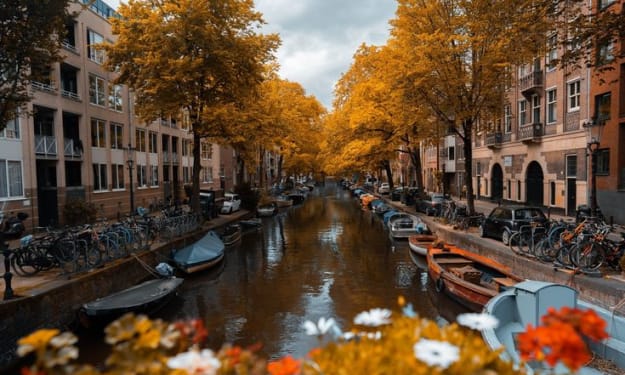
The Stranger Who Answered Back How talking to one stranger every single day for 30 days in Amsterdam quietly ended my panic attacks I used to think Amsterdam was the loneliest city on earth. You know the feeling — you’re surrounded by 900,000 people, bikes whizzing past, trams dinging, canal water lapping at your feet… and still feel completely invisible. My panic attacks had gotten so bad by January 2026 that I’d started avoiding the tram altogether. Heart racing at red lights, palms sweating in the rain, convinced everyone could see I was one deep breath away from falling apart. So on February 1st I made a stupid promise to myself: talk to one stranger every single day for 30 days. No small talk rules. No “nice weather” cop-outs. One real sentence. One genuine question. Nothing more. I had no idea that promise would save my life. The Awkward First Ten Days Day 1 was humiliating. I stood at the Albert Cuyp Market like a statue until a woman in a bright yellow raincoat picked up the last bunch of tulips. “Those are beautiful,” I blurted. She smiled, said “They’re for my mother’s grave,” and walked away. I wanted to disappear into the cobblestones. Day 3: A guy locking his bike near the Rijksmuseum. I asked how his day was going. He answered in perfect English, “Tired, man. My wife left yesterday.” I froze. He laughed at my face and said, “Relax, it’s been two years. You’re the first person who’s asked in months.” By day 8 I was getting braver. A barista at my usual spot on De Pijp told me her dream of opening a cat café in Portugal. On day 10 an old lady on the 12 tram scolded me for not offering my seat — then spent the next six stops telling me about her husband who died in 1998 and how she still sets the table for two. Every conversation felt like jumping off a cliff. My chest still tightened. My voice still shook. But something tiny was shifting. I was no longer invisible to the city — and the city was no longer invisible to me. The Day Everything Changed Day 17. A grey Thursday. I was exhausted, rain pouring sideways, and seriously considering quitting the whole stupid experiment. I ducked into Vondelpark under a big oak tree near the rose garden. There he was — sitting on a wet bench in a wool coat that had seen better decades. Silver hair, bright blue eyes, holding a small thermos like it was the only warm thing left in the world. I sat. Heart hammering. Then I did what I’d been doing for seventeen days straight. “Excuse me… do you mind if I ask what you’re drinking?” He looked at me for a long moment, like he was deciding whether I was worth the words. Then he smiled — the kind of smile that reaches the eyes first. “Turkish coffee,” he said in a thick Dutch accent. “My wife taught me. She died eleven years ago today.” I swallowed. “I’m so sorry.” He waved it away gently. “Don’t be. She would have liked you. You’re the first person in months who’s looked me in the eye instead of at their phone.” We talked for forty-three minutes. His name was Hendrik. He’d been a ship captain on the IJ for thirty-seven years. Lost his wife to cancer. Raised two daughters who now live in Australia. And then he said the sentence that cracked my entire life open: “You know what I learned after she was gone? Panic is just the mind trying to live tomorrow today. The only thing you can control is this moment — and whether you’re brave enough to share it with someone.” He tapped my knee. “You’re scared right now. I can see it in your shoulders. But you still sat down and asked an old man about his coffee. That’s how you win against the fear, jongen. One small yes at a time.” I cried on the tram home. Not pretty tears — ugly, snotty, shoulder-shaking ones. For the first time in two years, the tightness in my chest wasn’t panic. It was relief. The Last Thirteen Days & What Actually Changed The rest of the month felt different. I stopped forcing conversations and started enjoying them. A Syrian refugee who bakes the best pistachio baklava near Nieuwmarkt. A teenage girl practicing guitar by the canals who let me record her song. A stressed-out delivery cyclist who ended up inviting me for a beer after his shift. My panic attacks didn’t vanish overnight — but they lost their power. When the racing heart came, I heard Hendrik’s voice: This moment. Share it. So I would turn to whoever was nearest and ask one small question. Every single time, the fear shrank. By day 30 I wasn’t the same person who started. I smiled at strangers without thinking. I slept through the night. I even took the tram during rush hour without counting exits. What I Wish I’d Known Sooner Talking to strangers didn’t fix me. It reminded me I was never broken — just disconnected. In a city as beautiful and busy as Amsterdam, it’s ridiculously easy to feel alone. We all walk around wearing invisible headphones. But when you take them off for thirty days and actually see people, something magical happens. You realise every single person is carrying their own quiet storm — and most of them are desperate for someone to notice. Hendrik was right. The panic wasn’t in my chest. It was in the story that I had to do life alone. Your Turn I’m not saying you have to talk to a stranger every day for a month (though… why not?). Start smaller. Next time you’re waiting for coffee, on the tram, or sitting on a bench in Vondelpark — look up. Smile. Ask one real question. You might just meet the stranger who answers back. And who knows? They might be carrying exactly the words you’ve been waiting your whole life to hear.
By Shoaib Afridiabout 19 hours ago in Motivation



Comments
There are no comments for this story
Be the first to respond and start the conversation.