
Never Bank Your Welfare With Government
Learning How To Survive Even Under Bad Governments!


A lot of people rely on the government for their welfare. We all know that governments are not created equal. In democracies, governments change every few years, and continuity is often disrupted, especially when a new government from a different political party takes over. John Major, who replaced Margaret Thatcher, the Iron Lady, is considered one of the most brilliant English prime ministers to have ever led Britain. During Major's tenure, Britain experienced the highest rate of economic growth and became an economic powerhouse in Europe. However, Major also holds the record for losing an election by the widest margin in British history. When voters were interviewed to explain this anomaly, they stated that they simply "didn't like his face"! This serves to show that sometimes voters vote with their emotions rather than their best interests at heart
Governments are powerful entities. When they are good, they can bring about many positive changes. Conversely, when they are bad, their inefficiency negatively impacts almost everyone. The only individuals who emerge unscathed are those who have learned that they cannot rely on the government for their welfare, regardless of whether it is a good or bad government. These people learn the necessary strategies to mitigate the impact of a bad government's actions or to benefit greatly when a good government is in power.
Governments require funds to operate, and for many, this money is borrowed, with some revenue coming from taxes. To service internal debt, many governments resort to printing money, which leads to inflation and devaluation. Inflation and devaluation erode purchasing power, potentially causing corruption, job losses, and increased crime. Those who understand this scenario avoid keeping their money in the local currency. Instead, they convert it into gold and foreign currencies whenever possible. The local economy is less likely to affect their savings unless the government resorts to confiscating people's wealth. Investing in land and property is another effective way to preserve value in the face of a depreciating currency. In bad economies, the value of land and property tends to decrease, presenting smart investors with buying opportunities. When the situation improves, the value of land and property skyrockets, allowing investors to sell and make substantial profits.
Wealthier individuals take it a step further and diversify their assets across different countries. In the event of an economic downturn in one country, they are still protected by assets located in countries that are performing well.
Cryptocurrencies have emerged as an alternative in recent times. Their value is not influenced by the actions of any government, as they are virtual currencies not tied to any specific location or decisions made by official financial institutions, whether local or global. Even the American government, known for freezing the assets of those who fall out of favor, cannot seize someone's cryptocurrencies. Following the wars in Ukraine and Gaza, the global economy has experienced some turmoil. Certain countries have severe forex shortages, hampering their ability to finance imports. Traders in these countries face difficulties as they cannot import goods, despite having ample amounts of local currency. If these individuals had invested in cryptocurrencies, the current situation would not have affected them.
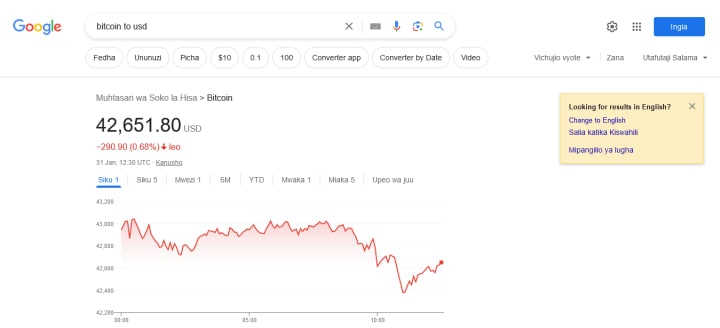
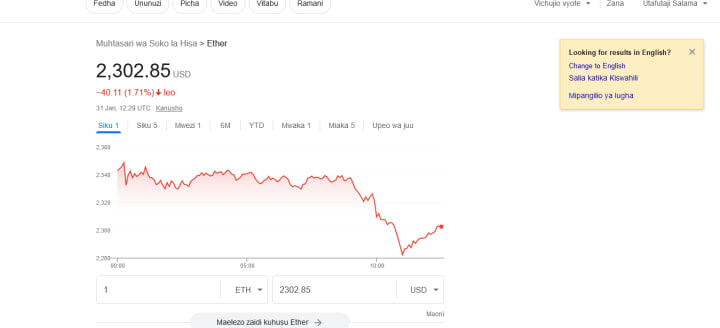
Until recently, cryptocurrencies were largely accessible only to the wealthy. In terms of dollars, most of these currencies were out of reach for ordinary people. For instance, let's consider the exchange rates of two popular cryptocurrencies, Bitcoin and Ethereum, to the dollar on January 31, 2024. On that day, one Bitcoin was averaging $42,651.8, while one Ethereum was valued at $2,302.85. It is understandable that entrepreneurs starting out or small business owners may not have substantial investments in cryptocurrencies.
Fortunately, there is now a cryptocurrency for everyone, called PI Network. Developed by a team of Stanford graduates, PI Network was first introduced in March 2019. Unlike traditional cryptocurrencies such as Bitcoin, PI Network does not rely on energy-intensive mining processes. Instead, it uses a consensus algorithm called the Stellar Consensus Protocol (SCP), which is more energy-efficient and less resource-intensive than Proof-of-Work (PoW). The network currently has over 47 million members and continues to grow, with membership being free.

The best part about PI Network (at least for now) is that acquiring cryptocurrency through the network does not involve trading or any other form of currency exchange. Members mine the Pi currency freely, and the rate of mining depends on their level of activity on the network. As of January 31, 2024, one Pi currency exchanges at $29.89. Since I joined on January 29, 2024, I have already mined 5.88 Pi cryptocurrencies, which are equivalent to $175.75! This amount is one and a half times the official monthly minimum wage in my country!


The developers of the PI Network aim to attract as many members as possible. So, welcome aboard! You can join through my referral link: https://minepi.com/Killaghai1961. By joining, not only will you help me increase my mining rate, but it will also kick-start your journey in mining the Pi currency. When you invite others to join, you will also mine Pi currency at a higher rate. Since joining is currently free, why not dive in?
About the Creator
Juma Killaghai
Juma Killaghai is a research chemist with over 30 years of experience in the field of research and development. He has a Master’s degree - Organic chemistry, from the University of Dar es Salaam. He resides in Dar es Salaam, Tanzania
Keep reading
More stories from Juma Killaghai and writers in Motivation and other communities.
Fortune in Every Misfortune!
In Islamic teachings Muslims are taught to thank God for every situation, be it good or bad. They are taught that in every misfortune there is a fortune within it. Strange teachings indeed until you start to reflect on real events you have witnessed or read about. Sometimes ago I read somewhere that during the second World War one third of all the food consumed by Americans came out of home gardens, affectionately called victory gardens! No! No! No! Go back and read again. What I am saying is that Americans in the midst of war cultivated their own food right down at the family level! Of course, with little consideration you will agree that this was indeed a fortune within a misfortune!
By Juma Killaghai3 years ago in Motivation
Amparo Araneta - Building Sanctuaries Where Beauty, Wellness, and Community Converge
Araneta’s story begins in the world of beauty and wellness, where her natural instinct for transformation first emerged. Trained as an esthetician and beautician, she expanded her practice into holistic aromatherapy, blending physical care with emotional and spiritual well-being. For Araneta, beauty has never been superficial. Instead, she views it as a restorative process—one capable of rebuilding confidence, dignity, and inner balance.
By Variety Press2 days ago in Motivation
The Refugee Who Built a $19 Billion Empire: The Raw, Untold Story of Jan Koum
Look down at your phone right now. If you are like billions of other people on this planet, there is a small, green icon sitting on your home screen. You tap it to talk to your mother across the country. You use it to close business deals, send photos of your children, and stay connected with friends on entirely different continents.
By Frank Massey 6 days ago in Motivation



Comments
There are no comments for this story
Be the first to respond and start the conversation.