
Keanu Reeves: The Man Who Walked Through Fire
SUCCESS STORY

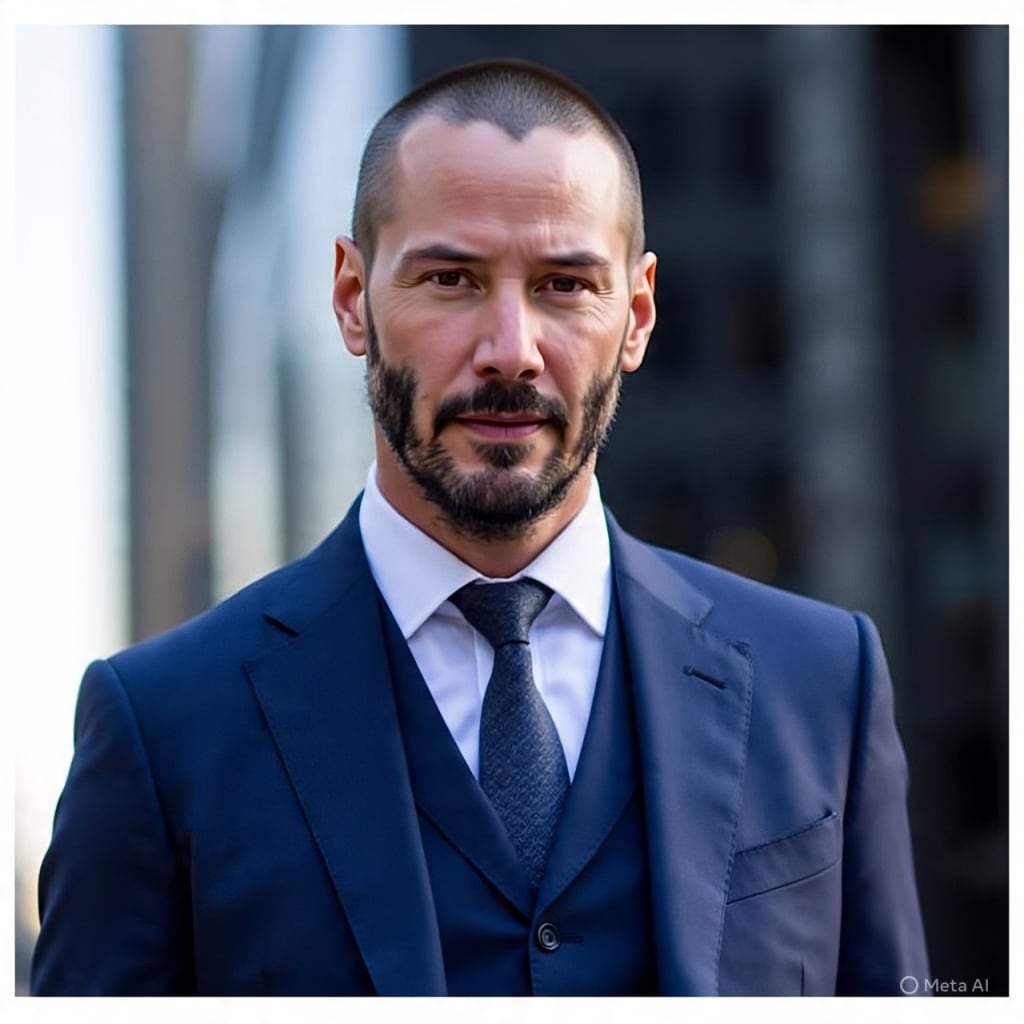
— Part 1
In a world obsessed with fame and fortune, Keanu Reeves stands as a mystery — a man who could own the world but chooses simplicity; a man who has walked through more darkness than most could bear, yet still shines with quiet kindness. His story is not just about Hollywood stardom; it’s about loss, loneliness, hope, and unshakable humanity.
Born on September 2, 1964, in Beirut, Lebanon, Keanu Charles Reeves was destined for a life that few could have imagined. His early years were marked by chaos — his father, Samuel Nowlin Reeves Jr., left when Keanu was only three years old. His mother, Patricia Taylor, a British costume designer, tried to build a stable life for her children, but the road was anything but smooth.
They moved constantly — from Beirut to Sydney, then New York, and finally Toronto — chasing stability that never seemed to arrive. Keanu’s name, meaning “cool breeze over the mountains” in Hawaiian, became an ironic symbol of the calm he carried through his stormy life.
The Boy Who Didn’t Belong
At school, Keanu struggled. He wasn’t the kind of kid teachers celebrated — he was dyslexic, shy, and constantly misunderstood. His grades suffered, and he often switched schools. But even then, he had a spark — a dreamer’s heart wrapped in silence.
He once said, “I wasn’t the brightest, but I always wanted to understand things in my own way.”
Hockey became his refuge. In Toronto, Keanu became known as “The Wall”, an unstoppable goalie who dreamed of playing professional hockey for Canada. But destiny had other plans. An injury ended that dream, and a new one began to take shape — acting.
The Stage Became His Sanctuary
In the late 1970s, Keanu began performing in small theater productions and local television shows. Acting gave him something he’d never had before — a voice. His early roles were small, but his presence was magnetic. People noticed the intensity in his eyes, the quiet sadness behind his smile.
His first major film, “Youngblood” (1986), saw him playing a hockey player — a poetic nod to his lost dream. But it was “River’s Edge” (1986) that showed Hollywood his depth. The film was dark, haunting, and painfully real — and Keanu’s performance mirrored his own life’s turbulence.
Then came “Bill & Ted’s Excellent Adventure” (1989). The goofy, lovable Ted “Theodore” Logan turned Keanu into a household name. Audiences adored his charm and innocence. Yet behind the laughter, Keanu remained deeply introspective, almost detached from the fame that followed.
He didn’t chase parties, didn’t seek luxury. While other stars indulged, Keanu kept to himself, reading philosophy, riding his motorcycle through empty streets, and quietly asking life’s biggest questions.
Tragedy Shadowed His Rise
Just as his career began to take flight, tragedy began to follow him like a shadow. In 1993, his close friend and fellow actor River Phoenix — whom he considered a brother — died of a drug overdose outside The Viper Room in Los Angeles. Keanu was devastated. River’s death left a permanent scar on him.
He once said softly in an interview, “I miss him. He was so pure of heart. I think of him all the time.”
While others turned pain into rebellion, Keanu turned it into reflection. He kept working — Speed (1994) made him an action superstar, The Matrix (1999) made him a legend. Yet even at the height of fame, he lived modestly — refusing expensive mansions and driving an old motorcycle to sets.
Love and Loss
Then came Jennifer Syme — a quiet, beautiful actress and personal assistant. Keanu met her at a party in the late 1990s, and it was love at first sight. She brought warmth into his lonely life. In 1999, they were expecting a baby girl, Ava Archer Syme-Reeves.
But fate, once again, was cruel. Ava was stillborn. The loss broke both Keanu and Jennifer. Their relationship couldn’t survive the grief, though they remained close. Two years later, Jennifer died in a tragic car accident.
Within just a few years, Keanu had lost his best friend, his daughter, and the woman he loved. Most people would have fallen apart. But Keanu… he simply disappeared from the spotlight — not to escape fame, but to heal in silence.
He once told Parade Magazine, “Grief changes shape, but it never ends.”
A Soul Who Chooses Kindness
What makes Keanu Reeves different isn’t the pain he endured — it’s how he responded to it. He turned his suffering into empathy.
He quietly donated millions to children’s hospitals, funded cancer research, and even shared his movie profits with the behind-the-scenes crew — the unsung heroes of filmmaking. During The Matrix Reloaded, he reportedly gave $75 million from his paycheck to special effects and costume teams, saying, “They are the ones who make the magic happen.”
He takes the subway like everyone else, gives up his seat to strangers, eats lunch with the homeless, and never makes a spectacle of his goodness.
Keanu doesn’t post quotes about kindness — he lives them.
Rebuilding Through Silence
By the late 2000s, Keanu was a man reborn through grief. He had learned to live with emptiness — to coexist with it rather than fight it. He began writing — poetry, short stories, and philosophical reflections on life and death.
He once said, “Sometimes simple things are the most difficult to achieve — peace of mind, happiness, love.”
In 2019, his life took a soft turn when he publicly appeared with Alexandra Grant, an artist and long-time friend. Their relationship reminded the world that healing is possible — even after years of pain.
Keanu never sought fame, love, or wealth — he sought meaning.
And that search, that relentless pursuit of peace, makes him not just a movie star — but a symbol of what it means to be human.
👉 End of Part 1
Next up — Part 2 will explore:
His rise to legend with The Matrix and John Wick,
His unspoken philosophy of kindness,
His poetic soul and impact on mental health awareness,
And how he became the “Internet’s favorite human being.”
Keanu Reeves: The Man Who Walked Through Fire — Part 2
When the world began calling him “the nicest guy in Hollywood,” Keanu Reeves didn’t smile proudly — he just shrugged.
He never tried to be good; he simply chose not to let pain harden him.
That, perhaps, is the quiet magic of Keanu Reeves — he became light not because he never knew darkness, but because he had lived there, and chose to rise anyway.
The Matrix and the Meaning of Reality
When Keanu accepted the role of Neo in The Matrix (1999), he didn’t realize he was stepping into one of the most revolutionary films in cinema history. The Wachowskis’ script was bold — a fusion of philosophy, technology, and human identity.
Neo wasn’t just a hacker; he was a metaphor for the awakening of the soul — a man questioning the illusion of life.
And Keanu embodied that question effortlessly, not just as an actor, but as a thinker.
During production, he trained for months, pushing through physical pain, sleepless nights, and a grueling routine of martial arts, choreography, and mental preparation.
When asked how he endured it, he smiled and said, “Because I love it. I love working. I love learning.”
Behind the cameras, Keanu was different from any Hollywood lead. He ate lunch with the stuntmen, laughed with the lighting crew, and refused to separate himself from them. When The Matrix exploded globally, earning over $460 million, he gave away a huge part of his earnings to the special effects team, saying they deserved it more.
It wasn’t an act of publicity — it was just Keanu being Keanu.
Loneliness in the Spotlight
While fans adored him, Keanu lived quietly, almost invisibly. No social media, no drama, no luxury villas flaunted online.
He often said, “I’m a pretty private person. I try to have a quiet life.”
He spent birthdays alone, riding his motorcycle through Los Angeles at night, often stopping at small diners, reading books, or simply watching people go by.
He wasn’t lonely — he was at peace in solitude.
But his eyes, even in interviews, carried that soft melancholy — the look of a man who had seen both heaven and hell.
Perhaps that’s what made his acting so authentic — when Neo screamed, we believed it; when John Wick grieved, we felt it.
Because Keanu didn’t act pain. He remembered it.
John Wick: The Resurrection
In 2014, after years of smaller, quieter projects, Keanu returned with John Wick — a film that would redefine his career and his image.
The story was brutal, emotional, and strangely poetic — a retired hitman who loses his wife and his beloved dog, then returns to a world he tried to leave behind.
Audiences connected deeply with it — because beneath the violence was grief, love, and redemption.
When Keanu spoke about the film, he said softly,
“It’s about loss. And the lengths we go to for the things we love.”
For him, John Wick wasn’t fiction. It was a reflection.
He trained for months again, performing 90% of his own stunts — firing weapons, driving, fighting — all with the dedication of a craftsman, not a superstar. His humility and discipline reignited Hollywood’s love for him, and a new generation discovered the depth of who he truly was.
The John Wick franchise became one of the most successful action series of the 21st century — but for Keanu, it wasn’t about money or fame. It was about the art of storytelling and the grace of perseverance.
Philosophy of a Quiet Soul
Keanu Reeves is not a man of big speeches — he speaks in silences that echo louder than words.
When asked once, “What do you think happens when we die?”, he paused for a long time, looked down, and simply said,
“I know that the ones who love us will miss us.”
That single line, delivered with honesty, broke the internet — not because it was profound, but because it was real.
He reads philosophy books, studies Buddhism, and lives by a simple rule: be kind without expectation.
He doesn’t moralize, doesn’t preach — he just exists as a reminder that goodness can still survive fame.
When fans approach him, he listens. When photographers invade his space, he smiles.
There are countless viral videos of Keanu walking alone, carrying his own bags, giving up his seat to strangers, and helping strangers who fall on the street.
Each one says the same thing: “He’s one of us.”
And maybe that’s the truth. Keanu Reeves, despite being worth millions, never stopped being human first.
Loss, Healing, and Quiet Love
For years, Keanu lived alone, carrying the ghosts of those he loved. But time, as it always does, softened his solitude.
He found companionship in Alexandra Grant, a brilliant artist and author who had been his friend for over a decade.
Their relationship became public in 2019 — and fans were surprised not by who she was, but by how real it looked. Alexandra wasn’t a Hollywood starlet. She was intelligent, calm, and mature — a true equal.
When the internet reacted to their relationship with surprise, Keanu’s fans defended him fiercely.
To them, it was beautiful that after decades of heartbreak, he’d found someone who understood his silence.
He once said, “We all need to love and be loved. I’m just grateful if that happens.”
The Internet’s Favorite Human Being
It’s rare for the internet — a place so often divided — to agree on anything. But when it comes to Keanu Reeves, it almost does.
People admire his simplicity, his humor, his sadness, and his strength.
He doesn’t live for validation. He lives for truth.
He never uses social media, but memes about his kindness, sadness, and humanity flood every platform.
He became a symbol of hope in a digital world full of noise — a reminder that real class doesn’t shout, it whispers.
One fan once wrote online:
“Keanu Reeves didn’t just survive his pain — he turned it into poetry.”
And that’s true. His life has become an unwritten poem about resilience, compassion, and quiet courage.
His Legacy: A Lesson in Grace
As Keanu enters his sixties, he remains humble, grounded, and endlessly curious.
He still works on films that matter to him — not because of fame, but because of love for the craft. He supports emerging filmmakers, musicians, and writers.
He once founded a private company to help special effects artists continue their careers. He also co-founded Arch Motorcycle Company, not to make money, but to create art on wheels.
Every decision he makes — from choosing roles to helping strangers — comes from intent, not impulse.
He says:
“Money doesn’t mean anything to me. I’ve made a lot of money, but I want to enjoy life and not stress myself building my bank account. I give a lot away and live simply.”
His words echo the very essence of his journey: you don’t have to be rich to be wealthy; you just have to have peace.
A Human Mirror
What Keanu Reeves teaches us isn’t about acting or success. It’s about living.
He’s a mirror to everything we’ve forgotten — gentleness, patience, gratitude, and empathy.
His story reminds us that life will break you — over and over — but healing isn’t about forgetting. It’s about choosing love again, even when love once hurt you.
In one of his most famous quotes, Keanu said,
“Sometimes enemies are our greatest teachers. People can learn from failure, grief, and loss. Every event in life can be turned to wisdom.”
And perhaps that’s the greatest wisdom of all — that even when life burns you down, you can rise, softer but stronger.
The Eternal Wanderer
Today, Keanu still walks the streets of Los Angeles without an entourage. He still rides his motorcycle alone.
Sometimes, fans spot him drinking coffee on a park bench, smiling at strangers.
He may not be the richest or the most glamorous, but he has something rare — peace with himself.
In the end, Keanu Reeves didn’t conquer Hollywood. He transcended it.
He became something far greater than a movie star — he became a living lesson in grace, humility, and the power of staying kind in an unkind world.
✨ Final Reflection
If there’s one message Keanu Reeves’ story leaves us with, it’s this:
“You can lose everything — your dreams, your love, your home — but as long as you never lose compassion, you’ll always find your way back to light.”
And that is why the world doesn’t just admire Keanu Reeves — it believes in him.
About the Creator
Frank Massey
Tech, AI, and social media writer with a passion for storytelling. I turn complex trends into engaging, relatable content. Exploring the future, one story at a time
Keep reading
More stories from Frank Massey and writers in Motivation and other communities.
Céline Dion: The Voice That Rose From Silence
In the small, snow-covered town of Charlemagne, Quebec, a frail little girl with a golden voice sang her heart out in a crowded kitchen filled with the laughter of her 13 siblings. That girl was Céline Marie Claudette Dion, the youngest of a poor but close-knit French-Canadian family. Her mother, Thérèse, a homemaker, and her father, Adhémar, a butcher, didn’t have much—but they had music.
By Frank Massey 5 months ago in Motivation
Rewriting the List
There was a time when my priorities felt obvious. Work came first. Productivity came first. Being dependable, available, efficient — those things defined success. A full calendar meant I was doing well. A busy day meant I was moving forward.
By Millie Hardy-Sims6 days ago in Motivation


Comments
There are no comments for this story
Be the first to respond and start the conversation.