
It Started With a Smile: How a Lonely Street Became a Living Community
One small act of kindness changed more than just a neighborhood—it changed lives.

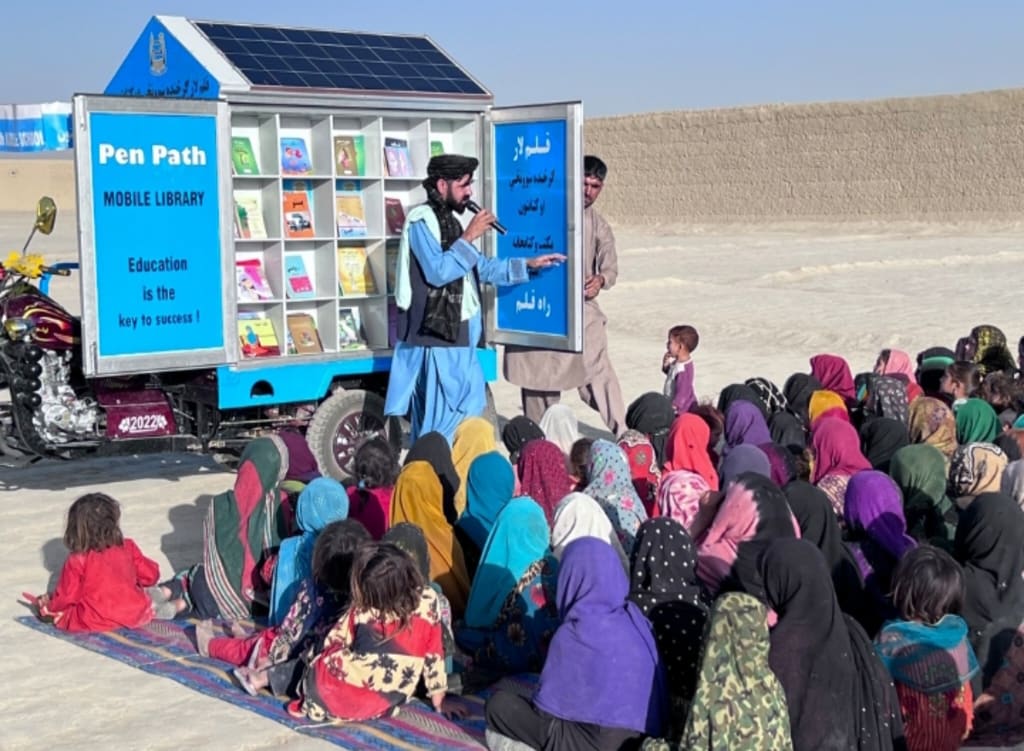
Nazia had always walked home quickly.
Not because she was in a rush—but because she didn’t want to see anyone.
She lived on a quiet street in the edge of the city, where houses stood close but hearts stayed distant. Neighbors didn’t know each other’s names. Doors opened and closed in silence. There were no children playing in the alleys, no greetings over fences. Just cement, steel, and silence.
And Nazia liked it that way—or so she thought.
After her husband died during the pandemic and her daughter moved abroad for school, she found herself alone in a three-room home filled with memories that spoke louder than people ever had. Her days blurred together. Tea. Prayer. Silence. Night.
Until one morning, something shifted.
She was sweeping her front step when she heard a soft cough. An old man—thin, hunched, and trembling—was struggling to carry a bag of vegetables up the hill. Without thinking, Nazia stepped down, took one handle of the bag, and walked beside him.
It took five minutes. Neither said much.
But when they reached his door, he turned to her, tears in his eyes, and whispered, “You’re the first person who’s helped me in two years.”
---
> “Too often we underestimate the power of a touch, a smile, a kind word…” — Leo Buscaglia
---
That night, Nazia couldn’t sleep.
She kept thinking about the man—Karim—and all the people like him. The widows. The elders. The single mothers. The boys who cleaned shoes at the bazaar and never smiled.
That Friday, she made ten small bags—each with rice, lentils, and a note: “You are not forgotten.”
She didn’t sign them. Just left them outside the houses on her street.
One woman—Zarmina—found her later and said, “Did you… leave this?” Nazia blushed, nodded, and braced for a strange reaction.
But Zarmina smiled, then sat beside her. “I thought no one here cared anymore. Thank you.”
From that one bag came a tea invitation. From that tea came a conversation. From that conversation came a plan.
---
They called it The Quiet Circle.
Every Friday after prayer, they would gather in Nazia’s courtyard. At first, it was five women. Then six. Then ten. Some were widows. Some were teachers. One was a midwife who hadn’t attended a birth in years. Another, a teenage girl who had tried to take her own life last winter.
They didn’t come to talk politics. Or gossip.
They came to listen.
And care.
Each week, they would share a story. One woman spoke of her late son. Another, of a broken engagement. Someone else, of living with chronic pain. They cried. They laughed. They shared tea. Sometimes, they just sat in silence, holding each other’s hands.
---
> “True community requires commitment and openness. It is a willingness to extend yourself to know the other.” — David Spangler
Then one day, Zarmina brought a neighbor’s child—Rahim, age nine.
His mother had left. His father worked long hours. The boy barely spoke.
“We need to do something for the children,” someone said.
So they started a Saturday reading class.
A retired teacher offered her time. A teenager made flyers. Another neighbor lent chairs.
Three children came the first week.
Fifteen came the next.
Then, something else happened. People started knocking.
“I heard you help children—can I volunteer?”
“I bake bread—can I send some for the kids?”
“I play the rubab—can I come play for them?”
---
> “The best way to find yourself is to lose yourself in the service of others.” — Mahatma Gandhi
---
Within six months, what was once a forgotten street had become a network.
They planted a small garden for the community. Started a fund to buy school uniforms. Created a women’s support line for domestic abuse. A student helped digitize stories from elders. The midwife began teaching girls about their health.
No one called it an organization. No one got paid. There were no banners, slogans, or hashtags.
Just love.
Pure, stubborn, daily love.
---
One snowy evening, a journalist visited. He had heard rumors about “The Street That Found Its Soul.” He asked Nazia how it started.
She smiled and said, “With a cough. And a heavy bag.”
He blinked, confused.
And she explained.
“It started when I decided to see someone. Not walk past them. Not judge them. Just see them. And help.”
---
> “There is no power for change greater than a community discovering what it cares about.” — Margaret Wheatley
---
That story was shared online. The post went viral. But the women didn’t care about fame.
They cared that Karim, the old man, now taught chess to boys in the park.
They cared that Rahim was reading books and had friends.
They cared that the alley had murals, laughter, light.
And Nazia? She was no longer afraid to walk slowly.
Because every step brought a greeting.
A wave. A voice.
And sometimes, a child running up to say, “Aunty, come see what we painted today!”
---
Why This Story Still Matters
In a world that rushes toward productivity, screens, and self-interest, this small street in Kabul reminds us of a profound truth:
We do not need much to change the world.
We just need to care.
Start with a smile. A bag of lentils. A listening ear. And everything will follow.
Because while you cannot fix the world alone, you can fix one person’s loneliness. And that might be all the world needed.
About the Creator
Keep reading
More stories from Abdulmusawer and writers in Motivation and other communities.
Change Your Mind, Change Your Life
Motivation: The Key to Unlocking Your Full Potential Motivation is the invisible and powerful force that drives us to pursue our dreams, achieve our goals, and overcome the many obstacles that life puts in our way. Whether you want to excel in your career, improve your physical or mental health, learn a new skill, or simply complete everyday tasks, motivation is the vital spark that sets everything in motion and keeps you moving forward. Yet, many people struggle to find or maintain motivation, especially when faced with setbacks, boredom, or uncertainty. Understanding what motivation really is, why it fluctuates, and how to harness it effectively can transform your life in amazing ways.
By Abdulmusawer9 months ago in Motivation
The Joy Of Sharing
Sharing Your Facebook Friend's Vocal Stories Yesterday I got a Facebook notification that my name had been mentioned, so I went to check up on it and was shocked in the most beautiful way by what was said about me as Lena Beana shared one of my stories. It was one of my fiction stories that you can read here:
By Mike Singleton 💜 Mikeydred 6 days ago in Motivation




Comments (1)
wow