
Imran Khan: From Cricket Legend to Nation’s Leader
The Journey of a Sportsman, Philanthropist, and Prime Minister

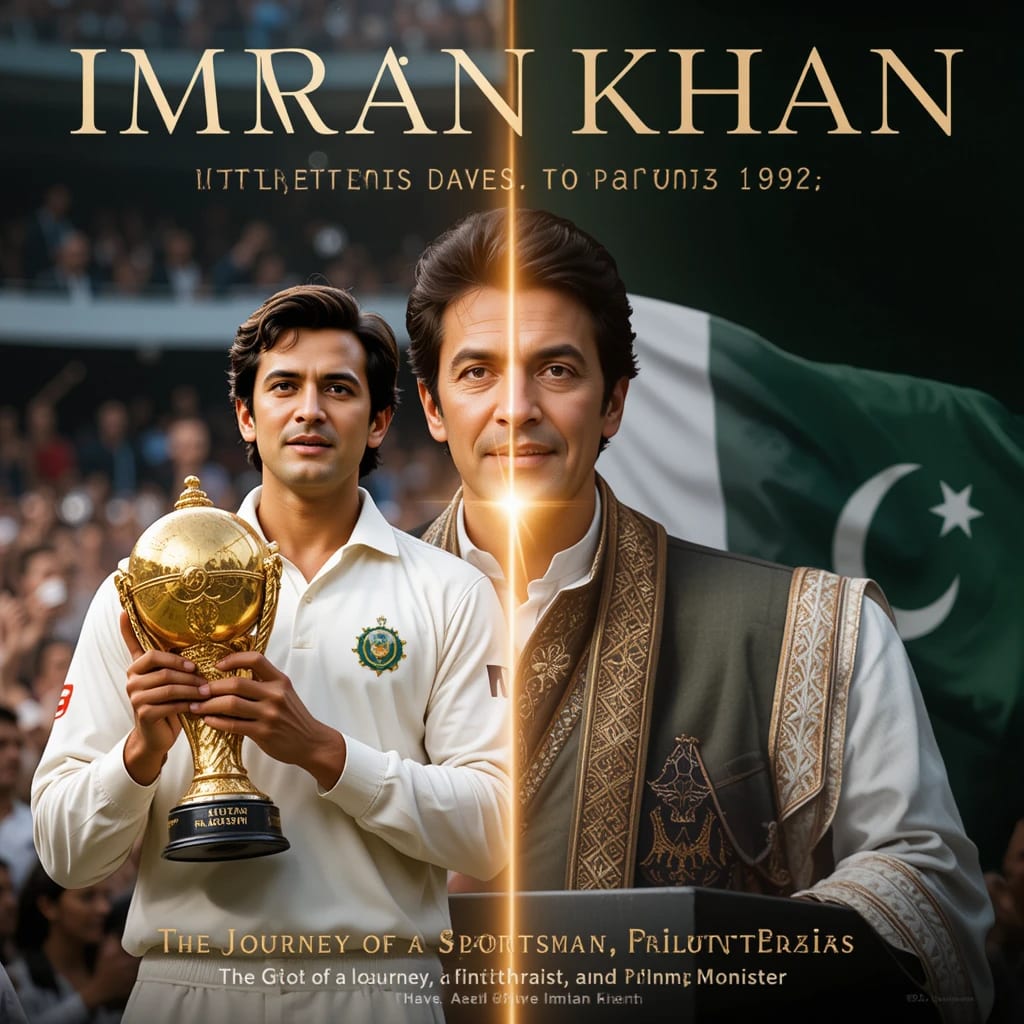
Imran Ahmed Khan Niazi’s life is a tale of determination, resilience, and transformation. Born on October 5, 1952, in Lahore, Pakistan, he grew up in a family that valued education and discipline. His father, Ikramullah Khan Niazi, was a civil engineer, and his mother, Shaukat Khanum, instilled in him the values of compassion and strength. From an early age, Imran showed a unique blend of physical vigor and a restless spirit that hinted at the extraordinary path his life would take.
The Early Years and Love for Cricket
Imran’s childhood was filled with energy and adventure. He studied at Aitchison College in Lahore, where his love for cricket began to shine. Later, he moved to England for higher studies at the Royal Grammar School, Worcester, and then at Keble College, Oxford, where he studied philosophy, politics, and economics. Cricket was never far from him during these years; in fact, it became the foundation of his global recognition.
His tall frame, determination, and fierce bowling action soon earned him a place in the Pakistan national cricket team at just 18 years old. The young Imran was raw but filled with potential. Over the years, he polished his skills, developing into one of the finest all-rounders of his generation. His charisma, discipline, and natural leadership made him a central figure in Pakistan cricket.
The Cricketing Glory
The highlight of Imran Khan’s sporting career came in 1992, when he led Pakistan to its first-ever Cricket World Cup victory. As captain, his leadership was tested during the tournament. The team faced several setbacks, but Imran’s belief never wavered. He famously urged his players to fight like "cornered tigers," and his words lit a fire in the team. In the final against England, Imran played a pivotal role, scoring crucial runs and guiding the team to glory.
The 1992 victory was not just a sporting triumph; it was a moment of national pride for Pakistan. Imran Khan became a household name, celebrated as a hero who had lifted the morale of an entire nation. His career as a cricketer spanned over two decades, during which he played 88 Test matches and 175 One-Day Internationals, scoring runs and taking wickets that cemented his legacy as one of the greatest all-rounders in cricket history.
From Sportsman to Philanthropist
After retiring from cricket, Imran Khan could have enjoyed a life of comfort and fame. Instead, he chose a path of service. In 1985, his mother, Shaukat Khanum, passed away due to cancer, an event that deeply affected him. Imran decided to honor her memory by building Pakistan’s first state-of-the-art cancer hospital.
The idea was met with skepticism at first—many thought it was impossible. Yet, Imran’s determination turned doubt into belief. He raised funds from people across Pakistan and abroad, even going door to door for donations. In 1994, the Shaukat Khanum Memorial Cancer Hospital and Research Centre opened its doors in Lahore, offering free treatment to thousands of patients who could not afford medical care. Later, similar hospitals were established in Peshawar and Karachi, further expanding his mission.
Through this project, Imran Khan earned respect as a philanthropist who turned personal tragedy into a beacon of hope for countless families.
The Political Journey
The 1990s also marked the beginning of Imran’s political career. In 1996, he founded Pakistan Tehreek-e-Insaf (PTI), a party built on the vision of justice, accountability, and welfare. The early years of PTI were difficult; the party struggled to win seats, and many dismissed Imran as an inexperienced dreamer. However, he refused to give up.
Year after year, his persistence and clear stance against corruption won him loyal supporters, particularly among the youth. His rallies attracted large crowds, and his slogan of creating a “Naya Pakistan” (New Pakistan) resonated deeply with the people.
Finally, after years of struggle, Imran Khan’s party achieved a historic victory in the 2018 general elections. He became the 22nd Prime Minister of Pakistan, fulfilling a dream that had once seemed distant.
As Prime Minister
Imran Khan’s tenure as Prime Minister was marked by both achievements and challenges. He focused on social welfare programs, such as the Ehsaas Program for poverty alleviation, and launched the “Ten Billion Tree Tsunami” project to combat climate change. Internationally, he advocated for peace, particularly highlighting the Kashmir issue on global platforms like the United Nations.
However, his government also faced criticism over economic hardships, inflation, and political polarization. Despite the controversies, Imran Khan’s leadership marked a significant chapter in Pakistan’s history.
Legacy of a Fighter
Whether as a cricketer, philanthropist, or politician, Imran Khan’s life is defined by his resilience and belief in struggle. He once said, “The more you challenge yourself, the more you grow.” His journey reflects that principle—rising from a young cricketer in Lahore to a global sports icon, building hospitals for the poor, and leading a nation as Prime Minister.
Imran Khan remains a symbol of determination, a man who never gave up on his dreams, no matter how impossible they seemed. His story continues to inspire millions—not just in Pakistan, but across the world—reminding us that with faith, persistence, and courage, one can transform both personal destiny and the fate of a nation.
About the Creator
Keep reading
More stories from Saqib Ullah and writers in Motivation and other communities.
I Entered the New Year With Unfinished Duas
The Night Between Two Years The world celebrated loudly that night. Fireworks cracked the sky open, laughter spilled from windows, and countdowns echoed through glowing screens. But in my room, the only sound was silence—heavy, patient, and familiar.
By Saqib Ullah10 days ago in Motivation
Looking back: 2025 was a beast
It's difficult to know how to start this. I've suggested that it's been a tough one from my title and in many ways, it has; however, there is an argument that it's not been that extraordinary at all, merely this wonderful thing we call "life" with all its climaxes and pitfalls.
By Rachel Deeming27 days ago in Motivation
Wild Card Weekend Recap: What Happens Now?
I think I figured out why I love Wild Card Weekend so much. It's because it's the first playoff anything of the calendar year. The NFL season starts in the fall, and once upon a time, the champion was crowned either on or slightly before New Year's. The evolution of the NFL schedule has resulted in the playoffs starting just into the New Year, and currently, the final week of the season falls on the first weekend of the New Year, with Wild Card Weekend coming a week after that. So yes, chronologically, the NFL's Wild Card Weekend serves as the first playoff anything of the calendar year.
By Clyde E. Dawkins6 days ago in Unbalanced




Comments
There are no comments for this story
Be the first to respond and start the conversation.