
How to Pitch Your Idea to Investors
How to Captivate Investors with a Powerful Pitch
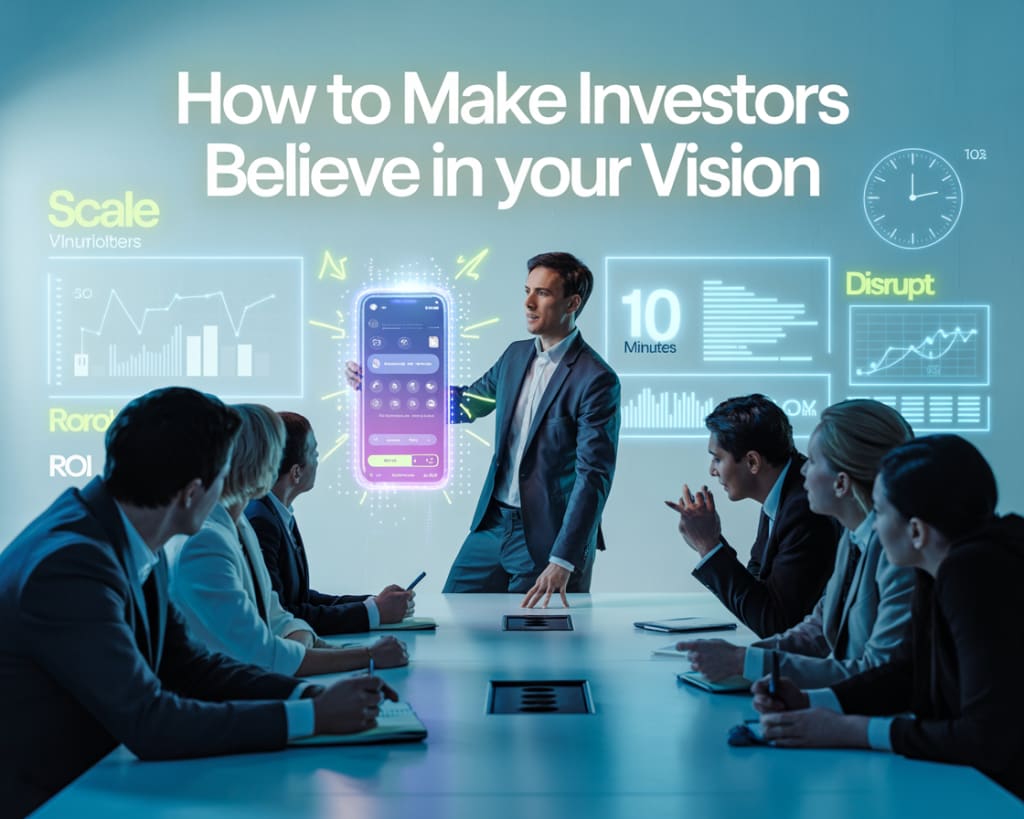
Jason Kim stood just outside the glass doors of the Blue Horizon Ventures conference room, his pitch deck clutched in his hands, slightly damp with sweat. At 27, he had left a comfortable job in a tech firm to build NeuroStep, a smart insole that analyzed walking patterns to detect early signs of neurological disorders.
He had one shot. Fifteen minutes with a panel of investors. Either they would see the vision or it would all fall flat.
But Jason knew this: ideas are everywhere. What separates dreams from funded startups is not just brilliance—it's clarity, credibility, and connection.
The Vision
Six months ago, Jason had watched his father struggle with undiagnosed Parkinson’s. The signs had been there—subtle changes in gait, balance issues—but no one caught them until it was too late. The idea for NeuroStep was born not in a lab, but on the hospital floor, while Jason waited during yet another round of scans.
He partnered with a former colleague, Priya Singh, a biomechanics expert, and together they developed a prototype that could analyze foot pressure and motion to detect micro-changes often invisible to the naked eye.
They had tested it with 50 users and validated their model with early clinical backing. But without capital, they couldn’t scale, market, or meet regulatory benchmarks. Jason knew what they had was valuable. Now he had to make others believe it too.
The Pitch
As he entered the room, five investors looked up. Some nodded, others checked their tablets. The lead, Angela Mendes, gestured for him to begin.
“Thank you for this opportunity,” Jason began. “Today, I want to show you how a simple step can change the future of neurological healthcare.”
The screen lit up behind him as he launched into his story. But unlike other pitches that started with graphs or product demos, Jason opened with emotion.
He talked about his father.
He talked about missed signs, delayed diagnoses, and how NeuroStep could have helped.
He paused. “What if every step we take could become a signal—an early warning system?”
Then came the numbers.
“There are over 10 million people worldwide living with Parkinson’s disease. Early detection can delay progression, reduce healthcare costs, and improve quality of life. Yet current diagnostic tools are expensive and often come too late.”
He clicked to a slide showing their product—sleek insoles, data dashboards, and testimonials from early users.
“We’re not just creating insoles. We’re building a data-driven preventative tool. One that integrates seamlessly into daily life.”
He outlined the business model: B2B2C sales to clinics, partnerships with insurance companies, and a direct-to-consumer subscription app with personalized insights.
“We’ve already secured a letter of intent from a regional health provider and a leading university is piloting our product with neurology patients.”
The Questions
Angela leaned forward. “Your product is promising. But wearable health tech is a crowded space. What makes you different?”
Jason nodded. “We’re focused on passive diagnostics, not fitness or step-counting. Our edge is in the algorithms we’ve developed, specifically tuned for neuromuscular patterns. We’re already in talks to patent our motion recognition framework.”
Another investor chimed in. “What’s your ask?”
Jason didn’t hesitate. “We’re seeking $1.2 million to finalize clinical trials, build our second-gen prototype, and expand our development team. We project a 24-month runway with a break-even point in year three.”
He flipped to a slide showing their burn rate, go-to-market timeline, and projected revenue. But he didn’t linger.
“More than your investment, we want your partnership. We know the science. We’re looking for strategic minds to help scale it responsibly.”
The Turnaround
The room fell quiet for a moment. Investors scribbled notes. Angela looked at her colleagues. Then she smiled.
“This is one of the most compelling pitches we’ve heard this quarter. It’s clear you’re not just selling a product. You’re solving a real, painful problem.”
They asked for a demo. Jason pulled out the app, showed real-time gait analysis from the insole, and even shared a 3D visualization of how subtle tremors evolved over time.
As the meeting wrapped, Angela said, “We’ll be in touch within a week.”
Jason stepped out, unsure of what would happen next. But he knew he had done what he came to do: translate vision into value.
The Outcome
Three days later, the call came. Blue Horizon Ventures was in. They would lead the round and help Jason connect with regulatory advisors and healthcare networks.
Funding came. So did the hires. Clinical trials expanded. And within a year, NeuroStep was FDA-cleared for early screening in neurology clinics across the U.S.
But Jason never forgot that first pitch.
He learned that capturing investor interest wasn’t about flashy slides or buzzwords. It was about:
Telling a human story.
Backing it with data.
Being honest about risks.
And showing a clear path from today’s pain to tomorrow’s possibility.
The Lesson
Pitching isn’t just about raising money. It’s about alignment—between vision and value, passion and practicality. When those come together in the right room, the impossible becomes investable.
Jason once stood on the edge of hope with nothing but a prototype and a story. Now, he was building a company that could change lives—one step at a time.
About the Creator
Keep reading
More stories from Ikram Ullah and writers in Motivation and other communities.
Building a Brand vs. Building a Business
Starting a company is exhilarating. There’s the thrill of creating a product, signing your first customers, and watching your vision come to life. But along the way, many entrepreneurs hit a fundamental crossroads: Should I focus on building a business or building a brand?
By Ikram Ullah10 months ago in Motivation
Stop Drifting: How to Decided What You Actually Want
A surprising number of people move through life without clear direction. They work hard. They stay busy. They respond to responsibilities and opportunities as they appear. From the outside, it might look like progress.
By Stacy Valentine2 days ago in Motivation
The Forsyth House Fire
Since 1851, Forsyth House has stood on the corner of Union Street and Gordon Street in the heart of Glasgow. Its iconic, or was... because on Sunday 8th of March, 2026, a fire broke out in a small, seemingly un-named shop in the building and tore all that history down. As I write, the rubble is still unsettled and the street is still blocked off. Central Station is quiet on the upper level, and around 30 small businesses have quite literally gone up in smoke.
By S. A. Crawford2 days ago in The Swamp




Comments
There are no comments for this story
Be the first to respond and start the conversation.