
How to Convert Bad Habits into Good Habits
Break the Chains of Negativity and Master the Science of Habit Transformation

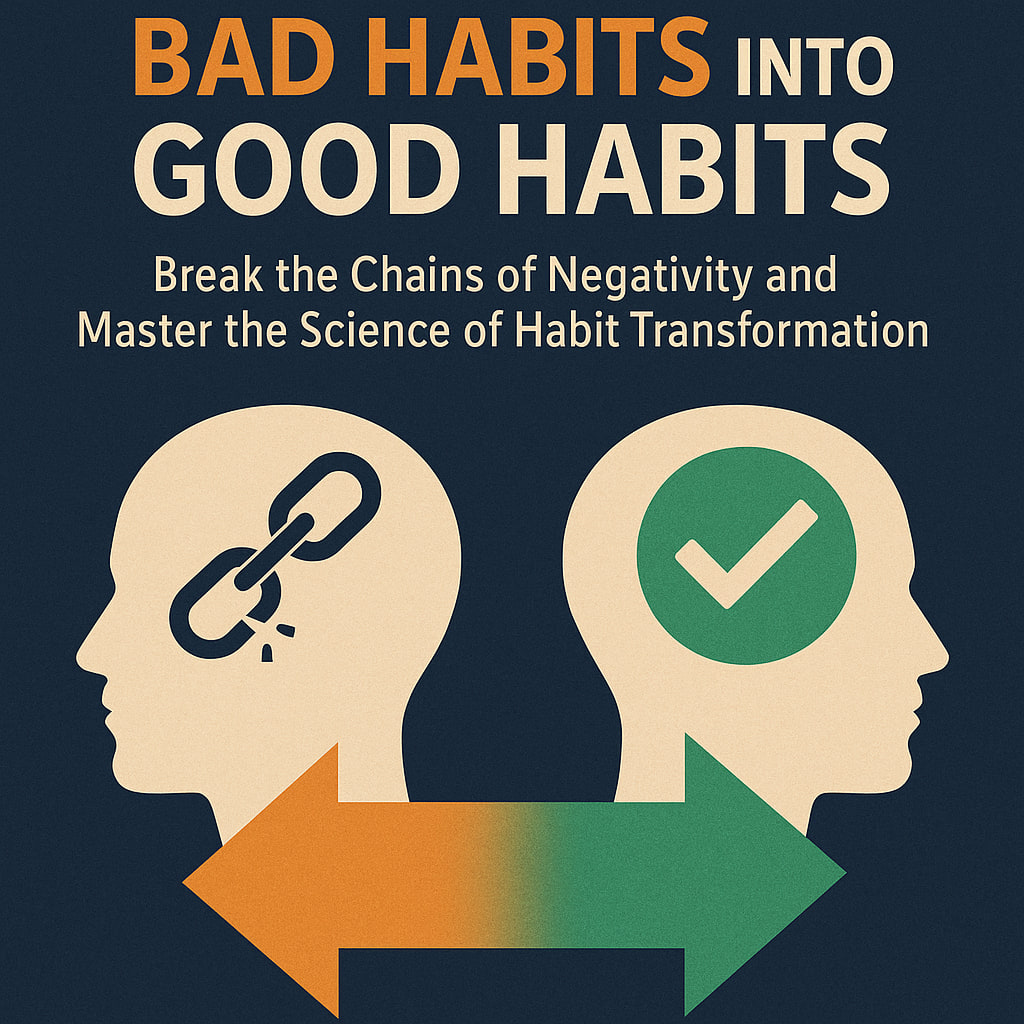
Habits are the invisible architecture of daily life. From brushing your teeth to scrolling endlessly on social media, habits define who you are and how you function. While good habits lead to productivity and well-being, bad habits often sneak in like uninvited guests, refusing to leave. But what if you could turn those negative patterns into positive rituals that serve your goals and dreams?
Understanding the psychology behind habit formation is the first step in conquering self-sabotaging behaviors. Our minds are wired for routine, but the brain doesn’t distinguish between a good or bad habit—it just seeks efficiency. That’s why breaking bad habits isn’t simply about willpower. It’s about rewiring your brain, one behavior at a time.
The transformation from a bad habit to a good one doesn’t require a superhuman effort. It starts with awareness. Think of your worst habit—maybe it’s procrastination, excessive phone use, or unhealthy snacking. Whatever it is, acknowledge it without guilt. Awareness is the gateway to change because you cannot fix what you don’t recognize.
Once you've identified the habit, examine its triggers. Habits are usually part of a loop: cue → routine → reward. Let’s say you grab your phone every time you feel bored (the cue). You scroll for twenty minutes (the routine) and feel momentarily entertained (the reward). If you want to change that behavior, you must alter the loop—ideally by replacing the routine with a healthier one.
Let’s walk through a fictional but relatable story. Meet Sara, a 27-year-old office worker who struggles with the habit of mindless eating. Every evening after work, she plops on the couch and binges on chips while watching Netflix. She knows it’s hurting her health and self-esteem but feels stuck in a cycle. One day, she decides to document her evening rituals to discover the deeper issue.
She notices that stress from work is her primary cue. Eating junk food becomes her way to unwind. But what if she swapped chips with a healthy smoothie and replaced Netflix with a short evening walk while listening to music? Over time, her brain would still associate stress relief with reward—but through a new and healthier channel.
Small changes create big results. The key is consistency over intensity. Instead of going cold turkey, which often leads to relapse, introduce small, sustainable changes. If you're a chronic snooze-button hitter, try placing your alarm across the room so you physically have to get up. These tiny shifts make your environment work for you.
Environment plays a massive role in habit formation. You are a product of your surroundings, and your space either fuels or frustrates your progress. If you're trying to reduce screen time, remove distracting apps from your home screen or use app blockers. If you want to read more books, keep one next to your bed instead of your phone.
Another crucial element is habit stacking. This method involves pairing a new habit with an existing one. For example, if you already make coffee each morning, use that time to practice affirmations or stretch. By piggybacking on an established behavior, the new habit becomes more natural and less forced.
Sara took this approach to heart. Since she already listened to music while commuting, she added a five-minute meditation at the end of each ride. This routine helped her arrive home calmer, reducing her stress-induced cravings. With time, she began to associate homecoming not with snacking, but with serenity and mindfulness.
Positive reinforcement can accelerate this transformation. Celebrate small wins. Each day you replace a bad habit with a good one, reward yourself—whether it's a compliment, a treat, or just a mental pat on the back. The brain thrives on rewards, so don’t underestimate their power in maintaining momentum.
One of the most underrated tools in habit conversion is accountability. Share your goal with a trusted friend or join a community with similar aspirations. Knowing that someone is watching your progress—or cheering for it—can dramatically improve your chances of success. We are social beings, and support systems can be a game-changer.
Don't fear setbacks; expect them. Progress is never linear. There will be days when you slip into old patterns. The important thing is not to let a single bad day define your journey. Think progress, not perfection. The real magic lies in the bounce-back—the resilience to begin again, stronger and wiser.
Journaling can help keep track of your transformation. Write down what triggers your habits, what changes you're making, and how you feel each day. Over time, your journal becomes a mirror reflecting not just your behavior, but your growth and mindset shifts.
Let’s revisit Sara. After three months, her evening routine is unrecognizable. Instead of chips, she opts for roasted nuts or yogurt. Instead of Netflix marathons, she walks her dog and listens to her favorite podcast. She’s lost ten pounds, gained confidence, and—most importantly—realized she has control over her choices.
What made Sara’s journey successful? It wasn’t a miracle diet or strict rules. It was a strategic, science-backed shift in behavior supported by environmental change, mindfulness, and consistency. Her transformation shows that anyone, regardless of age or background, can rewire their habits for the better.
Another fictional example is Malik, a college student addicted to gaming. He would skip assignments and sleep at odd hours, sabotaging his academic performance. One day, he decided to limit gaming to weekends only. He uninstalled all games from his weekdays’ laptop profile and replaced his evening gaming session with a one-hour gym workout. At first, it felt difficult. But after two weeks, he found his sleep improved, his energy increased, and his grades rose. Now, gaming is a reward, not a distraction.
Transforming bad habits into good ones doesn’t just improve your daily routine—it rewrites your identity. You’re no longer someone who “can’t focus” or “eats too much junk.” You become someone who is focused, disciplined, and aligned with long-term goals. That shift in identity is the true reward of habit transformation.
To make this change last, regularly revisit your why. Why do you want to stop this habit? Why does it matter to your future self? The stronger your reason, the greater your resilience. Post your “why” where you can see it—on your mirror, desk, or phone screen. Let it anchor you during tough days.
Building good habits is a lifelong process. You won’t get everything right at once, but every intentional action brings you closer to the person you want to be. It’s not about erasing who you are but upgrading who you’re becoming. That’s the beauty of habit change—it empowers you to evolve.
The science of neuroplasticity tells us the brain can change throughout life. That means it’s never too late to build a better routine, and no habit is too deeply rooted to change. The journey may take time, but with purpose, persistence, and a plan, you’ll get there.
As Sara and Malik’s stories reveal, converting bad habits into good ones is possible when you understand the root cause, break down the process, and replace it with purpose-driven actions. Whether it's improving sleep, focusing on studies, or eating healthier, the formula remains the same: identify, replace, repeat.
Your future self is shaped by what you do daily. Your habits are either chains or wings—they either trap you or free you. Choose wisely. Because changing one habit can change your whole life.
About the Creator
Lana Rosee
🎤 Passionate storyteller & voice of raw emotion. From thoughts to tales, I bring words to life. 💫
Love my content? Hit Subscribe & support the journey! ❤️✨
Keep reading
More stories from Lana Rosee and writers in Motivation and other communities.
Escape from Modernity
In an era dominated by fast-paced living, buzzing notifications, artificial intelligence, and an endless race toward technological advancement, many individuals are yearning for a deep and meaningful escape from modernity. This growing sentiment is not a rebellion against progress but a longing for authenticity, peace, and human connection in a world that feels increasingly mechanical. The concept of escaping modernity has become more than a romantic notion—it's now a real psychological and social need.
By Lana Rosee8 months ago in Motivation
From Field to Table: How Venison Donations Support Families in Need
Each year, many families in Huntsville struggle to keep enough food on the table. Rising costs and unexpected hardships make it difficult for some households to meet basic needs. At the same time, hunters across the region harvest deer during the season. When these two worlds connect, something powerful happens. Through programs that encourage donating venison, hunters can help provide healthy meals to people who need them most. One local partner making a real difference is Manna House in Huntsville.
By Joe Sottolano3 days ago in Motivation


Comments
There are no comments for this story
Be the first to respond and start the conversation.