
How I Built Real Businesses by Solving Real Problems
My Experience with Seafood, AI, and Creative Work

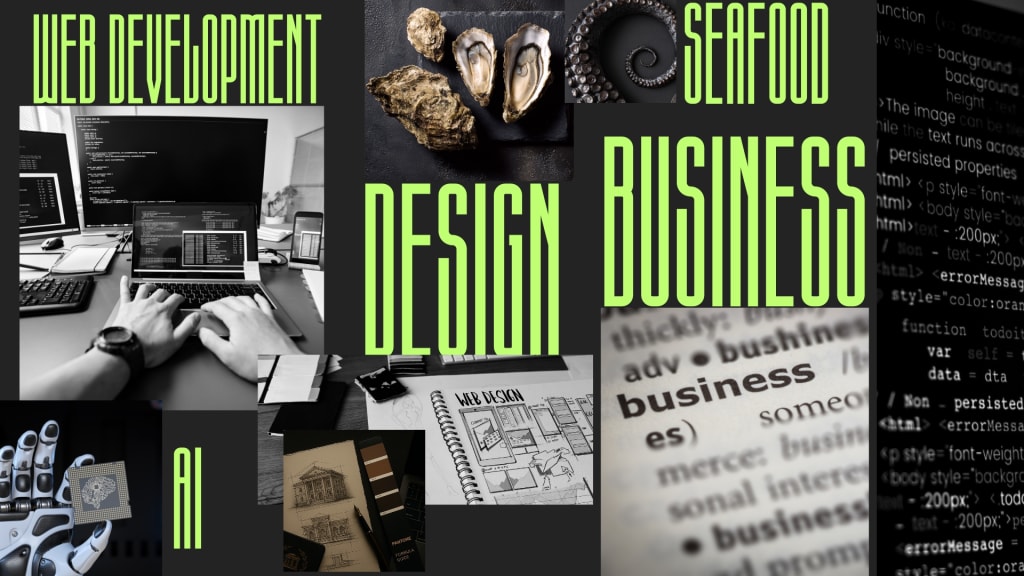
Business development sounds like a buzzword, but for me, it has always meant just one thing: fixing things that don’t work and making sure they stay fixed. None of the projects I’ve worked on started with a pitch deck. They started with actual problems that someone had to solve — often me.
I didn’t read a book to learn how to build a system. I got my hands dirty, made mistakes, and kept going until things worked. That’s been true across three very different projects:
• Bringing live seafood to restaurants in a landlocked country
• Helping teams use AI tools that actually help people do their jobs
• Creating content for brands in a way that feels both useful and personal
They don’t look related, but my mindset has been the same each time: understand what’s broken or missing, think through every part, then build something people can count on.

Bringing Live Seafood to Restaurants in a Country Without a Coastline
If you’ve ever tried to keep a crab alive more than a few hours outside its natural habitat, you’ll understand how tricky this was. Armenia is a landlocked country. Fresh seafood wasn’t a thing — everything came frozen.
But chefs wanted more. So I asked: could we bring live seafood into the country, and actually keep it alive long enough to serve?
It wasn’t about fancy tech. It was about thinking clearly.
The first thing I changed was the room.
Most setups I’d seen cooled only the water in the tanks. But that made no sense. When you open a box of chilled seafood into a warm room, the animals get shocked — it’s like jumping from a fridge into a sauna.
So I flipped the model. I insulated the entire room and kept the air at the same cold temperature as the water: 2 to 8°C. That alone made a huge difference.
Then came the water.
Regular tap water was useless. I had to clean it, filter it, rest it, cool it, then add salt and minerals. I didn’t rush it. The water sat for a day or two before use, which gave it time to stabilize. No sudden shifts, no surprises.
Filtering the water came next.
I used layers: one set of filters handled the biological waste, another caught debris, and a third balanced the chemistry. I added ozone, but only after testing how it would react in a closed room. I added safety layers, too — just in case.
Different animals needed different homes.
Crabs went in one area. Shellfish like mussels and oysters went in stackable trays with flowing water. Water pumps created smooth movement so nothing sat still for too long.
I didn’t use bright lights. I kept the room dark, with only a soft blue glow for orientation. The animals got the kind of environment they were used to. I even matched the food to their diets.
The result? After a lot of trial and error, the animals stayed healthy. Survival rates passed 90% after 30 days. And suddenly, high-end restaurants had access to something that had never existed here before: fresh, live seafood.

What I Learned About Using AI at Work
Once the seafood operation could run without me, I moved into something completely different: helping companies adopt simple AI tools.
A lot of people think AI means replacing workers. I never believed in that. I saw it as a way to take annoying parts of the job and make them easier — so employees could focus on what they do best.
We started by watching employees’ work process.
Not in a creepy way. We just paid attention to where they got stuck or wasted time. In one case, a worker spent over an hour a day comparing delivery paperwork by hand. Over and over.
So we built a tiny script.
It read the supplier files, checked them against what had actually arrived, and flagged anything odd. Simple. The worker then used that saved time to talk to customers and resolve problems.
The key was this: everyone had to understand what the tool did.
If it looked like a black box, people wouldn’t trust it. So we built clean dashboards, made sure the results could be explained, and never forced anyone to use something they didn’t understand.
It wasn’t about showing off with complex tech. It was about freeing up human hours and making the team feel like someone had their back.

Creative Work Can Be Systematic Too
Right now, I’m building something creative — a content studio that makes custom visuals, videos, and web designs for brands. It sounds totally different from seafood or software. But actually, it follows the same logic.
Start with a process.
Every creative project we take on goes through a clear set of steps: idea → visual sketch → lighting or animation → final output → feedback and learning. The steps are fixed, but what happens inside each one is creative.
Understand what makes visuals work.
You don’t just throw bright colors at the screen. Warm colors like gold and soft red can build trust. Blue can make people feel calm. These things matter.
Everyone on the team is part of the result.
Instead of handing work off like a relay race, the designer, writer, and campaign lead all sit on the same thread. If something changes, they all know. It sounds basic, but most agencies still don’t do this.
The numbers proved it worked.
One Amazon listing we redesigned had its click-through rate double. A reel for an interior brand got shared three times more than their average. Why? Because it didn’t feel like stock content. It felt like something made with care.
Patterns That Worked Across All Three Projects
If I had to give advice to someone starting a project — any kind of project — I’d say:
1. Pay attention to the basics. Physics, temperature, time, emotion. Whatever rules your problem, learn it first-hand.
2. Don’t copy someone else’s system. Take ideas, sure. But your solution needs to match your conditions, not someone else’s.
3. Test in real conditions. Don’t just imagine how it’ll work. Watch it. Break it. Fix it. Repeat.
4. Keep people in the loop. Whether it’s staff or customers, if they feel respected and understood, they’ll stick with you longer.
5. Don’t overcomplicate. A system should be clear enough that anyone on your team can use it without second-guessing. If it needs constant explanation, it’s not ready. Simplicity makes it stronger — and much easier to scale when the time comes.
Final Thoughts
Business development is just a fancy way of saying: I found a problem and decided to fix it. Not with hype. Not with fluff. With patience, clear thinking, and systems that make sense.
Whether you're shipping seafood, writing code, or designing a banner — if the person using your work feels supported by it, you've built something valuable. That’s what I care about.
And I think that’s what good business looks like.
About the Creator
Aram Minasyan
I’m an entrepreneur with a Master’s in Economics, an MBA, and a PhD in Finance. I’ve built companies in seafood logistics, AI-driven automation, and digital media. I write about business development and innovation, things that actually work
Keep reading
More stories from writers in Motivation and other communities.



Comments