
Finding Peace Amidst the Storm"
Transforming Stress into Strength"
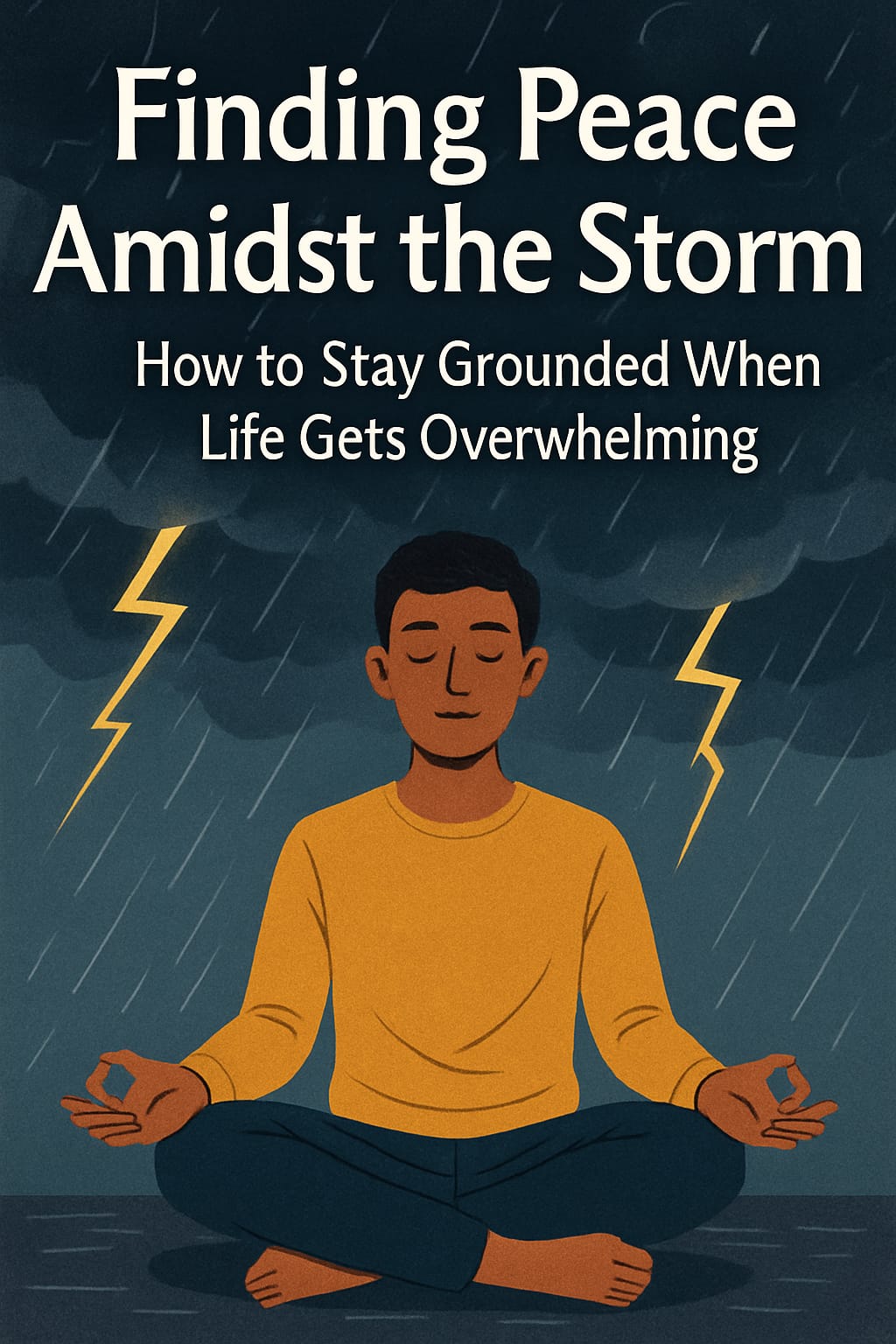
It was a quiet morning when Arman stepped out onto the porch, the sky above heavy with dark clouds. He could smell the rain in the air. The storm was coming — not just the one in the sky, but the one that had been brewing in his life for months.
Arman had always been the kind of person who kept pushing through. Deadlines, responsibilities, family expectations — he handled them all like a soldier. But recently, everything seemed to collide at once. He had lost his job, his savings were drying up, and the constant tension at home left him sleepless. His mind was a battlefield, and he didn’t know how to escape it.
One rainy evening, as the storm raged outside, Arman found himself staring at the ceiling in the dark. The wind howled like his thoughts — wild and out of control. He knew he couldn’t live like this anymore. He needed to find peace, or he would fall apart.
The next morning, despite the drizzle, he took a walk to the nearby park — a quiet place where he used to go as a child. There, on a damp bench under a swaying tree, sat an old man in a simple white kurta, his eyes closed, his hands resting gently on his knees. Arman watched him for a while, curious about the calm on his face while the wind around them shook the trees.
Eventually, Arman sat beside him.
“You seem peaceful,” he said. “Don’t storms bother you?”
The old man opened his eyes and smiled. “Storms are just noise, my son. Peace comes from knowing you are not the noise.”
Arman frowned. “But what if the noise is inside you?”
“Then you must learn to quiet it.”
They sat in silence for a while. Then the man handed him a small note that read: ‘Breathe. Accept. Release. Grow.’
“What is this?” Arman asked.
“A reminder,” the old man replied. “You cannot stop the rain, but you can stop yourself from drowning in it. That night, Arman tried something different. Instead of fighting his thoughts, he sat quietly, closed his eyes, and focused on his breath — in and out, slowly. His mind screamed, but he didn’t resist it. He just listened, breathed, and let the storm pass.
Days turned into weeks. Every morning, he returned to that park. Sometimes he spoke with the old man, other times he simply meditated on his own. He began to understand that life would always have storms — loss, fear, failure — but peace wasn’t the absence of problems. It was the ability to face them calmly.
He started keeping a journal. He wrote down every worry, then beside it, he wrote what he could control. The rest, he promised to release.
He began eating better, sleeping more, and saying “no” to things that drained him. Slowly, clarity returned. With a calmer mind, he updated his resume, applied for new jobs, and even started freelancing in the meantime.
One day, Arman looked in the mirror and saw something different — not a man without problems, but a man who had learned how to live with them without letting them define him.
Months later, he got a new job — not the highest paying, but one that gave him peace and balance. At home, things improved too. His calmness became a light for others. His younger brother, once angry and lost, started joining him in morning meditation.
Arman never forgot the old man in the park. One morning, he returned, hoping to thank him — but the bench was empty. Instead, pinned to the tree above, was a note in the same handwriting: “You have found your peace. Now help others find theirs.”
And he did.He started a small blog, sharing his story and tips on managing stress. He talked about breathwork, journaling, gratitude, and the power of stillness. His words touched people around the world.
The storm never really went away — life kept throwing new challenges — but Arman had changed. He no longer feared the wind or the rain. He had built his peace from within.
---
Moral of the Story: We cannot always control the storms that life brings, but we can control how we respond to them. Peace is not found by running away — it's found by going within.
About the Creator
Keep reading
More stories from Muhammad Imran and writers in Motivation and other communities.
"Taught with Care"
I was never taught with loud words or heavy books. I was taught with hands that never let go, with eyes that saw me even when I couldn’t see myself, and with a heart that beat louder for me than for its own self. I was taught with care—by my mother.
By Muhammad Imran9 months ago in Motivation
Looking back: 2025 was a beast
It's difficult to know how to start this. I've suggested that it's been a tough one from my title and in many ways, it has; however, there is an argument that it's not been that extraordinary at all, merely this wonderful thing we call "life" with all its climaxes and pitfalls.
By Rachel Deemingabout a month ago in Motivation
Start Now, Not Tomorrow
I used to believe I had time. Time to grow. Time to change. Time to chase my dreams. Whenever life felt uncomfortable, I told myself, “I’ll start tomorrow.” Tomorrow felt safe. Tomorrow felt forgiving. Tomorrow didn’t ask anything from me except patience.
By Fazal Hadi3 days ago in Motivation


Comments
There are no comments for this story
Be the first to respond and start the conversation.