
Exploring the Heart of the Himalayas: My Journey on the Langtang Valley Trek
Lifetime authentic Experience
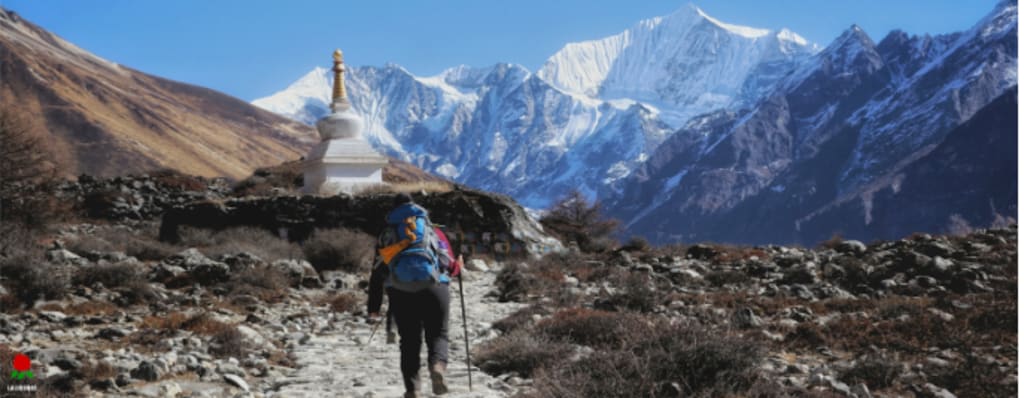
There are some places that you stumble upon not because they’re famous, but because they quietly call to you. That’s exactly how I ended up on the Langtang Valley Trek—not chasing Everest or Annapurna, but something more grounded, raw, and human. Nestled just north of Kathmandu, Langtang is often overlooked in favor of Nepal’s more popular trekking routes. But for those who have walked its trails, it holds a special kind of magic.
Let me take you there.
The Journey Begins
The adventure started with a long, bumpy jeep ride from Kathmandu to Syabrubesi—a charming village that acts as the starting point of the Langtang Valley Trek. The ride itself is an initiation of sorts. Think of winding roads, stunning river valleys, and more than a few moments of white-knuckle cliffside driving. But once you step out in Syabrubesi, the air feels cleaner, and the sense of adventure really sets in.
From here, it’s all about walking—through dense forests, across swinging suspension bridges, and up into the clouds.
Nature Unfiltered
One of the things I loved most about the Langtang Valley Trek was the sense of progression. You begin in lush subtropical forests teeming with monkeys, rhododendrons, and birdsong. Every day, as you ascend, the landscape changes. The forests thin out, the air gets crisper, and snow-capped peaks start to peek over the horizon.
By the time you reach the higher elevations, the views open up into a wide alpine valley ringed by majestic mountains—Langtang Lirung (7,227m) being the star of the show. You’re quite literally walking among giants.
And the best part? Unlike the crowded Everest Base Camp or Annapurna trails, Langtang feels spacious, peaceful, and somehow more personal. There were stretches where it was just me, my footsteps, and the distant sound of yak bells.
Tea Houses and Trail Life
Trekking in Nepal isn’t about camping out in the wild (unless you want it to be). Along the Langtang Valley Trek, you’ll find charming tea houses in every village—basic but cozy lodge where you eat, sleep, and connect with other trekkers and locals.
Each night, I’d gather around a stove with fellow hikers from around the world—some seasoned mountaineers, others first-timers—all sharing stories over plates of dal bhat (the ultimate trekking fuel). There’s a simplicity to life on the trail that makes you appreciate the small things: a hot cup of tea, a clear morning sky, a warm smile from a local child.
Cultural Connection
One of the most profound parts of this trek is the connection with the Tamang people, the ethnic group that inhabits much of the Langtang region. Their culture, which blends Tibetan Buddhism with local traditions, is rich and deeply spiritual. Prayer wheels, mani walls, and stupas dot the landscape, serving as constant reminders that you’re walking through sacred ground.
Langtang was hit hard by the 2015 earthquake, and signs of the tragedy are still visible—especially in Langtang village itself, which was almost entirely destroyed by a massive landslide. But what stands out even more than the loss is the resilience. The village has been rebuilt, and the people have moved forward, welcoming trekkers back with open hearts.
There’s a quiet strength in the people of Langtang that stays with you long after you leave.
The Summit Moment: Kyanjin Ri
The trek typically culminates in Kyanjin Gompa, a small village set at 3,870 meters, surrounded by dramatic peaks. From here, you can do an optional day hike to Kyanjin Ri, a viewpoint that sits at around 4,773 meters.
Let me tell you—if you’ve got it in you, do it.
It’s a tough climb, especially with the altitude, but the reward is worth every breathless step. Standing at the top, with the Langtang range laid out before me, I felt that rare, clear-headed awe that only comes a few times in life. No crowds, no noise—just you and the Himalayas.
How Difficult Is It?
Let’s be honest: trekking isn't a walk in the park. The Langtang Valley Trek is considered moderate—it doesn’t require technical climbing skills, but you’ll need a decent level of fitness. Daily hikes range from 5 to 7 hours, and the altitude can be a challenge for some.
But you don’t need to be a hardcore adventurer to do this. Go slow, listen to your body, and take time to acclimatize. It’s as much about the journey as the destination.
A Few Tips for Fellow Trekkers
• Best time to go: Spring (March to May) and autumn (September to November) offer the best weather and views. I went in early April and caught the rhododendrons in full bloom—unreal.
• Pack layers: The temperature swings can be wild. It’s warm when you’re moving, but freezing once the sun dips.
• Bring cash: ATMs are non-existent on the trail. Budget a little extra for snacks, hot showers, and souvenirs.
• Go with a guide (or don’t): The trail is fairly well-marked, so solo trekking is possible, but having a guide adds depth to the experience—plus it’s a great way to support the local economy.
Why Langtang?
Of all the treks I’ve done, the Langtang Valley Trek holds a special place in my heart. Maybe it’s the mix of natural beauty, cultural richness, and emotional weight. Maybe it’s the sense of discovery—of finding something slightly off the beaten path that ends up meaning more than you expected.
If you're looking for a trek that’s accessible, authentic, and absolutely breathtaking, put Langtang on your list. It won’t be the loudest adventure you ever have, but it might just be the most meaningful.
About the Creator
Keep reading
More stories from digineha and writers in Motivation and other communities.
Discovering Serenity: My Journey Through the Langtang Valley Trek
When most people think of trekking in Nepal, the legendary Everest Base Camp or the scenic Annapurna Circuit often come to mind. But tucked away to the north of Kathmandu lies a hidden gem that offers unmatched beauty, cultural depth, and raw Himalayan charm without the overwhelming crowds—the Langtang Valley Trek.
By digineha11 months ago in Motivation




Comments
There are no comments for this story
Be the first to respond and start the conversation.