
Celebrating Mario Molina: His Achievements, Challenges, and Lessons for Future Generations
Nobel Prize Winner and Environmental Champion

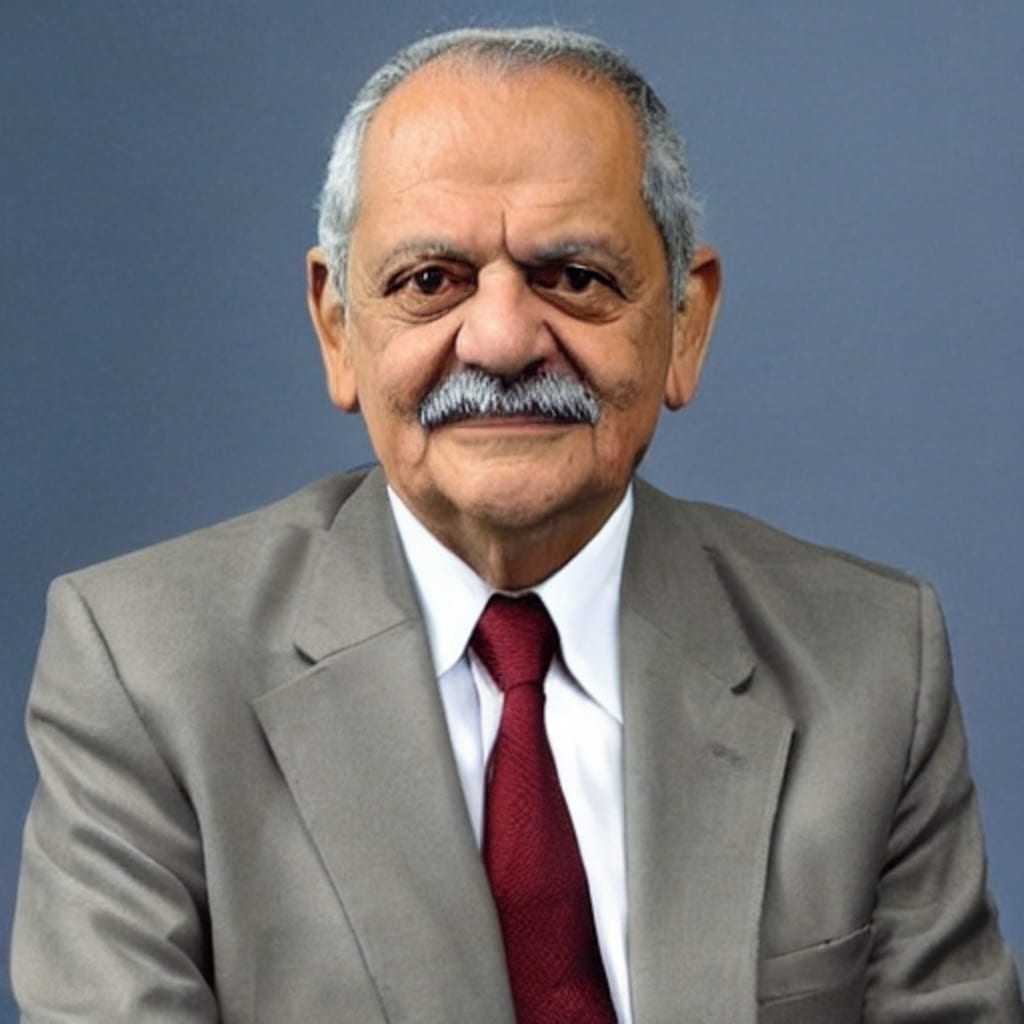
Mario Molina was a remarkable scientist who made significant contributions to our understanding of the Earth's atmosphere and the environmental impact of human activity. His groundbreaking research on the depletion of the ozone layer led to the adoption of the Montreal Protocol, an international treaty that has been credited with saving the ozone layer from further destruction.
Molina was born in Mexico City in 1943 and grew up in a family of scientists. His father was a chemist, and his mother was a physician. From an early age, Molina showed an aptitude for science, and he went on to study chemical engineering at the National Autonomous University of Mexico. After completing his undergraduate degree, he moved to Europe to pursue graduate studies, earning a Ph.D. in physical chemistry from the University of California, Berkeley.
It was during his time at Berkeley that Molina first became interested in the environmental impact of human activity. He began studying the chemistry of the Earth's atmosphere, focusing on the role of CFCs in the depletion of the ozone layer. CFCs were widely used in refrigeration, air conditioning, and other industrial applications, and Molina's research showed that they were breaking down in the upper atmosphere and releasing chlorine atoms, which were then destroying ozone molecules.
Molina's research was met with skepticism from some members of the scientific community, who argued that the concentrations of CFCs in the atmosphere were too small to have a significant impact on the ozone layer. But Molina persisted in his work, collaborating with other scientists to gather more data and refine his models. In 1974, he and his colleague F. Sherwood Rowland published a paper in the journal Nature that presented their findings on the impact of CFCs on the ozone layer.
The publication of Molina and Rowland's paper sparked a public debate about the environmental impact of CFCs, and led to increased scrutiny of the chemical industry. Molina and Rowland's work also caught the attention of policymakers, and in 1987, the Montreal Protocol was adopted by international agreement. The treaty called for the gradual phase-out of CFCs and other ozone-depleting substances, and has been widely hailed as one of the most successful environmental treaties in history.
Molina's work on the ozone layer brought him international acclaim, and in 1995 he was awarded the Nobel Prize in Chemistry, along with Rowland and Dutch chemist Paul Crutzen. The Nobel committee cited Molina and his colleagues for their "fundamental contributions to the discovery of the stratospheric ozone hole."
Despite his many achievements, Molina faced numerous challenges in his career. He had to navigate political and diplomatic hurdles in his advocacy for environmental policy, and he faced resistance from the chemical industry and other groups that opposed regulation of their products. Molina was also concerned about the impact of climate change, and he continued to advocate for policies to mitigate its effects in the years leading up to his death in 2020.
Molina's legacy teaches us many valuable lessons. First and foremost, his work reminds us of the power of scientific inquiry and the importance of pursuing research that can have real-world impacts. Molina's persistence in the face of skepticism and resistance is an inspiring example for future generations of scientists and activists.
Molina's work also underscores the importance of interdisciplinary collaboration in tackling complex environmental issues. His research drew on insights from chemistry, physics, and atmospheric science, and he worked closely with colleagues from many different fields to build a comprehensive understanding of the environmental impact of human activity.
Mario Molina was a pioneering scientist and environmentalist who dedicated his life to understanding the impact of human activity on the planet. As we celebrate his life and legacy, we can reflect on his achievements, challenges, and lessons for future generations.
- Achievements
- Challenges
Mario Molina is best known for his research on the depletion of the Earth's ozone layer. Along with F. Sherwood Rowland and Paul Crutzen, he discovered that chlorofluorocarbons (CFCs) were destroying the ozone layer, which protects us from harmful ultraviolet radiation. This groundbreaking research earned Molina and Rowland the Nobel Prize in Chemistry in 1995. Molina's work also played a crucial role in the adoption of the Montreal Protocol, an international agreement to phase out CFCs and other ozone-depleting substances.
Throughout his career, Molina faced significant challenges, including opposition from powerful industries and governments. He was frequently criticized and even threatened for his research on CFCs, which had major economic implications for the chemical industry. Molina also faced political pressure when he spoke out against the use of fossil fuels and advocated for stronger environmental regulations.
- Lessons
- Future impact
Mario Molina's life and work offer many valuable lessons for future generations. He demonstrated the importance of scientific research and innovation in addressing global environmental challenges. He also showed that courage, persistence, and a commitment to the truth are essential qualities for scientists and environmentalists. Molina's advocacy for stronger environmental policies reminds us that we all have a role to play in protecting the planet for future generations.
Molina's work has had a lasting impact on environmental policy and awareness, and his legacy will continue to inspire future generations of scientists, activists, and policymakers to work towards a more sustainable future.
In summary, Mario Molina's achievements, challenges, and lessons serve as an inspiration for us all. As we celebrate his legacy, let us honor his memory by continuing his work to protect the environment and promote sustainable development.
About the Creator
Mohamed Azharudeen
As a writer, I weave words into stories, crafting worlds to captivate readers and evoke emotions that linger long after the last page.
Keep reading
More stories from Mohamed Azharudeen and writers in Motivation and other communities.
Creating a Positive Work Environment: Strategies for Employee Well-being and Productivity
Summary: Creating a positive work environment is crucial for promoting employee well-being and maximizing productivity within organizations. This involves implementing various strategies that foster a supportive culture, prioritize work-life balance, invest in employee development, recognize achievements, and promote diversity and inclusion. By cultivating a supportive culture, organizations establish an environment where open communication, respect, and collaboration thrive, leading to increased engagement and productivity. Prioritizing work-life balance through flexible arrangements enables employees to manage personal and professional responsibilities effectively, reducing stress and enhancing job satisfaction. Investing in employee development empowers individuals to grow professionally, fostering motivation and productivity. Recognizing and rewarding achievements boosts morale and motivation, creating a culture of appreciation. Lastly, promoting workforce diversity and inclusion drives innovation and collaboration, contributing to a positive work environment. By implementing these strategies, organizations can create a workplace where employees feel valued, motivated, and empowered, resulting in enhanced well-being and productivity.
By Mohamed Azharudeen3 years ago in Motivation
The Man Who Became a Lightning Rod: The Unbelievable Life of Roy Sullivan
In the vast, unpredictable theater of the natural world, there are statistical anomalies, and then there is Roy Cleveland Sullivan. To the average person, the odds of being struck by lightning in a given year are roughly one in a million. The odds of being struck seven times? Those are calculated at approximately 1 in 100,000,000,000,000,000,000,000,000 (that’s a septillion).
By Frank Massey 2 days ago in Motivation
I Woke Up at 5 AM for 7 Days — Here’s the Honest Truth Nobody Talks About
I remember staring at the ceiling at 4:57 AM, my alarm threatening to shatter the silence of my room. Two minutes away from the most agonizing hour I had ever voluntarily committed to, my mind screamed at me: Go back to bed. Sleep is safe. Success can wait.
By Imran Pisani4 days ago in Motivation


Comments
There are no comments for this story
Be the first to respond and start the conversation.