
Barbie movie: a feminist role model or toxic capitalism?
The Spotlight Opinion

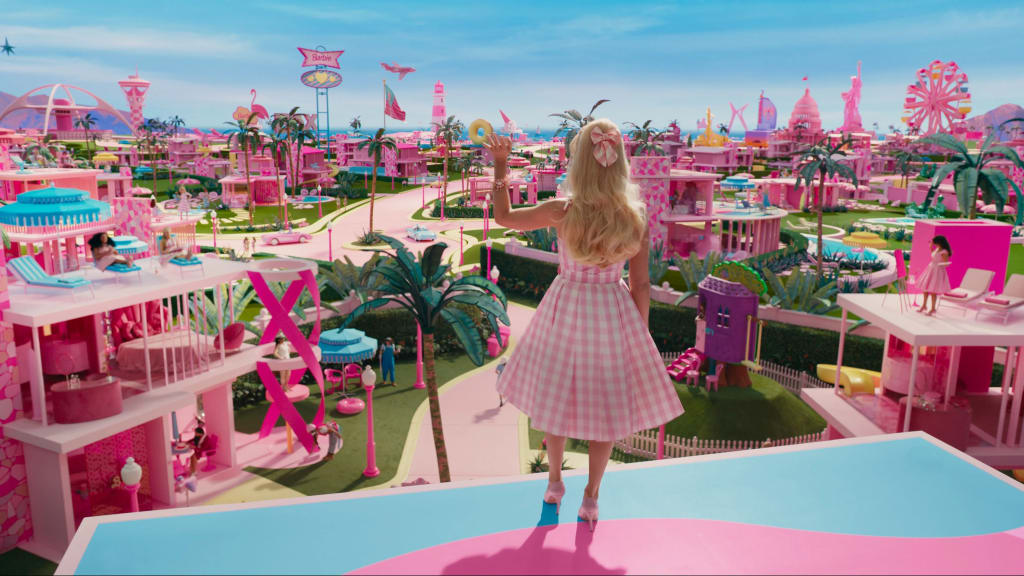
In the realm of cinema, discussions about Barbie have transcended the pink plastic world and delved into the complex realms of feminism and capitalism as the movie makes history with one billion dollars at the box office. Amidst speculations and conjectures, a fictitious narrative has emerged, painting a vivid picture of what a Barbie movie directed by Greta Gerwig could entail. But beneath the surface of this speculative tale lies a profound question: Would a Barbie movie represent a feminist role model or embody toxic capitalism?
The hypothetical narrative unfolds with Greta Gerwig at the helm, a visionary director known for her thought-provoking films. In this imaginative scenario, Barbie, the iconic doll, embarks on a journey through a kaleidoscope of worlds — from the fantastical Barbie Land to the stark reality of Earth. Margot Robbie assumes the role of Barbie, navigating through a narrative that challenges societal norms and gender roles.
The tale weaves a web of feminism and critique, as Barbie confronts the patriarchal structures of both Barbie Land and Earth. In a daring move, Ken, portrayed by Ryan Gosling, embraces a newfound ideology of male supremacy, plunging Barbie Land into turmoil. As Barbie grapples with her identity and societal expectations, she embarks on a quest to liberate her fellow Barbies from the shackles of conformity.
Through the lens of satire and speculation, the narrative takes aim at the corporate behemoth behind Barbie — Mattel. The portrayal of Mattel’s corporate hierarchy as a cabal of male executives underscores the film’s critique of capitalism and its exploitation of gender norms. The narrative dances on the delicate tightrope between subversion and complicity, highlighting the paradox of challenging societal norms within the confines of commercial interests.
The Barbie movie’s lack of diverse gender and sexual orientation representation can be noted objectively, reflecting a broader call for inclusivity in media and entertainment. The absence of such representation underscores missed opportunities for reflecting the diversity of human experiences and identities as the representation of the gay character Alan, was portrayed like a joke as if he has no other job rather than making people laugh.
Furthermore, the movie’s apparent attempt to radically alter the image of the toy, possibly driven by profit motives, is evident in its heavy commercialization.
But amidst the whimsical narrative and satirical jabs lies a fundamental question: Can Barbie transcend her status as a symbol of consumerism and embody the ideals of feminism? Or does she remain entangled in the web of toxic capitalism, perpetuating unattainable beauty standards and gender stereotypes?
As the fictitious narrative sparks conversations and debates, it serves as a mirror reflecting the complexities of contemporary society. Barbie, once a symbol of childhood innocence, emerges as a battleground for ideological struggles and cultural critiques.
In the end, whether Barbie becomes a feminist icon or a casualty of capitalism remains uncertain. But one thing is clear: the hypothetical Barbie movie directed by Greta Gerwig has ignited a dialogue that transcends the confines of fantasy, challenging us to confront the intricate intersections of gender, capitalism, and representation in popular culture.
In the end, whether Barbie becomes a feminist icon or a casualty of capitalism remains uncertain. But one thing is clear: the hypothetical Barbie movie directed by Greta Gerwig has ignited a dialogue that transcends the confines of fantasy, challenging us to confront the intricate intersections of gender, capitalism, and representation in popular culture.
In the end, whether Barbie becomes a feminist icon or a casualty of capitalism remains uncertain. But one thing is clear: the hypothetical Barbie movie directed by Greta Gerwig has ignited a dialogue that transcends the confines of fantasy, challenging us to confront the intricate intersections of gender, capitalism, and representation in popular culture.
About the Creator
The Spotlight
Spotlight on the unspoken point of view.
Keep reading
More stories from The Spotlight and writers in Motivation and other communities.
Echoes Behind the Iron Curtain: Soviet Union
History is rarely neutral. It is shaped, framed, and retold by those with the power to publish and the platforms to influence. For decades, the Western narrative around the Soviet Union has been less about balanced historical record and more about ideological victory. Through selective memory and strategic silence, the West has painted an image of the USSR as a failed, brutal experiment, erasing its scientific, social, and cultural achievements while blaming an entire state and its people for the actions of individual leaders.
By The Spotlight10 months ago in History
Hottest in the Office
Dear Rafi, You’re very distracting to work around. For the first second I saw you the other day, I thought you were some type of executive. It took a moment to realize no, you were just the new guy, dressed up for the job he wants. Be still, my heart.
By Gabriel Shames6 days ago in Pride




Comments
There are no comments for this story
Be the first to respond and start the conversation.