


Atal Bihari Vajpayee was an Indian politician, statesman, and a renowned orator who served as the 10th Prime Minister of India. He was born on December 25, 1924, in Gwalior, Madhya Pradesh, and passed away on August 16, 2018, in New Delhi. Vajpayee was a prominent leader of the Bharatiya Janata Party (BJP) and is regarded as one of the most influential politicians in Indian history.
Early Life and Education:
Vajpayee was born to a Brahmin family in Gwalior, Madhya Pradesh. His father, Krishna Bihari Vajpayee, was a school teacher, and his mother, Krishna Devi, was a homemaker. Vajpayee completed his early education in his hometown and later moved to Kanpur, Uttar Pradesh, to pursue his higher studies. He graduated with a bachelor's degree in Hindi, English, and Sanskrit from Victoria College, Gwalior, and then completed his master's degree in Political Science from DAV College, Kanpur.
Political Career:
Vajpayee began his political career as a member of the Rashtriya Swayamsevak Sangh (RSS), a right-wing Hindu nationalist organization. He joined the Bharatiya Jana Sangh (BJS), the political arm of the RSS, in 1951 and was elected to the Lok Sabha, the lower house of the Indian parliament, for the first time in 1957 from Balrampur, Uttar Pradesh.
Vajpayee was a prominent leader of the BJS and played a crucial role in the party's growth and development. In 1977, he was appointed as the External Affairs Minister in the Janata Party government led by Morarji Desai. Vajpayee played a key role in improving India's relations with the United States and China during his tenure as the External Affairs Minister.
In 1980, Vajpayee became the President of the Bharatiya Janata Party (BJP) and led the party in the 1984 Lok Sabha elections. However, the party faced a major defeat in the elections, winning only two seats in the parliament. Vajpayee was elected to the Rajya Sabha, the upper house of the parliament, in 1986 and became the leader of the opposition in the house.
In 1991, Vajpayee was elected to the Lok Sabha from Lucknow, Uttar Pradesh, and became the leader of the opposition in the lower house. He played a crucial role in exposing the corruption scandals of the then ruling Congress party and was known for his powerful oratory skills.
Prime Minister of India:
Vajpayee became the Prime Minister of India for the first time in 1996 when the BJP emerged as the single largest party in the Lok Sabha elections. However, he was unable to form a stable government and had to resign after just 13 days in office.
In 1998, the BJP again emerged as the largest party in the Lok Sabha elections, and Vajpayee became the Prime Minister of India for the second time. This time, he was able to form a stable government and served as the Prime Minister for five years, from 1998 to 2004.
As the Prime Minister, Vajpayee introduced several economic reforms and initiatives to modernize the Indian economy. He launched the National Highway Development Project, which aimed to improve the country's road infrastructure, and also introduced the Golden Quadrilateral project, which connected the four major metropolitan cities of India through a network of highways.
Vajpayee was also known for his efforts to improve India's relations with its neighbors, particularly Pakistan. In 1999 he undertook a historic bus journey to Lahore, Pakistan, to meet with the then Prime Minister of Pakistan, Nawaz Sharif. The visit was aimed at normalizing relations between the two countries and was seen as a significant step towards peace in the region.
However, Vajpayee's tenure as Prime Minister was not without its controversies. One of the most controversial incidents during his tenure was the 2002 Gujarat riots, which saw communal violence erupting in the state of Gujarat, resulting in the deaths of hundreds of people, mostly Muslims. Critics accused Vajpayee and his government of failing to control the violence and of not doing enough to protect the lives of the affected communities.
Legacy:
Despite the controversies during his tenure, Vajpayee is widely regarded as one of the most influential politicians in Indian history. He was known for his powerful oratory skills and his ability to unite people from different backgrounds and ideologies.
Vajpayee's contributions to India's economic and infrastructure development are also significant. The National Highway Development Project, which he launched, has helped improve the country's road connectivity and has had a positive impact on the country's economy. The Golden Quadrilateral project, which connected the four major metropolitan cities of India, has also had a significant impact on the country's infrastructure development.
Vajpayee's efforts to improve India's relations with its neighbors, particularly Pakistan, are also significant. The bus journey he undertook to Lahore in 1999 is seen as a historic moment in India-Pakistan relations and is considered a significant step towards peace in the region.
In conclusion, Atal Bihari Vajpayee was a towering figure in Indian politics and a statesman of great repute. His contributions to India's economic and infrastructure development, as well as his efforts to improve India's relations with its neighbors, are significant and will be remembered for years to come. His legacy as a leader who was able to unite people from different backgrounds and ideologies will continue to inspire generations of Indian politicians and citizens alike.
Apart from his political legacy, Vajpayee was also a well-known poet and writer. He wrote several books in Hindi, including poetry collections, essays, and a biography of Jawaharlal Nehru, India's first Prime Minister.
Vajpayee was also known for his love for music and was a proficient poet and singer. He composed and recited several poems that were set to music and became popular among the Indian masses.
In recognition of his contributions to Indian politics and culture, Vajpayee was awarded several awards and honors during his lifetime. In 1992, he was awarded the Padma Vibhushan, India's second-highest civilian award, for his contributions to public affairs. He was also awarded the Bharat Ratna, India's highest civilian award, in 2015, in recognition of his outstanding contributions to Indian society.
Vajpayee's death in 2018 was mourned by people across India and the world. Tributes poured in from political leaders, celebrities, and citizens alike, with many expressing their gratitude for his contributions to Indian politics and culture.
In conclusion, Atal Bihari Vajpayee was a towering figure in Indian politics and culture. His contributions to India's economic and infrastructure development, his efforts to improve India's relations with its neighbors, and his love for poetry and music are all significant aspects of his legacy. He will be remembered as a leader who was able to unite people from different backgrounds and ideologies and as a statesman who left an indelible mark on Indian politics.
One of the most remarkable qualities of Atal Bihari Vajpayee was his ability to connect with people from all walks of life. He was known for his warm and affable personality and was respected by both his political opponents and allies.
Vajpayee was a true statesman who always put the interests of the nation above his own political ambitions. He was known for his ability to take tough decisions when required and for his unwavering commitment to the welfare of the people.
His leadership during the Kargil War in 1999 is a testament to his courage and determination. Despite the challenges posed by the conflict, Vajpayee remained calm and composed and took several measures to ensure the safety of Indian troops and civilians.
Under his leadership, India also conducted several successful nuclear tests in 1998, which marked a significant milestone in the country's nuclear capabilities. However, Vajpayee also made it clear that India's nuclear program was for defensive purposes only and that the country remained committed to peace and non-proliferation.
Vajpayee's contributions to Indian politics and culture have earned him a special place in the hearts of people across the country. He was a true patriot who always put the interests of the nation first and worked tirelessly to build a better future for the people of India.
His legacy continues to inspire people across the country, and his contributions to Indian society will be remembered for generations to come. Atal Bihari Vajpayee will always be remembered as a great leader, poet, and statesman who left an indelible mark on Indian politics and culture.
About the Creator
Keep reading
More stories from Lalit Kumar and writers in Motivation and other communities.
Yogi Aadityanath
Start writing...Yogi Adityanath, born Ajay Singh Bisht, is a well-known Indian politician and current Chief Minister of Uttar Pradesh, India's most populous state. He is a member of the Bharatiya Janata Party (BJP) and has been serving as the Chief Minister since 2017. He is known for his controversial statements and policies, but also for his efforts to improve the state's infrastructure and economy.
By Lalit Kumar3 years ago in Motivation
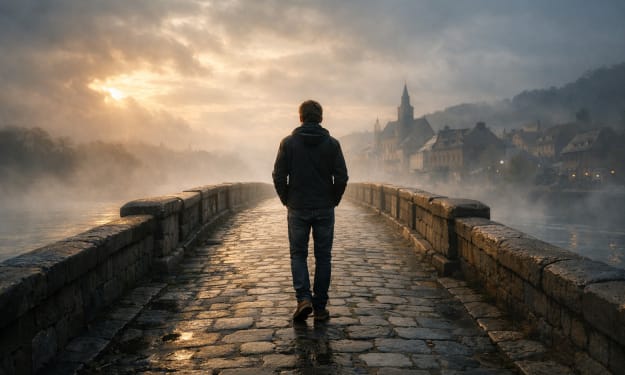
The Bridge He Almost Never Crossed
In a small riverside town in northern Europe, where winter stayed longer than welcome and the sun often hid behind gray clouds, lived a young man named Elias. His town was famous for its old stone bridge — a bridge that connected the quiet residential streets to the busy industrial district where most people worked. Every morning, hundreds of workers crossed it without thinking.
By Iazaz hussain6 days ago in Motivation



Comments
There are no comments for this story
Be the first to respond and start the conversation.