
Why the Ishihara Colour Test is Crucial for Coast Guard Recruitment
COLORON specializes in developing high-tech optical technology for addressing red-green colour vision deficiency.
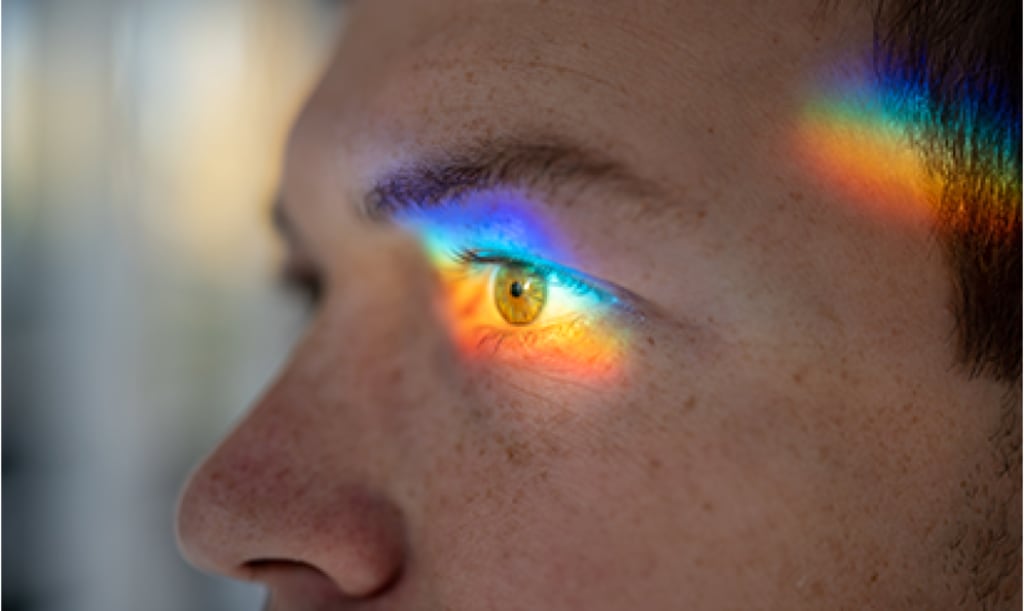
Used since 1917, the Ishihara test has been a gold standard colour vision test for Coast Guard recruitment. Read on.
The Ishihara Colour Test has been one of the most fundamental assessments to evaluate colour vision suitability for critical professions, like Coast Guard recruitment. Due to the importance of good colour perception in safety and navigation in the maritime sector, this test would qualify candidates to meet the job demands.
Read on to learn about the importance of the Ishihara Colour Test, its relevance to the Coast Guard, and recent advancements in colour vision testing in the maritime sector.
Key insight
According to the UK's (Maritime and Coastguard Agency) MCA, colour vision in seafarers must be tested to ensure all applicants who pass can carry out visually demanding, colour-related lookout duties that require the same accuracy as those with normal trichromatic vision. Those who can safely perform such responsibilities should not be denied career opportunities. MCA's current testing protocol adheres to international conventions. The Ishihara test is used as an initial screening, with confirmation testing available for those who fail it.
Evolution of colour vision testing for seafarers
It was during the 19th century that colour vision testing in seafarers was mandated, following the introduction of red and green lights for ship navigation and seaway markers. The colours were feasible with oil lamps burning yellow flames, coinciding with the common red-green colour deficiency, which affects 8% of males and 0.4% of females.
Testing started in the 1880s after mishaps due to mistaken identities of signals. Initially colour-naming, tests soon developed into colour-matching. Public complaints over spurious results compelled a UK study in 1911, and a standard colour-testing lantern became available by 1914. That lantern is a modern Holmes-Wright B, and it is still being used.
Testing was extended to deck ratings using Ishihara plates (IH) for screening, and lantern testing was done on those who failed. Both methods test for colour vision but in two different ways.
What is the Ishihara Colour Test?
Developed by Dr. Shinobu Ishihara in 1917, the Ishihara Colour Test is one of the most widely used methods for detecting red-green colour vision deficiencies. The test consists of a series of plates that contain a pattern of coloured dots that can form numbers or shapes observable only by people with normal colour vision.
These plates improve the detection of colour vision defects by using different techniques, including confusion between digits, the disappearance of digits, digit recognition, and trail following. However, the number of plates a subject fails to read correctly does not reliably indicate the severity of red/green colour vision loss.
It is simple, quick, and highly reliable in screening for the most common colour vision deficiency types like protanopia or red colour vision deficiency, and deuteranopia or green colour vision deficiency. Candidates who fail the test are often subjected to additional confirmatory assessments, such as lantern tests or advanced digital evaluations.
Importance of Ishihara colour test in Coast Guard recruitment
- Ensures Operational Safety: Differentiating between red and green goes to the interpretation of nautical lights and signals upon which maritime safety relies entirely.
- Mission Readiness: The operations of Coast Guards often take place under huge stress where making fast decisions is mandatory. Better colour vision also allows perfect communication and proper accuracy operational.
- Prevents Misjudgments: Incorrect identification of a signal light or buoy can lead to navigation errors, endangering both crew and civilians.
Current MCA colour vision test methods
Procedures implemented by the Maritime and Coastguard Agency (MCA) have undergone a lot of changes, and the last major update occurred following a review in 1997. There are also varying requirements for crew members, based on their department; that is, deck with lookout duties at navigational, engine crew members required to recognize colour-coded safety information, and catering and other departments.
For lookouts who will be performing navigational duties, preliminary testing is done using Ishihara plates. If a candidate fails to identify more than two, then the colour vision of the candidate is tested on the HW-B lantern. ADs (Approved Doctors) who are conducting statutory medicals on behalf of the MCA have to test colour vision on Ishihara plates at each medical examination unless they performed the previous test. In such instances, testing can be carried out at four-year intervals. These are specified in Merchant Shipping Notice (MSN) 1839 and endorsed by the Approved Doctors' Guidance (ADG) according to the journal by the Government of the UK.
Guidelines for Colour Vision Deficiency in Seafarers
As per guidelines ruled out by the UK's (Maritime and Coastguard Agency) MCA, most colour-vision deficiencies are detected in new seafarers, and appropriate vocational advice is given. It is a rare exception when colour vision deficiencies are reported in those seafarers who previously complied with the criteria. The AD (Approved Doctor) must attempt to get past test history from the previous AD and seek assistance from the latter, when necessary. If some undiagnosed eye disease is suspected to exist, it would become appropriate to recommend an opinion from an ophthalmological expert.
Seafarers with colour vision deficiency employed on deck and in the engine room should be tested and restricted appropriately. For new recruits joining officer cadetships and where restricted duties cannot be applied due to being unable to undergo the entire course of training, the same individuals should be classified as permanently unfit. However, they should be made aware of the duties they might be suited for, in case they wish to seek an alternative cadetship in the future.
Final Note
The Ishihara Colour Test is used in Coast Guard recruitment to ensure that candidates have the visual requirements for such a high-risk profession.
Whilst traditional methods like the Ishihara Test are invaluable, advances in colour vision testing technology improve the accuracy of colour vision assessments. Such developments not only uphold safety requirements but also ensure that marine operations continue to meet evolving demands.
COLORON: Enhancing Colour Vision for Colour Vision Deficiency
COLORON specializes in developing high-tech optical technology for addressing red-green colour vision deficiency. Combining cutting-edge colour vision science with decades of experience in the manufacturing of optics, COLORON produces eyewear designed to help you live a confident life with improved colour vision, specifically concerning reddish and greenish hues.
Since red-green colour vision deficiency affects one in every 12 males, COLORON's solutions are vital in enhancing safety and performance in professions like the Coast Guard, which rely on accurate colour perception to navigate and ensure operational safety.
Please note that regulations in different countries may differ on the use of colour vision deficiency aids for certain jobs. Always check the regulations in your country.
About the Creator
Keep reading
More stories from Adam Warlock and writers in Men and other communities.
Choosing the Best Accounting Software for Your Business Needs
A clean business environment requires proper accounts and financial management. Whenever there happens to be any kind of business, it may be in the small, medium or large scale, proper accounting of all the expenses invoices, and tax compliance require loads of documentation without proper tools. Accounting software then saves the businesses during that time. Accounting software helps companies keep things automatic, giving real-time analytics, and maintaining accuracy in such a manner that the growing environment will be maintained.
By Adam Warlockabout a year ago in Chapters
SIGNS OF of A HIGH VALUE MAN:
1. He Has a Job and Takes Responsibility A high-value man understands the importance of responsibility. Whether he is building a career, running a business, or working toward something meaningful, he believes in earning his way and standing on his own feet. He does not rely on others to carry his burdens or solve his problems. Instead, he takes ownership of his life and the direction it is going. Responsibility also shows in the way he handles commitments, whether personal or professional. People trust him because he follows through on what he promises.
By The Curious Writer5 days ago in Men
A System That Isn’t Working Challenge Winners
Systems promise order. They organize behavior, distribute opportunity, and suggest that if everyone follows the rules, things will work. The entries in A System That Isn’t Working look closely at what happens when that promise begins to slip.
By Vocal Curation Team4 days ago in Resources




Comments
There are no comments for this story
Be the first to respond and start the conversation.