
The World of Elon Musk
"Inside the Mind of Tech’s Most Ambitious Billionaire
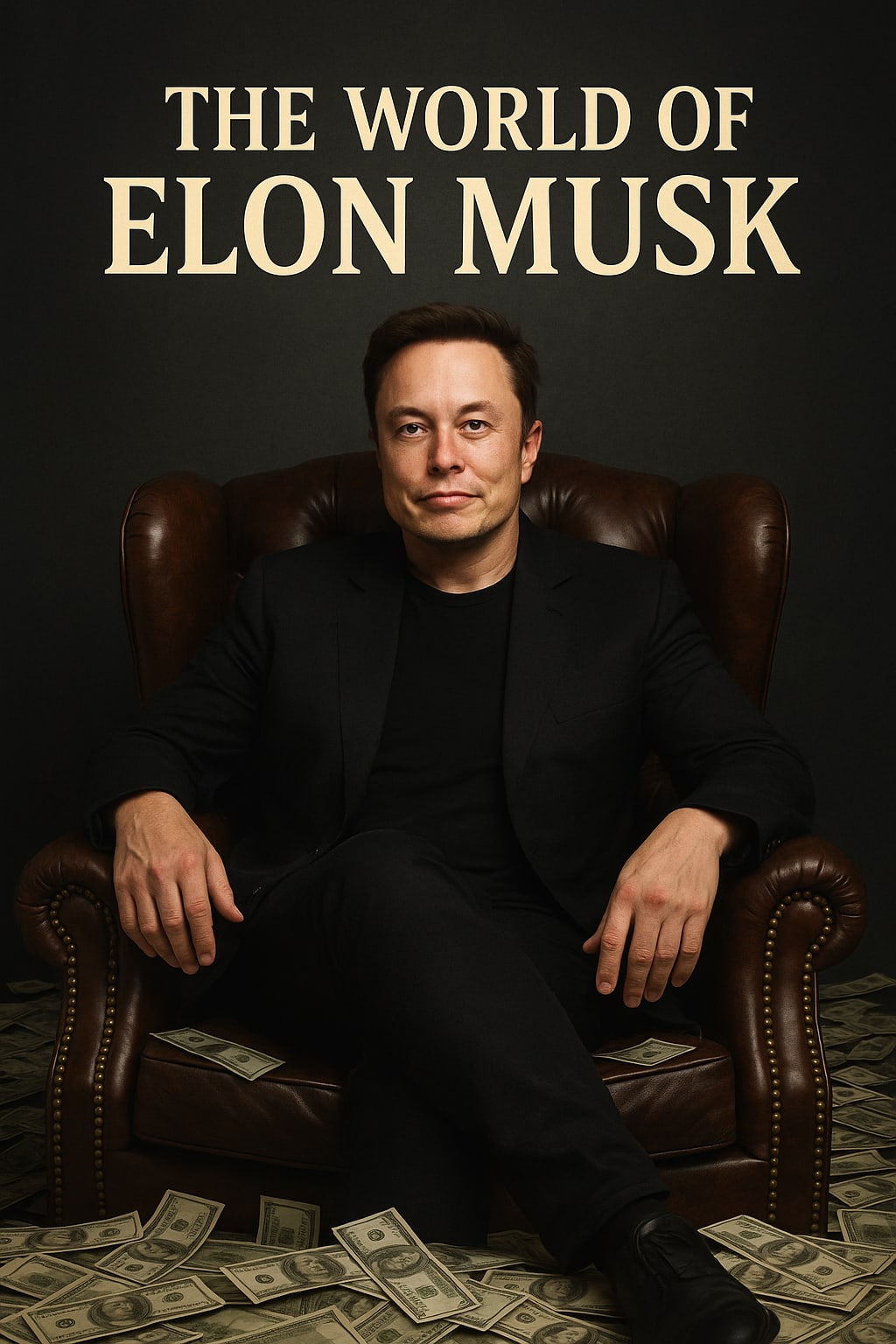
In the ever-evolving landscape of technology, innovation, and ambition, few names resonate as powerfully as Elon Musk. A billionaire entrepreneur, inventor, and provocateur, Musk has built an empire that spans electric vehicles, space travel, artificial intelligence, brain-computer interfaces, and sustainable energy. He is often hailed as a visionary genius, and sometimes criticized as a reckless risk-taker. Regardless of one’s stance, there is no denying the profound influence Musk has had on the modern world. “The World of Elon Musk” is not just a metaphor—it’s a real and growing sphere of impact, disruption, and imagination.
The Man Behind the Myth
Born in Pretoria, South Africa, in 1971, Elon Musk displayed an early fascination with computers and science fiction. By the age of 12, he had already developed and sold a video game. His intellectual drive brought him to the United States, where he attended the University of Pennsylvania. Though he enrolled in a Ph.D. program at Stanford, Musk left after two days, choosing instead to pursue his entrepreneurial dreams during the dot-com boom.
His first major success came with the sale of Zip2, a company he co-founded, which was purchased by Compaq for $307 million. He then co-founded X.com, which later became PayPal. When PayPal was bought by eBay for $1.5 billion in stock, Musk had the capital—and the boldness—to start making the world in his image.
Tesla: Reinventing the Automobile
Perhaps Musk's most visible and culturally significant venture is Tesla, the electric car company he joined in 2004. Under his leadership, Tesla transformed from a niche startup into the world’s most valuable automaker. Beyond producing sleek, high-performance electric vehicles, Tesla catalyzed a shift in public perception and industry priorities. Electric cars were no longer slow, ugly alternatives—they were cutting-edge, desirable, and fast.
Tesla’s impact extends beyond cars. Its advances in battery technology, autonomous driving, and energy storage have set the tone for the renewable energy revolution. With products like the Powerwall and Solar Roof, Musk envisions a decentralized, sustainable energy future where consumers produce and store their own power.
SpaceX: Mars and Beyond
If Tesla represents Musk's vision for Earth, SpaceX is his answer for the cosmos. Founded in 2002, SpaceX was born from Musk's frustration with the pace and cost of traditional space exploration. Today, it is the first private company to launch astronauts into orbit, resupply the International Space Station, and land orbital rockets vertically for reuse.
Musk’s ultimate goal is to make humanity a multiplanetary species. Through its Starship project, SpaceX is developing a fully reusable spacecraft capable of transporting humans to the Moon, Mars, and potentially beyond. While skeptics question the feasibility of colonizing Mars, Musk's ambitions have reignited public interest in space and redefined the possibilities of commercial aerospace.
Neuralink, The Boring Company, and Beyond
Musk’s world doesn’t end with cars and rockets. He also founded Neuralink, a company developing brain-machine interfaces that could eventually allow humans to control computers with their minds and, in theory, merge with artificial intelligence. While still in early stages, Neuralink represents Musk’s belief in preparing humanity for an AI-dominated future.
Then there’s The Boring Company, initially conceived as a joke to alleviate traffic in Los Angeles. It now works on underground transportation systems to reduce urban congestion. Hyperloop, another Musk-backed concept, envisions high-speed travel in vacuum tubes—faster than air travel and more sustainable.
Controversy and Criticism
Musk is as polarizing as he is popular. His communication style, particularly on social media, has drawn criticism, affected stock prices, and even resulted in legal challenges. Whether it's calling critics names, spreading conspiracy theories, or clashing with regulators, Musk’s brashness often lands him in hot water.
Critics argue that Musk overpromises and underdelivers on timelines, from self-driving cars to Mars missions. Labor practices at Tesla factories, environmental concerns about massive lithium mining, and the ethical implications of Neuralink have also sparked debate.
Yet, his defenders argue that Musk dares to dream big in a world that too often settles for the status quo. His timelines may be aggressive, but they create pressure that pushes industries forward.
The Musk Effect
“The World of Elon Musk” is more than a collection of companies. It’s a mindset—one defined by radical innovation, high-stakes risk-taking, and a refusal to be bound by conventional wisdom. Musk’s work has reshaped industries, challenged governments, and changed consumer expectations across the globe.
Whether one sees him as a messianic figure of progress or a dangerous disruptor, Musk’s influence is undeniable. He stands as a symbol of what’s possible when immense wealth is paired with an unyielding drive to change the world. His ventures span the Earth and stars, his goals stretch across generations, and his name will likely be remembered for centuries.
As the world watches his next moves—be it on Mars, in the mind, or through a new tweet—one thing is clear: we are all living, to some extent, in the world of Elon Musk.
About the Creator
Keep reading
More stories from Noor Hussain and writers in Men and other communities.
Imran Khan: From Cricket Legend to Political Powerhouse
Imra Imran Khan’s journey from the cricket pitch to the political arena is one of the most remarkable transformations in modern history. Known worldwide for leading Pakistan to its first Cricket World Cup victory in 1992, Khan later channeled his fame, leadership, and charisma into a political movement that disrupted the country’s entrenched power structures. His evolution into a political powerhouse reflects not just personal determination but also a changing Pakistani electorate seeking alternatives to the status quo.
By Noor Hussain10 months ago in Men
The Wolf of Wall Street: The True Story So Wild Hollywood Barely Changed It
When The Wolf of Wall Street premiered in 2013, audiences quickly realized they were watching something different from a typical Hollywood drama. The film was loud, chaotic, outrageous, and often shocking. Directed by Martin Scorsese and starring Leonardo DiCaprio, the movie tells the story of Jordan Belfort, a stockbroker whose rise to wealth and power became one of the most infamous financial scandals in modern American history.
By Lukáš Hrdlička3 days ago in Men
Gangs of New York: The Violent Story Behind the Birth of Modern Manhattan
When Gangs of New York premiered in 2002, audiences were transported to a New York City that few had ever imagined. Directed by Martin Scorsese, the film is an epic historical drama portraying a city in chaos, where gangs fought for control and every street corner held danger. With its mix of political intrigue, revenge, and raw violence, the movie offers a window into a period that shaped modern Manhattan.
By Lukáš Hrdlička3 days ago in Men


Comments
There are no comments for this story
Be the first to respond and start the conversation.