
The Quiet Power of "Silent Walking": Why Gen Z Is Putting Down the AirPods
In a world saturated with noise, the latest viral trend is all about turning it off—literally. Here’s why silent walking is resonating with millions and changing how we relate to ourselves.

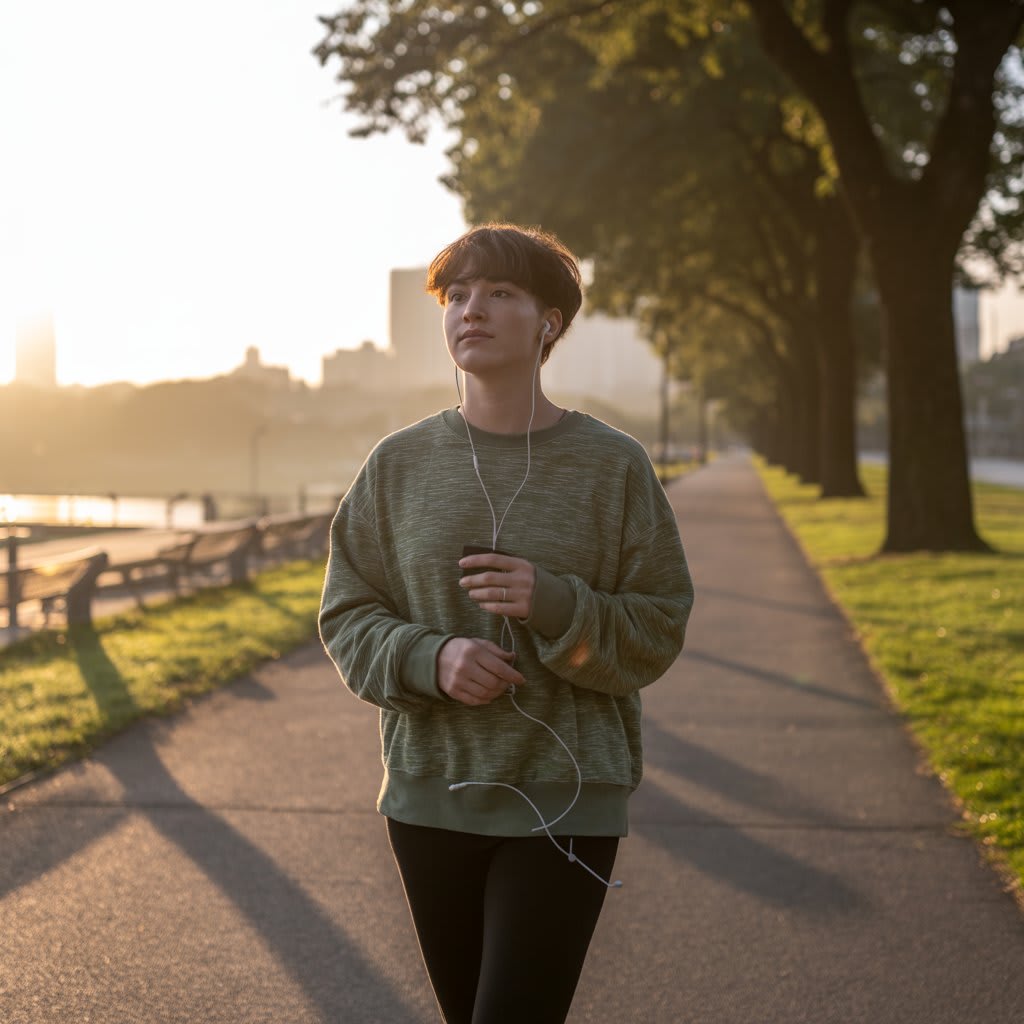
In the age of endless noise—notifications buzzing, podcasts streaming, playlists blasting—the newest trend sweeping across TikTok and Instagram is surprisingly simple: *silent walking*. It sounds almost too basic to go viral, yet this practice, especially embraced by Gen Z, is becoming a quiet rebellion against digital overstimulation.
Silent walking means exactly what it sounds like: taking a walk without music, podcasts, or phone distractions. No texting. No scrolling. Just walking. Alone. In silence. At first glance, it might seem uneventful or even boring—but for many, it’s proving to be transformative.
This trend started gaining traction in late 2024 and has exploded in early 2025, with millions of users posting videos about how silent walks are helping them reduce anxiety, reconnect with their thoughts, and become more aware of their surroundings. Influencers and everyday users alike are filming themselves post-walk, speaking with visible calm and introspection. Hashtags like #SilentWalk, #MentalReset, and #NoAirPodsChallenge have garnered billions of views.
What makes this trend so powerful is its sheer contrast to the world we live in. Our days are filled with sensory input—most of us wake up to an alarm, check social media before even getting out of bed, and fill every moment of silence with content. Waiting in line? Scroll. On the bus? Play a podcast. Even our workouts and walks are rarely done without earbuds.
Silent walking breaks that pattern. It’s a pause. And people are realizing that silence isn't empty—it’s full of clarity.
Psychologists are weighing in too. According to Dr. Lena Moravec, a behavioral therapist specializing in digital wellness, “Silent walking activates the default mode network in our brain—the part responsible for introspection, self-reflection, and creativity. We often suppress it with constant input, but when we disconnect, it wakes up.” In simpler terms: when you stop consuming, you start processing.
Some silent walkers describe experiencing mini-breakthroughs during these walks. Solutions to problems, bursts of creativity, and even emotional releases often bubble to the surface when the distractions are removed. It turns out that all the background noise we invite into our lives might be drowning out not just the world—but ourselves.
This shift also speaks to a deeper generational change. While millennials were the first to fully embrace the “always-on” lifestyle, Gen Z seems to be moving in the opposite direction. Digital natives by birth, many are now seeking ways to reclaim control over their attention. Silent walking is becoming a way to resist the algorithm, the dopamine hits, and the burnout that come with endless scrolling.
Of course, like any viral trend, silent walking has its skeptics. Some have mocked it as a rebranded version of what older generations simply called “going for a walk.” Others argue that romanticizing basic habits reflects how detached modern society has become from nature and presence. But perhaps that’s exactly the point. The fact that we need to “trend” silence to remember its value is a symptom of a deeper issue.
The benefits, however, are hard to ignore. Many report improved mental clarity, better sleep, and reduced anxiety after just a few days of practicing silent walking. Some even say it has become a ritual they can’t live without—like meditation in motion.
What’s particularly fascinating is how this trend has evolved into a kind of social non-event. Unlike other viral activities that require participation, posting, or performance, silent walking is anti-performance. There’s no playlist to share, no aesthetic to curate. It’s about not performing—for once.
The timing of this trend also coincides with a broader cultural shift toward mindfulness and intentional living. With burnout rates soaring and screen time at all-time highs, people are craving disconnection—not just from tech, but from the expectations that come with it. Silent walking offers a low-effort, low-cost antidote to a world demanding constant output.
Even urban dwellers are finding ways to adapt the practice. Walking early in the morning or exploring quieter backstreets is becoming part of the routine. Some are using silent walking as a companion to journaling or therapy, as a space to process and reflect before or after difficult conversations.
And yes, while the irony of recording videos about silent walking isn’t lost on anyone, many argue that promoting mindfulness—even digitally—is still better than not promoting it at all. As one TikTok user put it, “If one video makes someone unplug and go feel the wind on their face for ten minutes, that’s a win.”
What began as a simple act of walking without headphones has become something much bigger—a social reset button. In embracing silence, Gen Z is starting a quiet revolution. Not one of rebellion through chaos, but one through calm. One step at a time.
So, the next time you reach for your earbuds before heading out the door, maybe leave them behind. Let the silence speak. You might be surprised by what you hear.
About the Creator
Zakir Khan
Storyteller at heart, passionate about crafting tales that inspire, entertain, and spark thought. I write across genres—from heartfelt narratives to meaningful reflections. Join me on a journey through words, where every story has a soul.
Keep reading
More stories from Zakir Khan and writers in Men and other communities.
The AI Girlfriend Who Almost Replaced Me
It started as a joke. I remember sitting across from my boyfriend, Zain, as he showed me his new AI companion on his phone. “Meet Aria,” he said, grinning like a kid who had just found a new toy. Aria had big digital eyes, a soft voice, and she was available 24/7 to talk, flirt, and even “understand” him.
By Zakir Khan9 months ago in Humans
The Fortune in the Mop Bucket: The Janitor Who Secretly Funded a Stranger's Future
The halls of a high school after dark are a strange, liminal space. During the day, they are a cacophony of slamming lockers, shouting teenagers, and the squeak of sneakers. But after 4:00 PM, when the last bus pulls away and the teachers pack up their grading, the building exhales. It becomes a cavern of silence, smelling of floor wax, stale chalk dust, and industrial cleaner.
By Frank Massey 7 days ago in Men
How to Handle a Midlife Crisis Like a Champion
Feeling stuck, restless, or questioning everything about your life? You're not alone. Millions of people experience a midlife crisis between their 40s and 60s, and while it feels overwhelming, you can absolutely navigate this challenging time with confidence and purpose.
By LaMarion Ziegler4 days ago in Men



Comments
There are no comments for this story
Be the first to respond and start the conversation.