
The Last Harvest
A Tale of Hope and Hard Work in Willow Creek
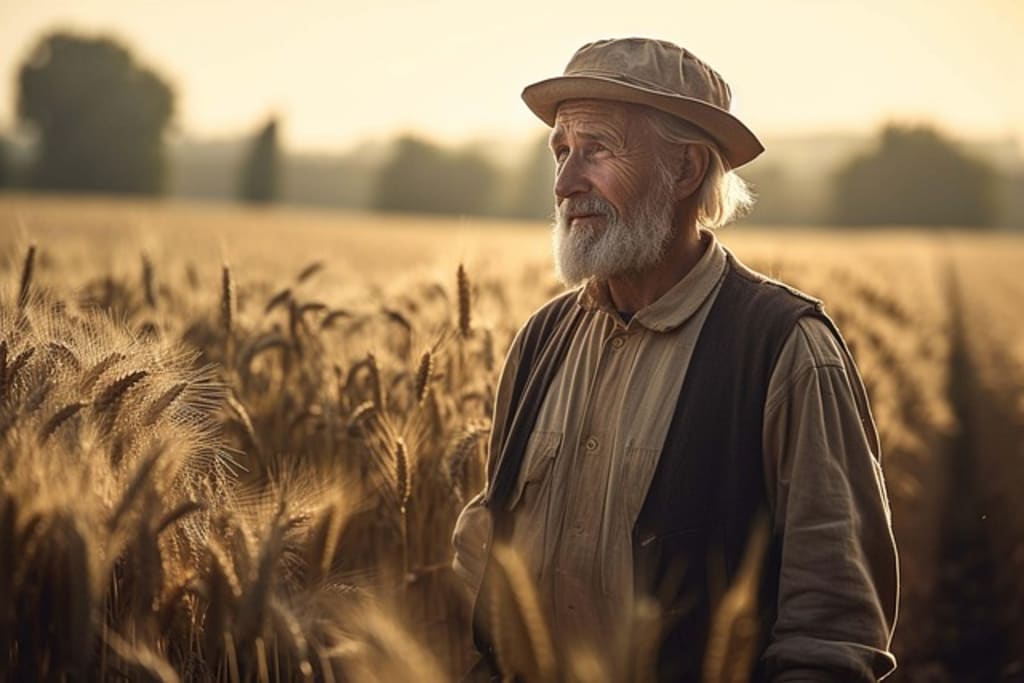
Samuel Reed was an old farmer who lived in the peaceful village of Willow Creek, which was tucked away between winding rivers and rolling hills. Samuel was a man of simple habits and deep roots, much like the sturdy oaks that lined his fields. The Reed family had tilled the same piece of land for generations, bringing life from the soil with only patience and hard work. But times had changed. Younger villagers had left for the city, chasing bright dreams and busier lives. Only a few people remained who believed that the earth could supply everything they required. Samuel, now nearing seventy, clung to his farm not just for survival, but for the memories it held — of his father teaching him how to sow wheat, of his mother singing while picking tomatoes, and of his late wife, Lily, smiling under the spring sun.
This year, however, the land seemed to betray him. His crops suffered from a dry spring and a harsh winter. Half of the corn stalks had withered by midsummer, and a severe storm had pushed the wheat flat against the ground. Many of Samuel’s neighbors abandoned their fields, turning instead to trade or leaving Willow Creek altogether.
Samuel, nevertheless, refused to give up. He rose before the sun every morning to care for the ill plants like a wounded bird would. He spoke to them softly, remembering Lily's words: "A kind word is a seed, too."
One evening, as Samuel repaired a broken fence, he noticed a young boy watching him from the road. The boy was Tom, the grandson of Samuel’s old friend, Mr. Hargrove. Tom, whose parents had recently moved back to Willow Creek after losing their city jobs, seemed curious about the farm.
“Need help, sir?” Tom asked, shy but earnest.
Samuel smiled. “Always could use an extra pair of hands.”
From that day on, Tom came by every afternoon. He quickly learned how to weed without destroying healthy plants, set up rain traps to save water, and listen to the ground beneath his feet. Samuel taught him everything, just as his father had once taught him.
Slowly, the fields began to recover. Not all the crops could be saved, but the ones that survived grew strong and golden. The villagers, seeing Samuel and Tom working day after day, felt a stirring in their hearts. If Samuel could fight for his land at his age, perhaps they had given up too soon.
By harvest time, the once-quiet fields buzzed with life. Families returned to help. The air was filled with laughter, the scrape of scythes, and the rustle of grain being gathered into sacks. Tom worked proudly beside Samuel, his cheeks sunburned and his hands calloused but strong.
On the last day of harvest, the village held a festival in Samuel’s honor. Long tables were set up along the main road, covered with roasted vegetables, fresh bread, and pies made from the newly reaped fruits. Lanterns hung from the trees, and a fiddler played tunes that had once echoed across the hills many years ago.
Standing at the center of it all, Samuel felt a lump rise in his throat. It wasn’t just about saving his farm anymore — it was about saving the spirit of Willow Creek. about demonstrating to a new generation that, despite the erratic nature of the earth, hard work, hope, and community yielded lasting rewards. Tom ran up to him, carrying a small gift: a wooden carving of an oak tree, its roots deep and sprawling.
“For you, Mr. Reed,” Tom said. “For everything you taught us.”
Samuel took the carving, his old hands trembling slightly. He looked around at the faces — young and old, familiar and new — and realized he was no longer the last farmer of Willow Creek.
He was simply the first of many to come.
About the Creator
SIGNS OF of A HIGH VALUE MAN:
1. He Has a Job and Takes Responsibility A high-value man understands the importance of responsibility. Whether he is building a career, running a business, or working toward something meaningful, he believes in earning his way and standing on his own feet. He does not rely on others to carry his burdens or solve his problems. Instead, he takes ownership of his life and the direction it is going. Responsibility also shows in the way he handles commitments, whether personal or professional. People trust him because he follows through on what he promises.
By The Curious Writer3 days ago in Men


Comments
There are no comments for this story
Be the first to respond and start the conversation.