
THE FATHER OF ATOMIC BOMB DOCTOR J.ROBERT OPPENHEIMER
The Story of the Genius Who Lit the Fire That Changed the World Forever
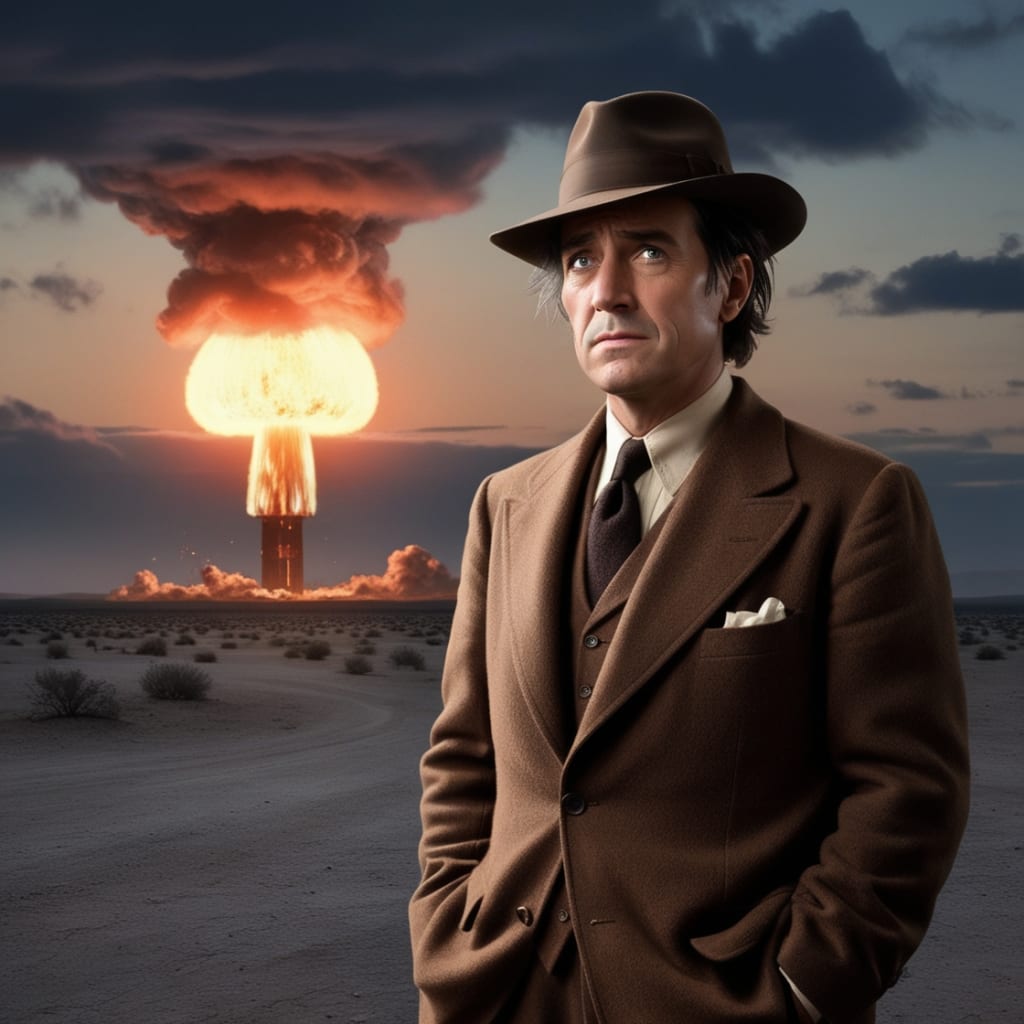
Some people are remembered for what they built. Others are remembered for what they destroyed. J. Robert Oppenheimer is remembered for both.
Known as the Father of the Atomic Bomb, Oppenheimer was a brilliant scientist who led the team that created the deadliest weapon in human history. But behind that title was a man full of doubt, sorrow, and deep regret.
This is the story of a genius who gave the world great power — and spent the rest of his life wishing it had never been used.
Early Life: A Brilliant Mind Is Born
Julius Robert Oppenheimer was born on April 22, 1904, in New York City, into a wealthy Jewish family. From a young age, he was different. He read books faster than most adults, loved science, and often asked questions that even his teachers couldn’t answer.
He studied at Harvard, then Cambridge, and later in Germany, where he earned a PhD in physics. Oppenheimer was known for his deep thinking, but also for being emotional, poetic, and intense. He once said:
“In some sort of crude sense which no vulgarity, no humor, no overstatement can quite extinguish, the physicists have known sin.”
The Call to War: Building the Bomb
In the early 1940s, during World War II, the world feared that Nazi Germany might develop an atomic bomb. In response, the United States launched a secret research project: the Manhattan Project.
Oppenheimer was chosen as the scientific director. He was not the oldest or most experienced scientist, but he had one rare skill: he could bring together the smartest minds and lead them.
The team built a hidden lab in Los Alamos, New Mexico, where thousands of scientists, engineers, and workers came together to do the impossible — split the atom and release the energy inside.
After years of work, they succeeded.
The First Test: A New Era Begins
On July 16, 1945, the first atomic bomb was tested in the desert of New Mexico. The explosion lit up the sky brighter than the sun. The shockwave was felt miles away.
Watching the fireball rise into the sky, Oppenheimer whispered a line from a Hindu scripture (the Bhagavad Gita):
“Now I am become Death, the destroyer of worlds.”
At that moment, he realized they had not just created a weapon — they had opened the door to destruction unlike anything the world had seen.
Hiroshima, Nagasaki, and the Deep Regret
Just weeks after the test, in August 1945, the U.S. dropped two atomic bombs on Hiroshima and Nagasaki, Japan. Over 200,000 people — mostly civilians — died instantly or from radiation later.
The war ended, but Oppenheimer was not celebrating.
He visited President Truman and said:
“Mr. President, I feel I have blood on my hands.”
Truman was angry. He later told aides, “I never want to see that crybaby again.”
Oppenheimer began to speak out against nuclear weapons, warning about their future use and calling for international peace and control.
Fall from Power
Because of his political views, Oppenheimer became a target. During the Cold War, the U.S. government accused him of having communist connections and being a threat to national security.
In 1954, his security clearance was revoked. He was humiliated in public. The man who gave America its strongest weapon was now treated like an enemy.
He never fully recovered from this betrayal.
Later Years: A Quiet Life of Thought
Oppenheimer spent his later years giving lectures, reading, and thinking. He stayed away from politics but never stopped worrying about the future.
He once said:
“The physicists have known sin; and this is a knowledge which they cannot lose.”
He died of throat cancer on February 18, 1967, at the age of 62.
Legacy: A Man Torn Between Genius and Guilt
J. Robert Oppenheimer is remembered in two ways:
To some, he was a hero who helped end a terrible war.
To others, he was a tragic figure — a brilliant mind who gave the world a terrible gift.
But everyone agrees: he changed the world.
He didn’t build the bomb out of hate. He built it out of fear — fear that if America didn’t do it first, someone else would.
In the end, he tried to stop what he had started. He spoke out, he warned leaders, and he asked the world to choose peace over power.
Final Words
Oppenheimer’s life teaches us a powerful lesson:
Knowledge is powerful — but it must be used with wisdom.
He was not a monster. He was a man. A scientist. A human being who made a choice that changed history. And then, he lived with the weight of that choice until the day he died.
He gave the world its greatest weapon — and its greatest warning.
About the Creator
Keep reading
More stories from Abuzar khan and writers in Men and other communities.
Albert Einstein: The Genius Who Changed the World
Albert Einstein is one of the most famous scientists in history. His name is often used to describe someone who is very intelligent. But Einstein was more than just smart — he was a thinker, a dreamer, and a man who believed in peace, kindness, and human rights. His life is a story of curiosity, courage, and change.
By Abuzar khan7 months ago in Men
The Surprising Truth About Drinking Milk With Prostatitis
The refrigerator door hangs open, its cool light spilling into the dim morning kitchen. You’re staring at the carton of milk, a simple staple that has suddenly become a source of quiet anxiety. Before your prostatitis diagnosis, it was an automatic part of your routine—a splash in your coffee, a base for your oatmeal, or a quick glass before bed. Now, every choice feels like a negotiation with your own body. You wonder, "Is this simple comfort now off-limits? Will it make the pressure, the urgency, the constant awareness of my own anatomy, even worse?"
By Amanda Chou5 days ago in Men



Comments
There are no comments for this story
Be the first to respond and start the conversation.