
Role in shaping societal values
Shaping the Core Values of Society

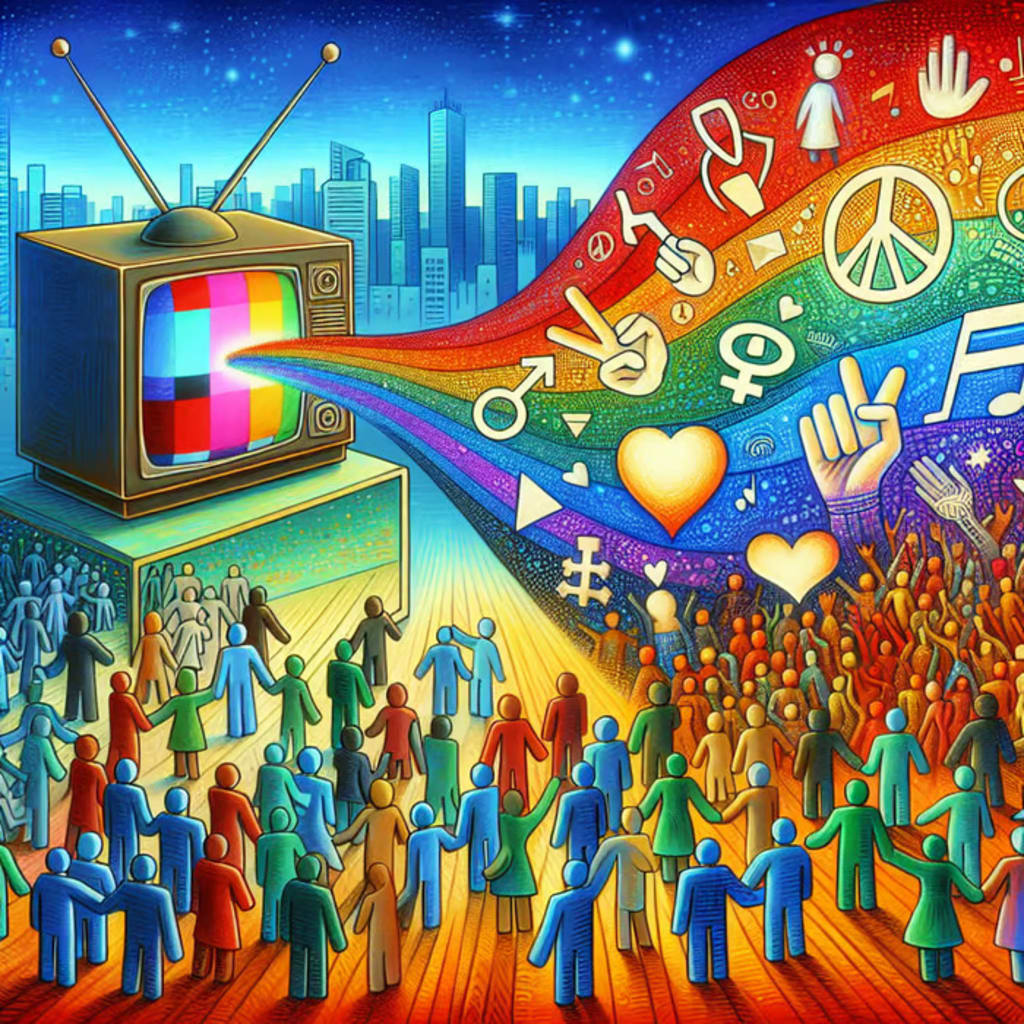
The role of an individual in shaping societal values is profound and multifaceted. Throughout history, individuals have often acted as catalysts for change, driving shifts in how societies think, behave, and understand key aspects of life. This impact is not always immediate, nor is it always recognized in the short term, but the cumulative influence of people who challenge, redefine, or enhance cultural and social values can transform entire generations. An individual’s influence on societal values can occur in a variety of ways: through advocacy, leadership, creativity, or even through quiet, personal acts of resistance or progress.
1. Challenging Established Norms
One of the most powerful ways an individual shapes societal values is by challenging existing norms. Societal norms dictate acceptable behavior, and individuals who question these norms force society to reevaluate them. For example, historical figures like Martin Luther King Jr. and Mahatma Gandhi defied social systems that perpetuated inequality and injustice. Their advocacy for civil rights and nonviolent resistance led to significant societal shifts, inspiring movements that challenged racism, segregation, and oppression. Individuals who stand up to entrenched societal beliefs challenge the status quo and push for reform, eventually leading to the creation of new values that promote justice, equality, and inclusivity.
2. Promoting New Ideals
Every time a person introduces a new idea or perspective, they contribute to the shaping of societal values. A thought leader or influencer can propose a vision for society that differs from the prevailing one, and if that vision resonates with others, it can become a new societal norm. For instance, individuals like Susan B. Anthony, who advocated for women’s suffrage, or more recently, activists fighting for gender equality and LGBTQ+ rights, have played a pivotal role in reshaping societal expectations of equality and freedom. The spread of these new ideals challenges traditional gender roles and leads to a reevaluation of how society defines and understands concepts like equality, freedom, and justice.
3. Leading by Example
The role of a person in shaping societal values is not only in their words but also in their actions. Leadership through example can be far more impactful than any speech or written work. When someone lives according to values that challenge societal norms, they offer a tangible demonstration of what a different kind of society might look like. An individual who embodies integrity, compassion, or innovation in their daily life can inspire others to adopt similar values. For example, Mahatma Gandhi’s lifestyle of simplicity and nonviolence inspired millions in India and around the world to rethink the importance of humility, peace, and self-sufficiency in their own lives. In this way, the individual’s behavior can be a key influence on transforming collective values, showing others the power of living a life driven by principles.
4. Advocating for Social Justice
Many individuals have become symbols of social justice movements that aim to correct societal wrongs and promote fairness. Leaders in the civil rights movement, the fight against apartheid, and the global movement to combat poverty or discrimination have shaped the way society thinks about justice and fairness. Their tireless advocacy and ability to rally public support have led to legal and societal changes that reframe concepts of human rights, equality, and moral responsibility. The importance of social justice becomes ingrained in societal values when individuals actively campaign for these causes, pushing institutions to adopt policies that reflect a more equitable distribution of resources and opportunities. These efforts, often propelled by personal sacrifice, ultimately reshape how future generations understand justice.
5. Fostering Compassion and Empathy
Some individuals profoundly shape societal values through their ability to foster compassion and empathy within a community. By raising awareness of human suffering and inequality, these individuals encourage others to adopt a more empathetic outlook. Figures like Mother Teresa and Florence Nightingale, who dedicated their lives to caring for the sick and impoverished, have helped to promote a culture of empathy in societies that might otherwise be indifferent to the marginalized. They showed that the value of human life is not just about success and achievement but also about care, kindness, and mutual respect. As a result, communities that embrace empathy as a guiding value are more likely to develop systems that prioritize human welfare, equitable healthcare, and support for vulnerable populations.
6. Advancing Innovation and Progress
The role of individuals in shaping societal values can also be seen through their contributions to technological or intellectual progress. Innovators and scientists have shaped how societies understand the world and their place in it. Through the introduction of groundbreaking ideas, discoveries, and inventions, these individuals alter society's relationship with technology, nature, and even the very structure of human life. Consider figures like Albert Einstein, whose theories on relativity changed our understanding of the universe, or Steve Jobs, whose vision for personal computing and mobile technology revolutionized how society communicates. These innovations have led to shifts in societal values around technology, education, work, and human potential, pushing society to value intellectual curiosity, progress, and adaptability.
7. Influencing Cultural and Artistic Movements
Culture and art play a significant role in shaping the values of a society. Individuals who create or lead cultural movements—whether in music, literature, film, or visual art—can influence how society sees itself. Icons like William Shakespeare, Pablo Picasso, or modern-day filmmakers such as Spike Lee have shaped not only artistic expression but also societal perceptions of identity, race, gender, and morality. Through their work, they challenge existing values and offer new lenses through which to understand the human experience. These cultural shifts create new societal values as people begin to understand their own identities and relationships in deeper, more nuanced ways. Art and culture thus serve as mirrors reflecting and often challenging the societal values of their time.
8. Spreading New Philosophies
Individuals who introduce new philosophical, ethical, or religious ideas have a profound role in reshaping societal values. These individuals often offer an alternative to traditional beliefs, proposing a new way of thinking about life, morality, and existence. Figures like Confucius, Socrates, and Buddha introduced ideas that fundamentally altered the course of societies, leading to new systems of ethics, governance, and spiritual life. By offering a new perspective, these individuals give people a framework for understanding their place in the world, prompting shifts in collective values about morality, justice, and the meaning of life. These new philosophies can spread across cultures, influencing how societies perceive and react to challenges, suffering, and human potential.
9. Shaping Political and Economic Systems
Finally, individuals can shape societal values through their involvement in politics and economic systems. Politicians, economists, and activists who introduce new ideas or challenge existing structures can directly influence the values that underpin a society's political or economic system. For example, Franklin D. Roosevelt's New Deal in the United States redefined the role of government in providing for the welfare of its citizens during the Great Depression, establishing values of social safety nets and economic fairness. In a broader sense, political thinkers like Karl Marx, John Locke, and Adam Smith have helped shape how societies understand capitalism, socialism, democracy, and human rights. By advocating for changes in how society is governed or how resources are distributed, individuals play a crucial role in reshaping the core values that define political and economic life.
In conclusion, the role of an individual in shaping societal values is indispensable. Whether through challenging the status quo, promoting new ideas, leading by example, or contributing to cultural, philosophical, or political change, individuals play a critical role in shaping the values that guide society. These values evolve over time, and the efforts of one person can ripple through generations, influencing how communities think, act, and define success.
About the Creator
DINESH KUMAR SHARMA
i am a writer and a investor
Keep reading
More stories from DINESH KUMAR SHARMA and writers in Men and other communities.
Legacy of positive change
1. Influence on Future Generations The legacy of any individual can be seen most clearly through the impact they have on future generations. A person's beliefs, actions, and teachings can continue to shape the world long after they are gone. When a man contributes positively to society, whether through education, mentorship, or advocacy, he leaves behind a blueprint for others to follow. His values become ingrained in the communities he’s influenced, and his actions create a ripple effect. His legacy, therefore, is not just about what he accomplished in his lifetime, but how his contributions inspire future leaders and thinkers. For instance, if he has invested in education or skills training, generations of children and young adults may grow up empowered to make their own contributions to society. The man's values, principles, and approach to problem-solving influence how the society moves forward, ensuring that the positive changes continue.
By DINESH KUMAR SHARMAabout a year ago in Men
Beating The Odds And Doctor Death
Hello Death To think that I was happy, content, and comfortable just a few short years ago, makes me long for the past. When everything changed, it all spiraled pretty fast. And yet, out of all the constant ickyness, somehow the need to survive and fight back hasn't died off in me.
By Jason Ray Morton a day ago in Men
Who is your "Person"?
It's important to recognize that you cannot go through life as easily on your own. My name is Elizabeth and I'm a survivor of child abuse and horrific trauma. Healing from trauma is not a quick fix and recognizing that it will take time, is part of the struggle.
By Elizabeth Woods4 days ago in Psyche



Comments
There are no comments for this story
Be the first to respond and start the conversation.