
Research Report: The Impact of Technology Dependence on Men’s Socialization, Masculinity and Well-Being in Umeå, Sweden
Effect of Technology On Men’s Masculinity In Umea


Abstract
This report examines how men’s dependence on technology in Umeå, Sweden, affects their socialization, friendship-building skills, and perceptions of masculinity. It explores the dilution of traditional masculine traits due to excessive technology use, the need for masculinity education, and strategies to enhance real-life social activities to reduce social isolation. Drawing on Swedish research and global perspectives, the report proposes interventions to support men in reaffirming their masculine identities through face-to-face interactions and community-based activities. Recommendations focus on fostering social connectedness, reducing technology reliance, and addressing gender identity concerns to enhance men’s happiness and well-being.
Introduction
In modern societies, technology has transformed how individuals connect, communicate, and perceive themselves. In Umeå, a city known for its progressive gender equality policies, men face unique challenges as excessive technology use may dilute traditional masculine traits, hinder socialization, and exacerbate social isolation. This report investigates how technology dependence impacts men’s ability to form meaningful friendships, maintain strong masculine identities, and achieve happiness. It addresses the need for masculinity education, strategies to support men questioning their gender identity, and ways to increase real-life social activities with other men. Insights from Swedish experts and global research inform the analysis, with a focus on practical interventions to reduce technology’s negative effects.
Methodology
This report synthesizes qualitative and quantitative research from peer-reviewed articles, Swedish studies, and reputable online sources. The literature review focuses on:
Technology’s impact on men’s socialization and masculinity.
Swedish perspectives on gender norms and technology use.
Interventions to enhance face-to-face interactions and reduce social isolation.
Support for men questioning their masculinity or gender identity.
Findings and Discussion
1. Technology Dependence and Its Impact on Men’s Socialization
Excessive technology use, particularly social media and gaming, has been linked to reduced face-to-face interactions and weakened social bonds among men. In Sweden, men are increasingly vulnerable to loneliness due to fewer social connections compared to women (Statistics Sweden, 2023, cited in Barreto et al., 2021). Key impacts include:
Reduced Friendship-Building Skills: Online interactions often lack the depth of in-person connections, limiting men’s ability to develop trust and emotional intimacy with other men (McKenzie et al., 2018).
Social Isolation: Prolonged screen time correlates with feelings of isolation, particularly among younger men in individualistic cultures like Sweden (Barreto et al., 2021).
Dilution of Masculine Social Norms: Traditional masculine activities, such as sports or group hobbies, are being replaced by solitary tech-based activities, reducing opportunities for homosocial bonding (Mackenzie et al., 2017).
Swedish expert Caroline Price, a mental health specialist, emphasizes the importance of balancing online and offline interactions: “While forums can be beneficial in connecting those who may be experiencing similar struggles, face-to-face contact is vital in helping to prevent feelings of isolation” (Bupa Global, 2025). This suggests that technology, while useful for initial connections, cannot replace the emotional depth of real-life friendships.
2. Technology and the Dilution of Masculinity
Traditional masculinity in Sweden has historically been tied to physical toughness, independence, and social dominance (Sandström and Dahlgren, 2015). However, technology’s influence has shifted these norms, leading to concerns about diluted masculinity. Key findings include:
Perceived Loss of Masculine Identity: Men who spend excessive time online may internalize less traditionally masculine traits, such as emotional stoicism, due to exposure to diverse gender norms on social media (Goedecke, 2022).
Threatened Masculinity: Swedish studies link technology use to feelings of threatened masculinity, particularly among men who perceive societal shifts toward gender equality as diminishing their traditional roles (Goossen, 2023).
Mental Health Implications: Adherence to rigid masculine norms, combined with technology-induced isolation, is associated with higher rates of depression, substance abuse, and suicide among men (Seidler et al., 2016).
Swedish sociologist Jeff Hearn notes that technology can reinforce hegemonic masculinity through online communities that promote dominance but also challenge it by exposing men to alternative gender expressions (Hearn et al., 2012). This duality creates confusion for men navigating their masculine identities in Umeå’s egalitarian context.
3. The Need for Masculinity Education in Umeå
To counter technology’s impact, ongoing masculinity education is essential to help men in Umeå embrace diverse, positive masculine identities. Swedish gender equality initiatives, such as gender-neutral education, have encouraged boys to engage in empathetic interactions, but specific programs for adult men are limited (Nutshell, 2025). Proposed educational strategies include:
Workshops on Positive Masculinities: Programs like the UK’s Good Lad Initiative, which could be adapted for Umeå, promote inclusive masculinities by challenging toxic norms and encouraging emotional vulnerability (WHO, 2020).
Community-Based Learning: Local organizations in Umeå, such as cultural centers, could host discussions on masculinity, drawing on Sweden’s history of gender equality advocacy (Florin and Nilsson, 2000).
Role Models: Engaging local male leaders to model healthy masculine behaviors, such as cooperation and emotional openness, can inspire men to redefine masculinity.
Swedish researcher Klara Goedecke argues that cultural representations of men as emotionally open, as seen in Swedish media, can support masculinity education: “Portrayals of men striving to live as progressive men problematize traditional roles and encourage new ways of being” (Goedecke, 2022).
4. Supporting Men Questioning Their Masculinity or Gender Identity
Men questioning their masculinity or gender identity in Umeå may face social stigma, exacerbated by technology’s amplification of rigid gender norms. Support strategies include:
Counseling Services: Professional counselors should explore men’s sources of social support and how masculinity influences their well-being, creating safe spaces to discuss gender identity (Counseling Today, 2022).
Peer Support Groups: Face-to-face groups in Umeå, facilitated by trained moderators, can help men share experiences of gender questioning without judgment (McKenzie et al., 2018).
Intersectional Approaches: Recognizing diverse identities (e.g., ethnicity, sexuality) ensures inclusive support, as Black and Latino men may face unique challenges compared to White men (PMC, 2020).
Swedish studies highlight that men redefining masculinity to include vulnerability report improved mental health outcomes (WHO, 2020). This suggests that supporting gender exploration can enhance happiness and self-acceptance.
5. Increasing Weekly Masculinity Experiences Through Social Activities
To reduce technology reliance and foster masculinity, men in Umeå need opportunities for real-life social activities with other men. Recommended activities include:
Men’s Sheds: Inspired by UK and Australian models, Men’s Sheds in Umeå could provide spaces for men to engage in traditionally masculine activities like woodworking while building friendships (Mackenzie et al., 2017).
Sports and Outdoor Groups: Local sports clubs or hiking groups can promote physical activity and homosocial bonding, countering the sedentary nature of technology use (Sandström and Dahlgren, 2015).
Hobby-Based Clubs: Umeå’s cultural scene could support clubs for music, gaming (in-person), or cooking, encouraging collaborative masculinity (Bergman, 2009).
Community Events: Regular events, such as Umeå’s annual cultural festivals, could include male-focused activities to foster camaraderie (Forsberg, 2009).
Swedish research emphasizes that shoulder-to-shoulder activities, where men connect through shared tasks, are effective for building social bonds without compromising masculine identity (WHO, 2020).
6. Reducing Social Isolation Through Real-Life Connections
Social isolation, worsened by technology, is a significant concern for men in Umeå. Strategies to enhance real-life connections include:
Technology Boundaries: Men should set schedules for internet use, avoiding excessive social media to prioritize in-person interactions (Bupa Global, 2025).
Community Hubs: Umeå’s libraries, community centers, and cafes can serve as venues for men’s social groups, reducing reliance on online forums (Barreto et al., 2021).
Mentorship Programs: Pairing younger men with older male mentors can provide guidance and foster intergenerational connections (Mackenzie et al., 2017).
Swedish public health expert William Cockerham highlights that supportive social structures enhance men’s health and agency, suggesting that community-driven initiatives in Umeå could mitigate isolation (Cockerham, 2015).
Recommendations
Based on the findings, the following recommendations are proposed for Umeå:
Establish Men’s Social Hubs: Create Men’s Sheds and hobby clubs to promote face-to-face interactions through shared activities.
Launch Masculinity Education Programs: Partner with local universities and NGOs to offer workshops on positive masculinities, emphasizing emotional openness and gender diversity.
Expand Counseling Services: Increase access to male-focused mental health support, addressing masculinity and gender identity concerns.
Promote Technology Balance: Run public campaigns encouraging men to limit screen time and engage in offline socializing.
Foster Community Events: Organize regular male-focused events at Umeå’s cultural venues to build camaraderie and reduce isolation.
Conclusion
Technology dependence in Umeå has significant implications for men’s socialization, masculinity, and well-being. Excessive screen time dilutes traditional masculine traits, hinders friendship-building, and increases social isolation. Through masculinity education, real-life social activities, and targeted support for men questioning their gender identity, Umeå can help men rediscover happiness in their masculine identities. Swedish experts emphasize the need for balanced technology use and community-driven interventions to foster positive masculinities. By implementing these strategies, Umeå can create a more connected, equitable, and fulfilling environment for men.
References
Barreto, M., Victor, C., Hammond, C., Eccles, A., Richins, M. T. and Qualter, P. (2021) ‘Loneliness around the world: Age, gender, and cultural differences in loneliness’, Personality and Individual Differences, 169, p. 110066. doi: 10.1016/j.paid.2020.110066.
Bergman, Å. (2009) Växa upp med musik: Ungdomars musikanvändande i skolan och på fritiden. Göteborg: Göteborgs universitet.
Bupa Global (2025) ‘The impact of the internet on men’s health’, Bupa Global. Available at: https://www.bupaglobal.com/en/your-wellbeing/healthy-mind/the-impact-of-the-internet-on-mens-health.[](https://www.bupaglobal.com/en/your-wellbeing/healthy-mind/mens-health-and-the-internet)
Cockerham, W. C. (2015) ‘Health lifestyles and the search for a concept of agency within structures’, PLOS One, 10(5), p. e0124781. doi: 10.1371/journal.pone.0124781.
Counseling Today (2022) ‘The effects of gender socialization on boys and men’, Counseling Today, 15 June. Available at: https://ct.counseling.org/2022/06/the-effects-of-gender-socialization-on-boys-and-men/.[](https://ct.counseling.org/2022/06/the-effects-of-gender-socialization-on-boys-and-men/)
Florin, C. and Nilsson, B. (2000) Något som liknar en oblodig revolution: Jämställdhetens politisering under 1960- och 70-talen. Umeå: Umeå universitet.
Forsberg, L. (2009) Involved parenthood: Everyday lives of Swedish middle-class families. Linköping: Linköping Studies in Arts and Science No. 473.
Goedecke, K. (2022) ‘Feeling rules and sexualities: Postfeminist men in Swedish television’, Men and Masculinities, 25(1), pp. 123–140. doi: 10.1177/1097184X211017804.
Goossen, M. (2023) ‘Not all men, nor all women: Strength of gender identification and social spending preferences in Sweden’, Men and Masculinities, 26(2), pp. 245–267. doi: 10.1177/1097184X231159123.
Hearn, J., Nordberg, M., Andersson, K., Balkmar, D., Gottzén, L., Klinth, R. and Pringle, K. (2012) ‘Hegemonic masculinity and beyond’, Men and Masculinities, 15(1), pp. 31–55. doi: 10.1177/1097184X11432114.
Mackenzie, C. S., Roger, K., Robertson, S., Oliffe, J. L., Nurmi, M. A. and Urquhart, J. (2017) ‘Counter and complying masculinities in men’s sheds’, Journal of Men’s Studies, 25(3), pp. 251–270. doi: 10.1177/1060826516661351.
McKenzie, S. K., Collings, S., Jenkin, G. and River, J. (2018) ‘Masculinity, social connectedness, and mental health: Men’s diverse patterns of practice’, American Journal of Men’s Health, 12(5), pp. 1247–1261. doi: 10.1177/1557988318772732.
Nutshell (2025) ‘Gender equality and diversity in Swedish society’, Nutshell. Available at: https://www.nutshellapp.com/en/post/gender-equality-and-diversity-in-swedish-society.[](https://www.nutshellapp.com/publicsummaries/gender-equality-and-diversity-in-swedish-society)
Sandström, L. and Dahlgren, L. (2015) ‘Health and masculinities shaped by agency within structures among young unemployed men in a northern Swedish context’, PLOS One, 10(5), p. e0124785. doi: 10.1371/journal.pone.0124785.
Seidler, Z. E., Dawes, A. J., Rice, S. M., Oliffe, J. L. and Dhillon, H. M. (2016) ‘The role of masculinity in men’s help-seeking for depression: A systematic review’, Clinical Psychology Review, 49, pp. 106–118. doi: 10.1016/j.cpr.2016.09.002.
WHO (2020) ‘Mental health, men and culture: How do sociocultural constructions of masculinities relate to men’s mental health help-seeking behaviour’, World Health Organization. Available at: https://www.ncbi.nlm.nih.gov/books/NBK554698/.[](https://www.ncbi.nlm.nih.gov/books/NBK559709/)
About the Creator
Alexander Hyogor
Psychic clairvoyant fortune teller on future self aware artificial intelligence effect on your work career business and personal relationships to marriage.
Keep reading
More stories from Alexander Hyogor and writers in Men and other communities.
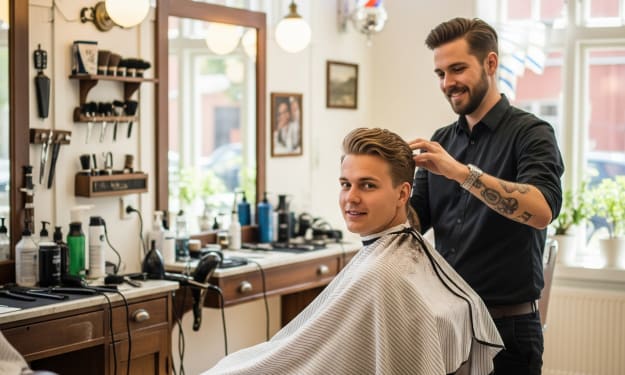
An Analysis of the Men's Hairdressing, Styling and Barber Industry in Umeå, Sweden
1. Executive Summary The men's hairdressing and barbering sector in Umeå, Sweden, presents a dynamic and evolving market, characterized by a blend of traditional service values and contemporary consumer demands. This report indicates a vibrant industry where establishments range from classic, male-centric barbershops to modern, full-service salons, many of which actively cater to a male clientele. Consumer preferences in Umeå appear to mirror broader trends, with demand for both timeless cuts and modern styles such as fades and textured crops, alongside a significant interest in specialized beard care and a growing array of other grooming services.
By Alexander Hyogor8 months ago in Men
The Surprising Truth About Drinking Milk With Prostatitis
The refrigerator door hangs open, its cool light spilling into the dim morning kitchen. You’re staring at the carton of milk, a simple staple that has suddenly become a source of quiet anxiety. Before your prostatitis diagnosis, it was an automatic part of your routine—a splash in your coffee, a base for your oatmeal, or a quick glass before bed. Now, every choice feels like a negotiation with your own body. You wonder, "Is this simple comfort now off-limits? Will it make the pressure, the urgency, the constant awareness of my own anatomy, even worse?"
By Amanda Chou7 days ago in Men
Rachel Reviews: The Spiral Archive by Pieter Hendrik
It's difficult for me to know where to start with a review of this book as it was, for me, an entirely unique experience and one that I'll probably never have again. I don't want that to be interpreted as unenjoyable but it has left me scratching my head a little and ruminating on its content, its themes and its characters.
By Rachel Deeminga day ago in BookClub


Comments