
Innovations in Hair Transplants: How New Technology is Transforming Post-Surgery Recovery
hair transplant treatment
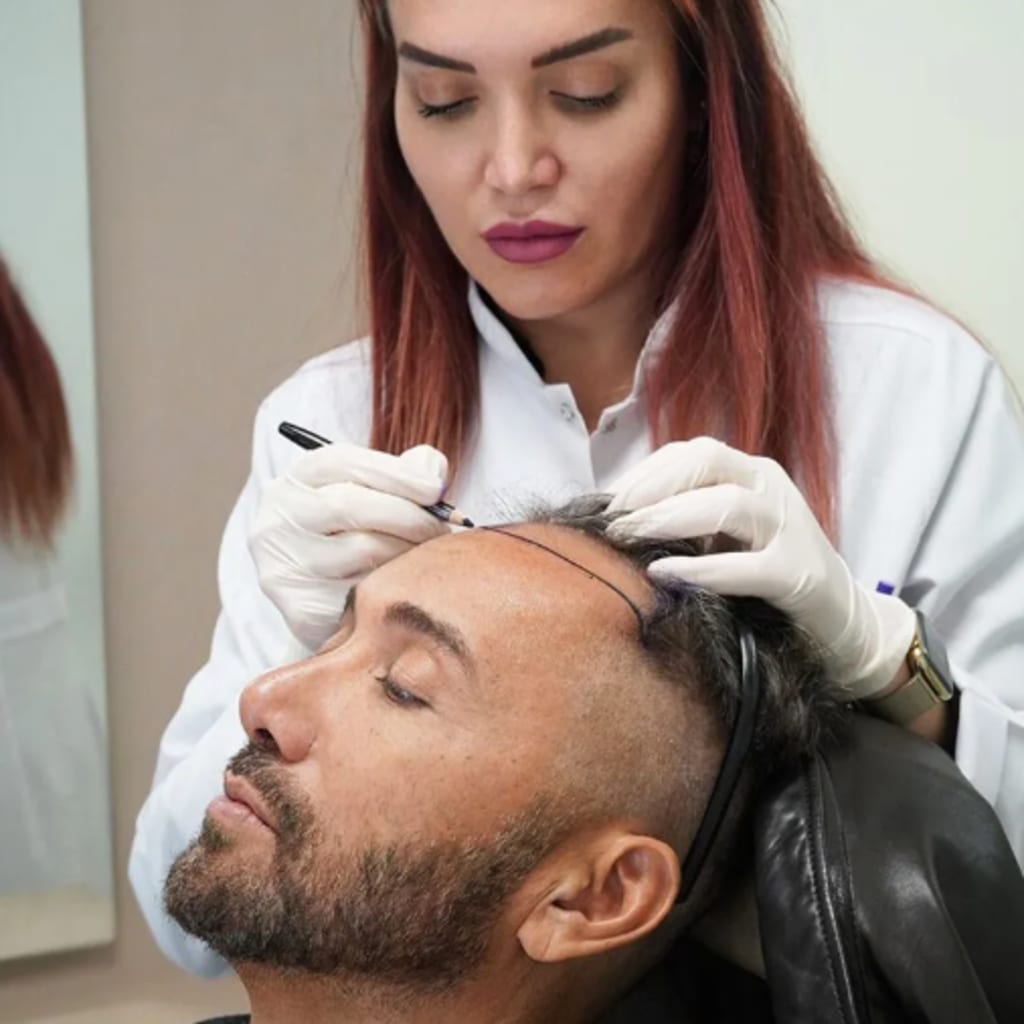
In recent years, the field of aesthetic medicine has seen remarkable advancements, and one area that has benefited immensely is hair restoration. The process once known for its long recovery times, discomfort, and inconsistent results is undergoing a major evolution. With the advent of groundbreaking technology and techniques, patients today are experiencing a more comfortable, quicker, and effective post-operative journey. These changes are not only improving the patient experience but also making the hair transplant procedure more appealing and accessible to a broader audience.
The Rise of Minimally Invasive Techniques
One of the most significant shifts in the hair restoration landscape is the widespread adoption of minimally invasive surgical methods. Traditional approaches often involved large incisions and noticeable scarring, requiring weeks of recovery and significant downtime. Today, technologies like Follicular Unit Extraction (FUE) and Direct Hair Implantation (DHI) have replaced older, more invasive procedures.
With FUE, individual hair follicles are extracted from the donor area using a microneedle and implanted into the thinning or balding regions. This method causes less trauma to the scalp, reduces scarring, and significantly shortens the healing period. Patients are now able to resume normal activities within just a few days. As a result, the psychological and social discomfort associated with visible signs of surgery is also greatly reduced.
Regenerative Medicine and Stem Cell Applications
One of the most exciting innovations transforming post-surgery recovery is the integration of regenerative medicine. Researchers and clinicians are increasingly turning to Platelet-Rich Plasma (PRP) therapy and stem cell treatments to enhance healing and stimulate new growth. PRP involves extracting the patient's blood, isolating the platelets, and injecting them into the scalp to accelerate tissue repair and follicle rejuvenation.
Stem cell-enriched grafts are another breakthrough that is gaining momentum. These grafts are harvested with a combination of hair follicles and surrounding stem cells, which are believed to play a crucial role in healing and tissue regeneration. Their inclusion can help reduce inflammation, speed up recovery, and improve graft survival rates. This biological enhancement is a game-changer for individuals who previously experienced poor outcomes due to slow healing or excessive scarring.
Robotic Assistance and AI Precision
Artificial Intelligence (AI) and robotics are revolutionizing how hair restoration surgeries are performed and how recovery unfolds. Robotic systems, such as the ARTAS system, provide unparalleled precision in extracting and placing follicles. These machines are guided by sophisticated algorithms that map the patient’s scalp, ensuring optimal placement and minimizing trauma to surrounding tissue.
This increased accuracy leads to better graft survival and a natural-looking hairline. From a recovery standpoint, robotic assistance reduces human error and physical strain, which can lower the likelihood of complications. The less invasive the surgery, the less demanding the recovery, and this has become a fundamental principle in modern procedures.
Moreover, AI-driven post-operative monitoring systems are now being used to track healing progress and detect early signs of infection or graft failure. Patients can upload images or data from home and receive instant feedback from their medical team, reducing the need for multiple follow-up appointments and allowing quicker interventions if issues arise.
Cooling Devices and Light Therapy for Enhanced Healing
New therapeutic devices are also making waves in the post-surgical care of hair restoration patients. Low-Level Laser Therapy (LLLT) is one such technology that’s gaining widespread adoption. By applying red light wavelengths to the scalp, LLLT increases blood flow and cellular activity, helping the scalp recover more efficiently. It's painless, non-invasive, and can be used at home as part of a routine recovery protocol.
In addition to laser therapy, advanced scalp cooling systems are being introduced to reduce inflammation and discomfort in the first 24 to 72 hours following surgery. These wearable cooling devices work similarly to cryotherapy by minimizing swelling and soothing the area, allowing patients to avoid heavy use of pain medications or anti-inflammatory drugs.
Together, these innovations ensure that patients can not only heal faster but also enjoy a more comfortable and manageable recovery experience, paving the way for broader acceptance of hair restoration procedures.
Personalized Recovery Plans and Digital Integration
Technology has not only improved surgical tools but also enhanced how patients engage with their recovery plans. Mobile health applications and digital dashboards now allow clinicians to design personalized recovery protocols tailored to each patient’s biology, health status, and lifestyle. These tools remind patients to take medications, apply topical treatments, or attend virtual check-ins.
By integrating wearables that monitor sleep, stress, and physical activity, doctors can gain a fuller picture of a patient's healing environment. When signs of delayed recovery or potential setbacks appear, interventions can be adjusted in real-time. The result is a proactive rather than reactive approach to healing, reducing complications and optimizing results.
Furthermore, virtual consultations and augmented reality platforms are helping patients visualize their healing timeline and expected outcomes. This education empowers individuals, reduces anxiety, and helps them adhere more strictly to post-operative guidelines, which in turn boosts overall success rates.
The Future of Seamless Healing
Looking ahead, the integration of nanotechnology, bioengineered follicles, and smart biomaterials may further revolutionize post-surgery recovery in hair restoration. Early-stage research is exploring scaffolds that can support new follicle growth and biodegradable materials that dissolve as the scalp heals, eliminating the need for sutures or staples.
Nanoparticle-based drug delivery systems are another promising area. These technologies could allow for controlled release of healing agents directly into the scalp, ensuring continuous support over the weeks following surgery. Combined with genetic profiling, these systems may eventually allow for hyper-personalized treatments that match the individual’s unique healing capacity.
While many of these concepts are still in development, the current wave of innovations is already making a significant impact. From minimally invasive techniques and biologics to smart monitoring and personalized care, the patient’s path to recovery is faster, safer, and more predictable than ever before.
About the Creator
Keep reading
More stories from Hash Invasive and writers in Men and other communities.
Chasing the Ideal: Liposuction and the Culture of Celebrity Perfection
In an era dominated by Instagram filters, paparazzi shots, and red-carpet glamour, the pursuit of physical perfection has become more than just a personal goal — it’s a societal standard. Celebrities often serve as the gold standard of beauty, and their seemingly flawless physiques have inspired millions to chase similar ideals. At the heart of this pursuit lies a booming cosmetic industry, with liposuction surgery standing out as one of the most prominent tools in the modern aesthetic arsenal. But beneath the surface of sleek contours and toned abdominals lies a complex cultural story — one that speaks volumes about identity, self-worth, and the ever-blurring line between authenticity and aspiration.
By Hash Invasive10 months ago in Men
127 Hours of Hell
Aron Ralston's unthinkable choice in a Utah canyon and the excruciating self-amputation that saved his life The human survival instinct is powerful enough to make us do things we would consider absolutely impossible under normal circumstances, and nowhere is this more dramatically illustrated than in the true story of Aron Ralston, a twenty-seven-year-old mechanical engineer and experienced outdoorsman who became trapped alone in a remote Utah canyon in April 2003 and made the unthinkable decision to amputate his own right arm using a cheap multi-tool knife in order to free himself from the eight-hundred-pound boulder that had him pinned against a canyon wall, and the fact that he survived this self-performed surgery and managed to rappel down a sixty-five-foot cliff and hike seven miles through the desert before finding help represents one of the most remarkable survival stories in modern history. Ralston's ordeal began on Saturday, April 26, 2003, when he drove alone to Canyonlands National Park in southeastern Utah for a day of solo canyoneering, a sport he was passionate about that involves hiking, climbing, and rappelling through slot canyons, and he deliberately chose not to tell anyone where he was going because he valued his independence and solitude and never imagined that this decision would nearly cost him his life and would become the detail that made his situation so desperately dangerous.
By The Curious Writerabout 7 hours ago in Men
The Man Who Fell From 33,000 Feet and Lived:
How a Serbian flight attendant survived the highest fall without a parachute and the mysterious explosion that caused it The survival of Vesna Vulović, a twenty-two-year-old flight attendant who fell 33,330 feet from an exploding aircraft over Czechoslovakia in 1972 and lived, represents the most extreme survivable fall in recorded history, and the circumstances of both the explosion that destroyed JAT Yugoslav Airlines Flight 367 and her impossible survival have never been fully explained, making her story one of the most remarkable and mysterious in aviation history. On January 26, 1972, Vulović was working aboard DC-9 Flight 367 traveling from Stockholm to Belgrade with stops in Copenhagen and Zagreb, and she was actually a last-minute crew substitution, replacing another flight attendant named Vesna who had the same first name, and this twist of fate meant that she was on a plane she was never supposed to be on, working a route that was not her usual assignment, when at 4:01 PM the aircraft was at cruising altitude over the mountains of eastern Czechoslovakia and suddenly exploded, breaking apart in mid-air and sending debris and passengers falling six miles to the ground below.
By The Curious Writerabout 7 hours ago in Men


Comments
There are no comments for this story
Be the first to respond and start the conversation.