
Don’t Love and Cry Just Fuck and Fly
Don’t Love and Fly, Just Fly: The Modern Rebellion Against Attachment
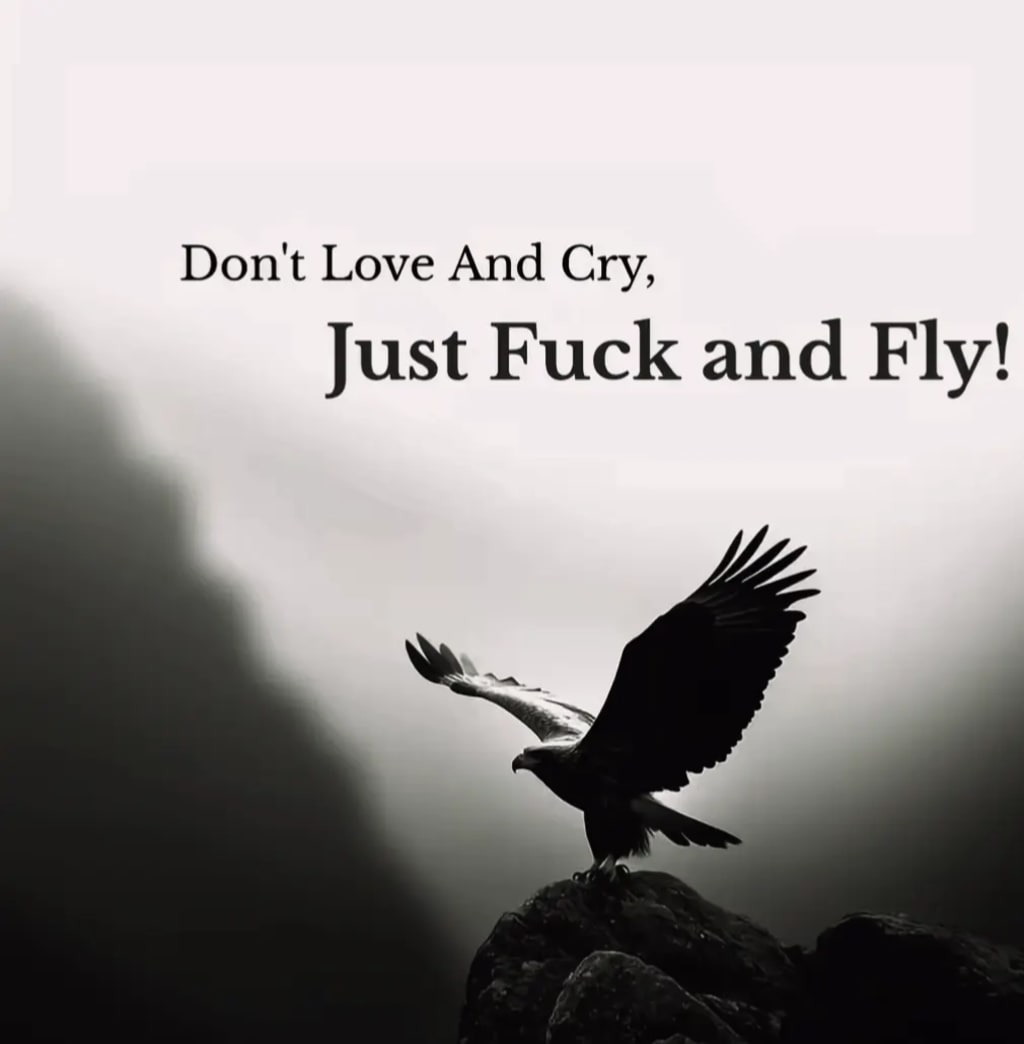
Don’t Love and Fly, Just Fly: The Modern Rebellion Against Attachment
In an age of fleeting connections and restless ambition, a new cultural mantra has emerged: “Don’t love and fly, just fly.” The phrase has become symbolic of a generation choosing freedom over attachment, ambition over intimacy, and self-fulfillment over dependence. It’s not just a slogan — it’s a reflection of how technology, social change, and emotional fatigue have reshaped what love means in the 21st century.
For many young people today, love no longer sits at the center of their life goals. The modern world, with its emphasis on career growth, travel, and personal evolution, encourages independence at every level. The idea of “just flying” — moving forward without emotional anchors — speaks to those who fear that love may slow them down or complicate their pursuit of freedom.
This shift didn’t happen overnight. The digital era has transformed relationships into fast-moving exchanges, often filtered through screens and apps. Dating culture, influenced by platforms like Tinder, Bumble, and countless others, promotes the idea of endless options. Swipe left, swipe right — the next connection is only a click away. In such an environment, commitment begins to feel restrictive, even outdated. The mantra “don’t love and fly, just fly” fits perfectly into this mindset: enjoy the moment, but don’t stay grounded.
Sociologists have noted a steady rise in “situationships” — relationships that lack labels, expectations, or long-term plans. These arrangements often promise emotional companionship without the responsibilities that come with traditional love. While they may seem liberating, they also reflect a deeper fear of vulnerability. People are more guarded now, more protective of their energy and emotions. Love, in its raw and demanding form, requires exposure — and that can feel dangerous in a world that values control.
But it’s not just fear driving this trend; it’s also ambition. Modern life moves fast. Between career pressures, financial instability, and the constant chase for personal growth, many people view relationships as distractions. The new form of independence — celebrated on social media and in pop culture — encourages self-prioritization. Phrases like “focus on your grind,” “chase the bag,” and “put yourself first” dominate digital spaces. “Don’t love and fly, just fly” becomes an anthem for self-determination — a refusal to let emotions dictate direction.
Yet, beneath this empowerment lies a quiet irony. For all the talk of freedom, loneliness has become one of the most widespread conditions of modern life. Studies have shown that despite being more connected online, people report feeling more isolated than ever. The very independence we celebrate often comes at the cost of intimacy. The walls we build to protect our peace sometimes keep love out entirely.
Still, many argue that this isn’t a rejection of love itself — but a redefinition of it. Younger generations tend to view love as something fluid, evolving, and non-possessive. It’s no longer about “belonging” to someone; it’s about growing alongside someone without losing yourself. In that sense, “just fly” doesn’t mean abandoning love — it means refusing to be trapped by it. It’s a statement of emotional autonomy: I can love, but I can also let go.
Artists, writers, and musicians have picked up on this cultural rhythm. Modern songs, films, and social media expressions often glorify the solo journey — the hero who walks alone, the woman who chooses peace over partnership, the dreamer who leaves rather than stays. It’s a romanticization of solitude, portraying independence as the ultimate form of strength.
However, balance is key. True freedom doesn’t come from running away from love — it comes from mastering it. To “fly” without love is to avoid risk; to “fly” with love and still remain free is the greater challenge. Perhaps the modern generation isn’t heartless, just cautious — trying to love without losing themselves in the process.
In the end, “Don’t love and fly, just fly” captures a complex truth of our times. It’s both an anthem of empowerment and a quiet cry of self-preservation. It celebrates independence but also exposes the emotional cost of living without connection. Maybe the real evolution lies not in rejecting love — but in learning to love without clipping our wings
About the Creator
10 Things That Can Change Your Life in Six Months If You Stay Consistent
1. Remove Harmful Distractions One of the biggest productivity killers today is constant distraction. Porn, excessive social media, and mindless entertainment steal hours from your day without giving anything meaningful in return. These habits may seem harmless at first, but over time they slowly drain your focus, motivation, and energy.
By The Curious Writer3 days ago in Men
TUS NUA - ch 53
TUS NUA – ch 53 New Beginnings – Mia and Midnight (*)(*)(*) Finola knew Ali’s brother-in-law needed to put his mind at rest. She fed her arm through his and led him outside. “We’ll sit here. If you like, I can put a block around us so our conversation will be private.”
By Margaret Brennan5 days ago in Fiction



Comments
There are no comments for this story
Be the first to respond and start the conversation.