
Different Types of Indian Outfits for Men and Their Cultural Significance
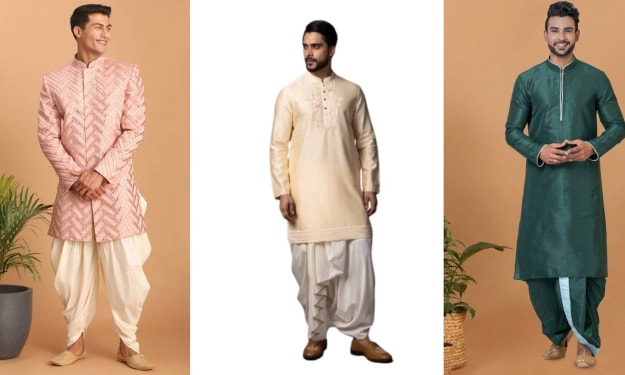
Sherwani for men

Indian men’s clothing is more than just fabric stitched into a garment—it is a celebration of history, heritage, and identity. Every outfit carries its own story, reflecting regional traditions, festivals, and evolving fashion sensibilities. From the royal sherwani to the humble yet elegant kurta pajama, men’s ethnic wear in India represents a blend of culture, comfort, and timeless style.
In this blog, we’ll explore the different types of Indian outfits for men, their origins, how they are styled today, and the cultural significance that makes them special.
Sherwani – Royalty That Never Fades
The sherwani is synonymous with grandeur and celebration. Traditionally worn by kings and nobles during the Mughal era, it became the attire of choice for grooms and festive occasions. Sherwanis are long, coat-like garments worn over a kurta and churidar or pajama, often crafted in luxurious fabrics like silk, brocade, or velvet.
Cultural Significance:
The sherwani signifies prestige, honor, and festivity. Even today, it remains the most popular wedding attire for Indian grooms, often paired with a turban, stole, and juttis to complete the royal look.
Modern Touch:
Designers now experiment with Indo-Western sherwanis—adding asymmetrical cuts, minimal embroidery, and modern silhouettes for men who want a mix of tradition and trend.
Kurta & Kurta Pajama – Everyday Comfort to Festive Elegance
The kurta is one of the most versatile Indian outfits for men. Traditionally made in cotton or silk, a kurta is a long tunic that can be worn alone or with a pajama, churidar, or even jeans for a modern twist.
Cultural Significance:
Kurtas are deeply rooted in Indian culture and are worn across regions—be it daily wear, temple visits, or during festivals like Diwali, Eid, and Raksha Bandhan. For weddings and special events, embroidered or silk kurtas paired with pajamas elevate the elegance.
Modern Touch:
Contemporary kurtas come with stylish collars, prints, and fusion designs that make them a go-to outfit for both traditional and semi-formal gatherings.
Nehru Jacket – A Blend of Power and Sophistication
Named after India’s first Prime Minister, Jawaharlal Nehru, this sleeveless or full-sleeved jacket adds charm and authority to any outfit. It is typically worn over a kurta pajama but can also be paired with western trousers for a smart Indo-fusion look.
Cultural Significance:
The Nehru jacket symbolizes confidence, political stature, and Indian pride. Over the years, it has been adopted as a symbol of dignified dressing for events, weddings, and even corporate occasions.
Modern Touch:
Designers now introduce Nehru jackets with quirky prints, vibrant colors, and fusion styling, making them appealing for young men at weddings and festive parties.
Pathani Suits – Rugged Yet Elegant
Inspired by Afghan and Pathan culture, the Pathani suit consists of a long kurta with a straight cut, paired with salwar-style bottoms. It is often crafted in cotton, giving it a relaxed yet commanding appeal.
Cultural Significance:
The Pathani suit stands for masculinity and strength. It is especially popular during Eid celebrations, traditional functions, and regional weddings, symbolizing pride and cultural identity.
Modern Touch:
Today, men style Pathani suits in solid shades like black, navy, or earthy tones, often accessorized with a Nehru jacket for an elevated look.
Dhoti – The Oldest Traditional Attire
The dhoti is one of the oldest garments for Indian men, deeply tied to Indian tradition and spirituality. It is essentially a long piece of cloth tied around the waist and legs in a unique draping style.
Cultural Significance:
The dhoti is often associated with purity, simplicity, and cultural pride. It holds strong religious importance, worn by priests, scholars, and men during rituals, temple visits, and traditional ceremonies. In South India, the dhoti is commonly called a veshti or mundu, while in Bengal, it’s known as dhuti.
Modern Touch:
While less common in urban life, dhotis have found their way into designer collections, with pre-stitched versions offering style and comfort for weddings and cultural events.
Dhoti Kurta – Tradition With a Regal Flair
The dhoti kurta combines the simplicity of a dhoti with the elegance of a kurta. This pairing has been worn by men for centuries, especially during weddings, pujas, and festivals.
Cultural Significance:
In many parts of India, including Bengal, South India, and rural regions, the dhoti kurta is considered a symbol of respect, heritage, and grace. For grooms, a silk dhoti kurta adorned with embroidery creates a majestic look.
Modern Touch:
Pre-stitched dhotis with kurtas in silk, brocade, or linen make this outfit more accessible to younger generations looking for a mix of heritage and convenience.
Achkan – Aristocratic Elegance
Similar to a sherwani but slightly shorter in length, the achkan is another outfit deeply rooted in aristocratic India. Traditionally made of silk or brocade, it is worn with churidar pants and sometimes accessorized with a stole.
Cultural Significance:
The achkan is particularly popular in North India and was historically worn by royals and nobles. It is considered a ceremonial dress that reflects authority and sophistication.
Modern Touch:
Today, achkans are preferred for weddings, receptions, and high-profile cultural events. Designers experiment with embroidery, pastel shades, and Indo-Western cuts to keep the outfit fresh.
Conclusion
From the grandeur of sherwanis to the simplicity of dhotis, Indian men’s clothing captures the country’s cultural richness and diversity. Each outfit tells a story—of rituals, traditions, and heritage, that has been passed down through generations.
In today’s world, these outfits are no longer limited to festivals or weddings, they are a fashion statement, blending the past with the present. Whether you want to embrace the royal elegance of a sherwani, the versatility of a kurta pajama, or the cultural pride of a dhoti kurta, Indian ethnic wear for men ensures you always carry a piece of tradition with style.
About the Creator
10 Things That Can Change Your Life in Six Months If You Stay Consistent
1. Remove Harmful Distractions One of the biggest productivity killers today is constant distraction. Porn, excessive social media, and mindless entertainment steal hours from your day without giving anything meaningful in return. These habits may seem harmless at first, but over time they slowly drain your focus, motivation, and energy.
By The Curious Writer5 days ago in Men


Comments
There are no comments for this story
Be the first to respond and start the conversation.