
Between Shadows and Honor
"Between Shadows and Honor," encapsulates the dilemma of military life, characterized by danger and sacrifice, yet driven by the desire to fulfill one's duty and support fellow soldiers. It portrays the human nature tested in difficult times and showcases the triumph of survival and camaraderie amidst the shadows of war.
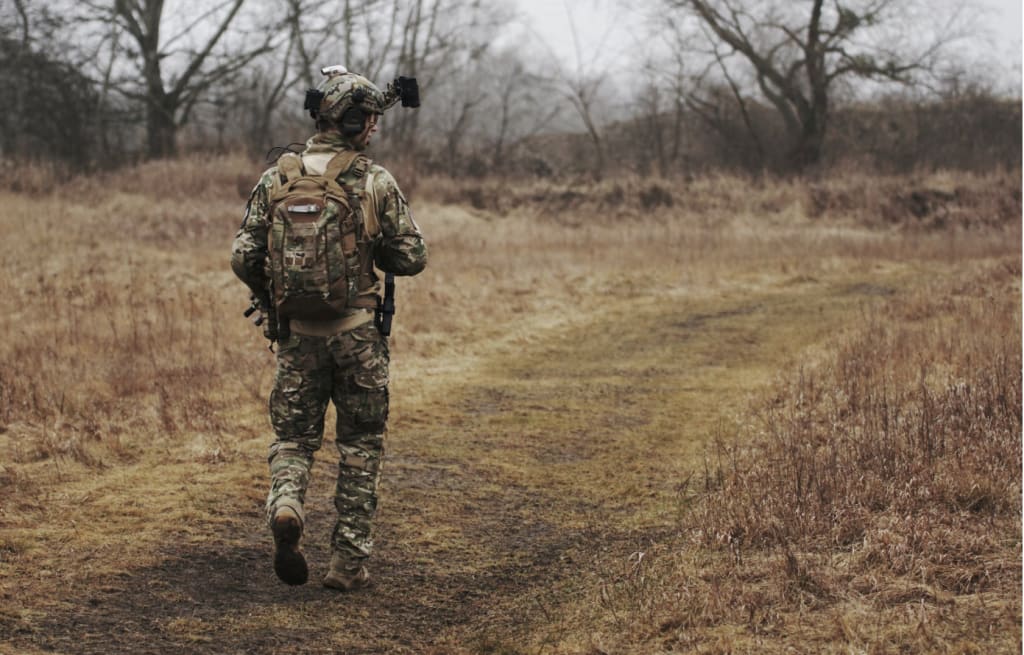
The moon stood high in the sky as Sergeant Miller and his unit arrived at the camp. They had just completed a long and dangerous mission. Everyone was exhausted, but their duty constantly called them back into the darkness of war.
Miller had been a soldier for years. Military life had shaped and changed him. He had experienced the sound of weapons, the smell of blood, and the horrors of war. Yet, despite all the atrocities, he never lost his faith in the mission and camaraderie.
The camp was secluded in the mountains, surrounded by dense fog and impenetrable forests. There was no civilization in sight. Here, the rules of the military prevailed. There was no time for doubt or weakness. Victory and survival were all that mattered.
One night, while Miller was on patrol, he suddenly heard suspicious noises. He tensed his muscles and gripped his weapon. Shadows darted through the undergrowth, and he knew he wasn't alone. He signaled his comrades, and together they moved swiftly and silently towards the sounds.
Suddenly, the darkness broke, and a fierce firefight erupted. Bullets flew, and the soldiers' shouts merged with the sounds of explosions. Miller fought like a lion, charging forward and protecting his comrades with everything he had. Yet, it seemed hopeless.
As the smoke cleared, Miller witnessed the devastation around him. Comrades lay wounded or dead on the ground. But despite the defeat, there was no room for mourning or resignation. They had repelled the enemy and defended the camp. Duty continued to call them.
In the following weeks, Miller led his unit through dangerous operations. They fought on the frontlines, traversed enemy territory, and risked their lives for their comrades and their homeland. Yet, despite the constant pressure and fear of death, their bond grew stronger.
The war dragged on, seemingly without end. But Miller and his unit kept fighting. They fought for their beliefs, for their comrades, and for a better future. The shadows of war had molded them, but they had preserved their honor.
When the day of liberation finally came and the war ended, they returned to their homeland. Their mission was accomplished, but they had paid a high price. Yet, they were not broken. They had learned that military life was not solely defined by darkness and terror but also by unity and strength.
In the aftermath of the war, Miller and his unit returned home to a country that hailed them as heroes. Parades were held, medals were awarded, and speeches praised their bravery. But amidst the celebrations, Miller couldn't help but feel a sense of emptiness. The horrors of war had left scars on their souls, scars that couldn't be erased by public accolades.
Transitioning back to civilian life proved to be a challenge. The structured routines and unwavering camaraderie of the military were replaced by a sense of aimlessness and isolation. Miller and his comrades struggled to find their place in a world that seemed so different from the battlefield.
Haunted by memories and plagued by nightmares, Miller sought solace in the company of his fellow soldiers. They formed a tight-knit support network, understanding each other's silent struggles and unspoken traumas. They found comfort in shared stories, laughter, and the knowledge that they were not alone in their experiences.
Despite the difficulties, Miller refused to let the shadows of war consume him. He embarked on a personal mission to help his fellow veterans reintegrate into society. Together, they formed a veterans' support group, offering a listening ear, counseling, and resources to those who had served.
As Miller dedicated himself to this new purpose, he discovered that helping others heal was a way to heal himself. Through their collective efforts, they forged new bonds and found a renewed sense of purpose. They became a beacon of hope for those struggling to find their way back to a semblance of normalcy.
Their work caught the attention of organizations and policymakers, leading to the establishment of better mental health support systems for veterans. Miller and his comrades became advocates, speaking out about the challenges faced by returning soldiers and demanding change.
Over time, Miller realized that their journey from the darkness of war to a life of honor wasn't just about surviving—it was about thriving. The scars they carried were reminders of their resilience and the strength they found within themselves and each other.
About the Creator
Keep reading
More stories from writers in Men and other communities.
The Departed: The Crime Thriller With a Twist That Still Shocks Fans
When The Departed premiered in 2006, audiences were introduced to one of the most intense crime thrillers of the modern era. Directed by Martin Scorsese, the film blends tension, violence, and psychological drama into a story that keeps viewers guessing until the very last moment. With powerful performances and a complex narrative about loyalty and betrayal, the film quickly became a landmark in modern crime cinema.
By Lukáš Hrdlička2 days ago in Men
Titanic Secrets That Still Haunt the Ocean More Than a Century Later
On the night of April 14, 1912, the world believed it had conquered the ocean. The RMS Titanic was the largest and most luxurious passenger ship ever built. Newspapers proudly described it as nearly unsinkable. Wealthy elites, hopeful immigrants, and crew members all boarded the ship with confidence that they were traveling on a masterpiece of engineering. Few could imagine that this floating symbol of human progress would soon become one of the most tragic maritime disasters in history.
By Lukáš Hrdlička2 days ago in Men


Comments
There are no comments for this story
Be the first to respond and start the conversation.