
The Quiet Language of Love
Sometimes the Deepest Love Is Spoken Without Words

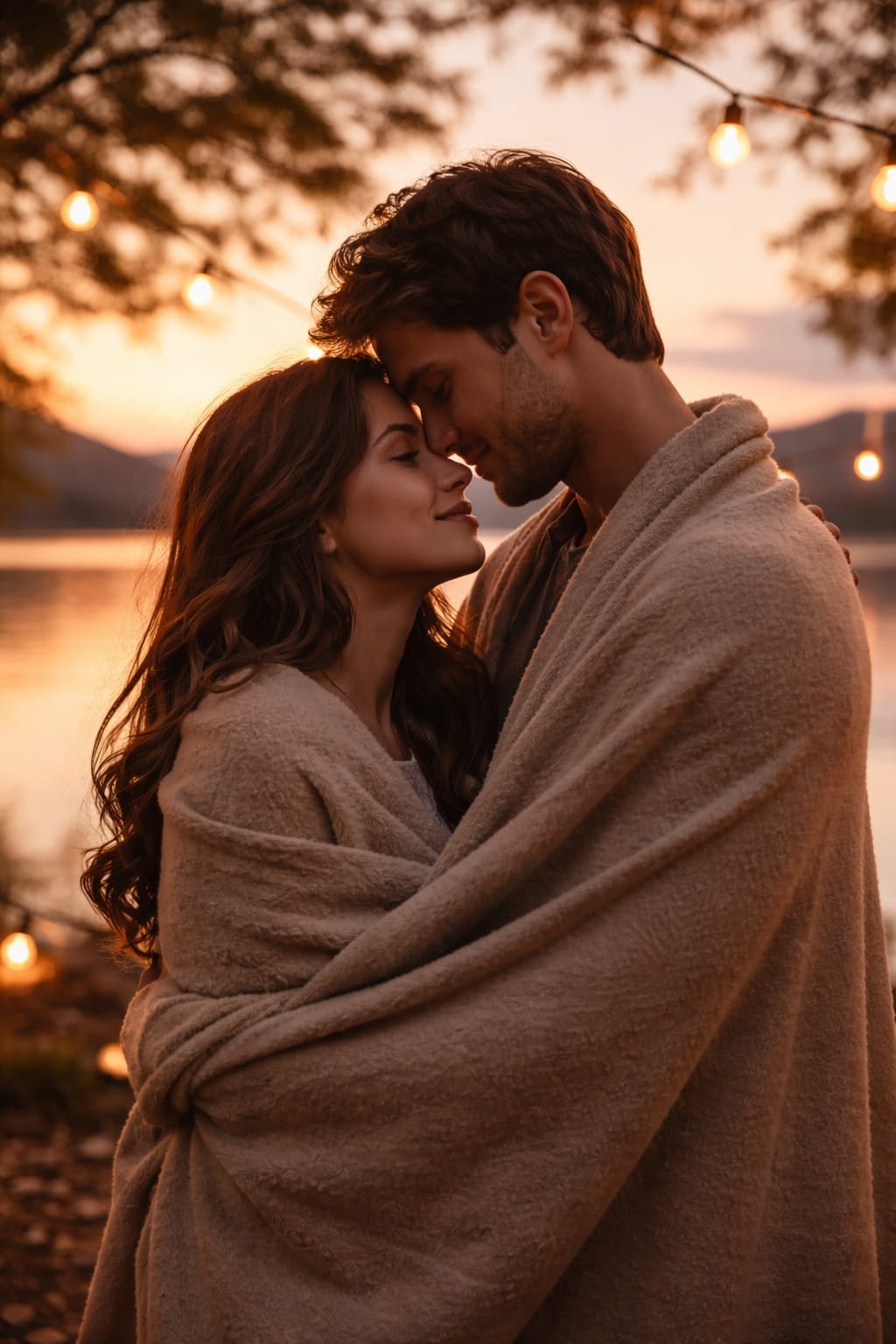
On the edge of a small lakeside town stood a weathered wooden bench that had witnessed decades of changing seasons. In spring, it was surrounded by wildflowers; in autumn, by leaves that fell like gentle rain. Few people noticed the bench anymore—except for two strangers whose lives were about to quietly intertwine.
Elena arrived in the town at the beginning of summer. She had taken a temporary job at the local library, hoping the calm environment would help her recover from a year filled with disappointment. She carried herself with quiet determination, though her eyes often held the distant look of someone rebuilding their inner world.
Every evening after work, she walked to the lake and sat on the bench with a book in her hands. Reading had always been her refuge. Stories made sense in ways life sometimes did not.
One evening, as the sky softened into shades of gold and lavender, she noticed someone painting near the water. A young man stood before an easel, his brush moving quickly as if he were racing against the fading light.
Over the next few days, their silent routine continued. Elena read; the painter painted. They exchanged polite nods but nothing more.
Until the day the rain came unexpectedly.
Elena had forgotten her umbrella and was about to run for shelter when the painter stepped forward, holding one above her head.
“You can share mine,” he said simply.
His name was Adrian.
From that day on, words slowly replaced silence. They learned each other’s habits first—Elena’s love for early mornings, Adrian’s preference for twilight. Then came the small stories: favorite childhood memories, places they dreamed of visiting, the things that frightened them and the things that gave them hope.
Adrian painted landscapes, but he confessed that what he truly loved was capturing emotion—the kind you couldn’t easily describe.
“Feelings are colors,” he once said. “Most people just don’t notice them.”
Elena smiled. “Maybe they’re too busy looking for something louder.”
Their friendship unfolded gently, like the turning of pages in a cherished book. There was no dramatic moment, no grand declaration—only countless small acts of care.
When Elena mentioned she missed homemade meals, Adrian surprised her with a simple dinner he had learned from his grandmother. When Adrian doubted his talent after a gallery rejected his work, Elena spent hours writing letters to local cafés, helping him find places willing to display his paintings.
Love, though neither named it yet, was growing in the quiet spaces between them.
One afternoon, Elena arrived at the bench to find Adrian unusually restless.
“I got an offer,” he said. “A studio in another city. It’s everything I hoped for.”
She felt happiness rise first—then the ache that followed.
“That’s wonderful,” she said, meaning it.
Yet that evening, the lake seemed wider than ever before.
In the days that followed, both avoided speaking about what his departure would mean. Instead, they focused on ordinary moments, as if stretching time.
On Adrian’s final night in town, he asked Elena to meet him by the water.
The bench was decorated with tiny lanterns, their reflections shimmering like stars fallen into the lake.
“I wanted to give you something,” he said, revealing a covered canvas.
When he lifted the cloth, Elena gasped softly.
The painting showed the bench beneath a glowing sky—but it was not empty. A figure sat reading, peaceful and luminous. Beside her, subtle but unmistakable, were shades of color swirling through the air.
“That’s how I see you,” Adrian explained. “You bring color without trying.”
Elena traced the edge of the canvas. “I don’t know what to say.”
“You don’t have to,” he replied. “Some things are understood.”
For a moment, neither spoke.
Then Elena said quietly, “I used to think love had to be dramatic to be real. But with you, it’s been… steady. Like the lake.”
Adrian nodded. “Love doesn’t always arrive like a storm. Sometimes it grows so gently you only recognize it when you imagine life without it.”
The truth settled between them—not heavy, but clear.
“Does leaving mean goodbye?” Elena asked.
“No,” Adrian said. “It means we choose what happens next.”
She looked out across the water, gathering courage.
“Then I choose not to let distance decide for us.”
Months passed after Adrian moved away. They wrote letters—real ones, ink on paper. They shared sketches, pressed flowers, favorite lines from books. Whenever doubt crept in, they returned to the quiet language they had learned together: patience, honesty, presence.
Eventually, Elena visited his new studio. Sunlight poured through tall windows, illuminating canvases that seemed alive with emotion.
Near the center stood a new painting.
It showed two figures walking along a shoreline at dawn. Not ahead of one another, not trailing behind—simply side by side.
Adrian joined her.
“I realized something while painting this,” he said. “Love isn’t about finding someone who completes you. It’s about finding someone who walks with you while you continue becoming yourself.”
Elena smiled, feeling the truth of his words.
Years later, the old bench still faced the lake. Travelers came and went, seasons changed, but the quiet spirit of that place remained.
For Elena and Adrian, love was never defined by grand gestures. It lived in shared silences, in unwavering support, in the freedom they gave each other to grow.
And if someone had asked them what love truly meant, they might have answered this way:
Love is not always loud.
It is not always dazzling.
Sometimes, it is simply the steady presence of a person who sees your colors—even on the days you cannot see them yourself.
Then they would smile, knowing that the quietest love often lasts the longest.
About the Creator
Keep reading
More stories from NAIB REHMAN and writers in Marriage and other communities.
A Bond Time Couldn’t Break
The first time Amina met Zayd, the air was thick with dust and the sound of hammers. It was the last week of summer vacation, and the neighborhood was alive with the loud, clumsy rhythm of people building a new community center. Amina had come to help her uncle with the painting. Zayd was there because his mother worked as the architect for the project.
By NAIB REHMAN9 days ago in Filthy
Love Can’t Wait: The Real Story Behind Last-minute 2026 Weddings
There’s a quiet myth around weddings that everything must be planned years in advance. Twelve months for the venue, six months for suppliers, endless spreadsheets, and a countdown that feels more stressful than romantic. But Last-minute 2026 weddings are gently breaking that myth—and doing it beautifully.
By Andrew Mile7 days ago in Marriage
A Promise Without a Price Tag: Finding Meaning in Affordable Engagement Rings
The Moment That Matters More Than the Ring When Daniel finally decided to propose, it wasn’t the size of the diamond that kept him awake at night. It was the weight of the promise. He wanted something that said I know you, not look what I bought. Like many people standing at the edge of a lifelong commitment, he felt the quiet pressure of expectations—family traditions, social media highlights, and the unspoken idea that love must be expensive to be real.
By CEO A&S Developers5 days ago in Marriage


Comments
There are no comments for this story
Be the first to respond and start the conversation.