
The Distance Between Us
The Slow Study of an Unmoved Heart

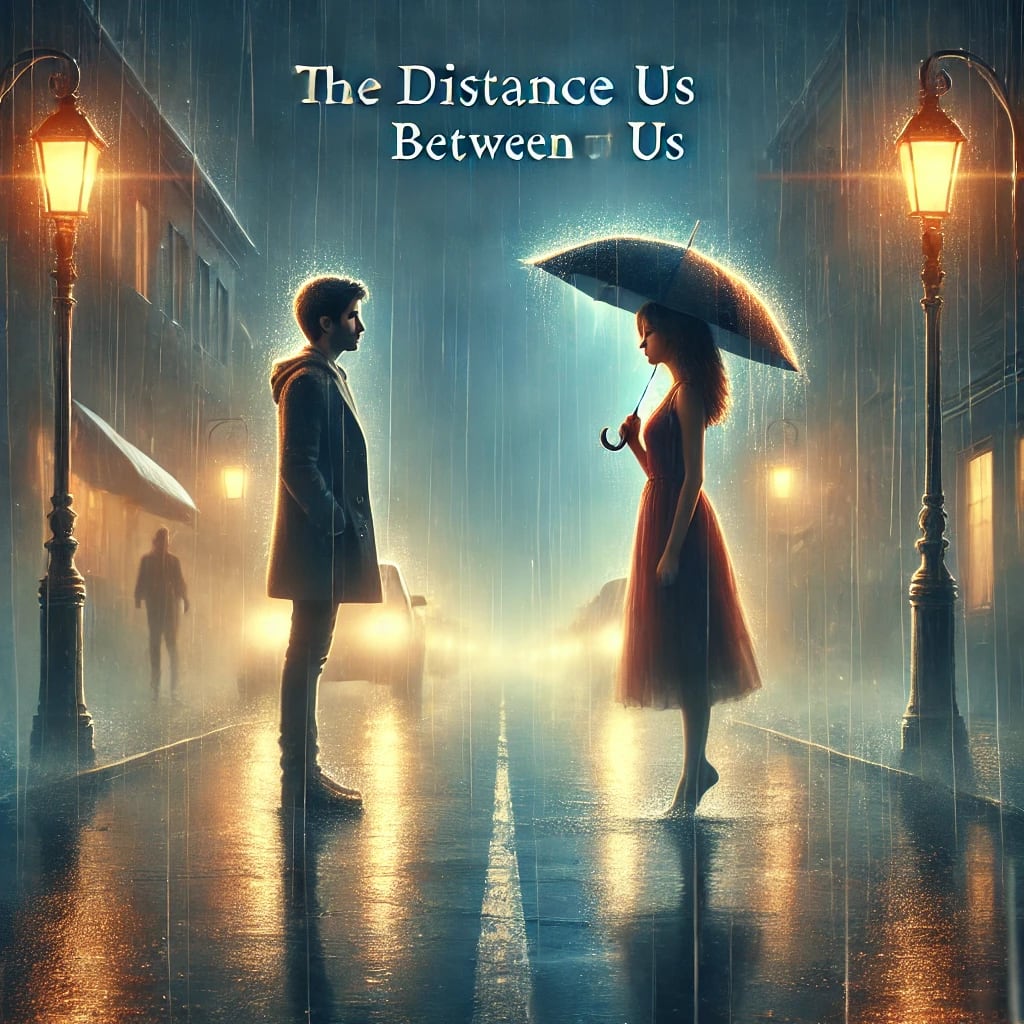
Arthur always thought the universe had a cruel sense of geometry. We sat across the same oak table in the university library, shared the same thin, metallic air of the metro car, and often stood under the same awning waiting for the same sudden storm to break. Yet, the distance between us—the emotional span between my heart and hers—was infinite, a gulf no measure of physical proximity could ever bridge.
Her name was Clara. For four years, she was the fixed star in my sky, the perfect, luminous center around which my own small, predictable life orbited. I knew her patterns the way a fisherman knows the tide: the three hesitant knocks she gave the study room door, the faint scent of sandalwood and old paper that followed her, the small, specific laugh—a sudden, sharp intake of breath—she made when she finally solved a difficult problem set.
I was her perfect supporting character, the steadfast, comfortable friend. I was the one who listened when the others were loud, who remembered the exact brand of tea she hated (Lapsang Souchong) and the one obscure poetry collection she loved (Rilke’s Book of Hours). My love was built on these minute, accumulated facts, a vast, complex internal shrine dedicated to the reality of Clara.
She, meanwhile, saw me as warm wallpaper—reliable, calming, and necessary, but utterly unexciting.
The moment that defined our distance occurred during our third year. We were celebrating the end of exams with our usual group at the crowded, loud pub on Elm Street. Everyone was focused on the victory, shouting over the music. But Clara, momentarily tired of the noise, leaned across the sticky table toward me.
“Arthur,” she said, her voice dropping to a conspiratorial whisper, her eyes wide and earnest. “I think I might be truly happy now. I’ve never been this happy before.”
In that moment, she was six inches from my face. I could see the tiny gold flecks in her hazel eyes, the soft curve of her lower lip. My breath hitched. This was it, I thought. The culmination of the thousand small kindnesses, the hundred hours of listening, the devotion she must finally recognize.
“That’s wonderful, Clara,” I managed, my voice rough. “Why now?”
She pulled back slightly, her smile radiant. “Because Leo finally asked me out. He’s just… incredible. And I think he feels the same way.”
The air rushed out of the room. It wasn’t a knife in the back; it was a gentle, unavoidable correction of physics. Her happiness, the one thing I desired most, had nothing to do with me. It was the absolute, total independence of her joy that was so devastating. The entire universe was telling me: Your affection is irrelevant to her trajectory.
I managed a genuine smile—a real one, untainted by jealousy, because her happiness truly was paramount—and raised my glass. “To Leo, then. And to your happiness.”
“Oh, Arthur, you’re the best,” she said, quickly squeezing my hand—a familiar, friendly gesture—and then turning to describe the exact details of Leo’s clumsy invitation to our mutual friend, David, who sat two feet away.
The distance remained: six inches physically, but light-years emotionally.
For the next year, I watched their relationship flourish from my established position on the periphery. I saw their first awkward date, their first fight (Clara cried on my shoulder, oblivious to the agony it caused me to comfort her about another man), and the gradual, comfortable melding of their lives.
I performed the duties of the supportive best friend flawlessly. When Clara wanted to buy Leo a complicated vintage camera, I spent three Saturdays scouring flea markets, knowing exactly the lens speed he wanted. When Leo needed help moving apartments, I was there with my truck, quietly lifting boxes that contained the elements of their shared future. I was the architect of their happiness, a ghost builder, laying bricks I would never stand on.
Sometimes, the one-sided nature of the love became almost farcical. One rainy evening, we were all at Clara’s apartment. Leo was in the kitchen, joking with Jane. Clara was sitting next to me on the worn sofa, resting her head on my shoulder, tracing patterns on my arm.
“You’re my safe space, Arthur,” she murmured, sleepily. “You’re the quietest, kindest corner of my world.”
A safe space. A corner. Something you retreat to, not something you advance toward. I realized then that my love had become a form of camouflage. My absolute commitment to her well-being made me perfectly harmless. There was no threat, no tension, and therefore, no possibility of romance.
The culmination came, as it always does in these stories, with a ring. It was a clear, sunny day in the Botanical Gardens. Clara and Leo had called everyone together under the pretense of a picnic. Leo made his speech, eloquent and heartfelt, kneeling under the archway of ancient wisteria.
I stood slightly apart, sipping lukewarm lemonade. As Clara screamed a tearful "Yes!" and Leo slipped the diamond onto her finger, everyone surged forward to embrace them.
I waited my turn patiently, rehearsing the perfect, sincere line of congratulations. When I finally reached them, I pulled Clara into a long, familiar hug. The scent of sandalwood and paper was still there.
“I am so incredibly happy for you, Clara,” I whispered, meaning it with every fractured piece of my heart.
She pulled back, her face wet and glowing. “I know you are, Arthur. You’ve always been our strongest supporter.”
That was my epitaph. Strongest Supporter.
The distance between us was cemented that day. It was no longer a question of inches or possibility, but of time and reality. She was stepping into her life, and I was remaining here, on the edge of the photograph.
I didn't leave the picnic immediately. I watched them laugh, watched Leo adjust her hair, watched them make plans for a future that was beautifully and correctly two-sided. I realized that my task wasn't to win her, but simply to love her well, even from the vast, secure distance I had built for myself. My devotion would always be a secret room, furnished only for her, and she would never have to step foot inside to benefit from the warmth it generated. And in a strange, silent way, that was enough.
I raised my glass again, this time to myself, and to the eternal, lonely geometry of unrequited love. The distance remained, but at least, finally, I was done trying to measure it.
About the Creator
Faisal Khan
Hi! I'm [Faisal Khan], a young writer obsessed with exploring the wild and often painful landscape of the human heart. I believe that even the smallest moments hold the greatest drama.
Keep reading
More stories from Faisal Khan and writers in Marriage and other communities.
MISS WINCHELSEA'S HEART
Miss Winchelsea had long dreamed of going to Rome. For more than a month before her departure, she spoke of little else. She discussed Roman history, art, poetry, and famous graves as though she had personal ties to them. Some people admired her enthusiasm, but others found it excessive. A few even suggested that she was rather proud of “her Rome.” Still, Miss Winchelsea believed her passion was refined and intellectual, not boastful. She carefully prepared for the journey, selecting clothes that were sensible yet not obviously tourist-like. Even her red guidebook was hidden in a gray cover to avoid looking common. When the great day came, she stood at Charing Cross Station feeling dignified and adventurous.
By Faisal Khan6 days ago in Fiction
The Last Words My Mother Whispered That Destroyed My Entire Marriage
The Last Words My Mother Whispered That Destroyed My Entire Marriage I still remember the smell of antiseptic in the hospital room. It clung to the air, sharp and unforgiving, as if even the walls understood that something was ending.
By imtiazalam5 days ago in Marriage



Comments
There are no comments for this story
Be the first to respond and start the conversation.