
The Algorithm of Us
How Data Predicts Love—and Why It’s Wrong


In a world where love was no longer a matter of chance but a matter of code, Aria and Eli were the anomaly.
Their story didn’t begin with sparks flying across a crowded room or glances exchanged under starlight. It began with a compatibility score: 52%. In a society where 90% was considered ideal and anything under 70% was frowned upon, 52 was practically a glitch.
Aria, a senior data analyst at the world’s leading relationship algorithm platform, HeartMatch, believed in numbers. Everything from morning coffee preferences to childhood trauma patterns was fed into the system. The algorithm boasted a 99.7% success rate. For Aria, love was math—clean, calculated, predictable.
Eli, on the other hand, was a freelance coder and digital philosopher who believed emotions could never be truly quantified. “We are not equations,” he said once during a viral podcast interview. “We are chaos wrapped in skin.”
So when HeartMatch mistakenly paired Aria with Eli, she was furious. She submitted a complaint to the platform, requesting a reassessment. But instead, her supervisor said, “It’s experimental. We’re testing variables—don’t break it yet.”
Reluctantly, Aria agreed to one coffee date, purely for “data integrity.”
They met at a small café where Eli, with his unkempt hair and analog watch, looked like a relic from a forgotten era. Aria arrived five minutes early, he arrived ten minutes late.
Their first conversation was tense, peppered with statistical arguments from her and poetic metaphors from him.
“Your smile registers increased dopamine release in my test subjects,” she said.
“Maybe love is just the willingness to be wrong for someone,” he replied.
It was infuriating—and oddly intriguing.
One date turned into three. Three turned into ten. Over time, Aria found herself questioning the very platform she helped build. She laughed more. She stopped checking scores and started listening.
Eli, for all his quirks, made her feel seen in ways no algorithm ever had.
But cracks soon formed. Aria’s colleagues were concerned. Her score with Eli hadn’t improved. “You're undermining the credibility of HeartMatch,” her manager warned. “You’re a public figure in the data community. What kind of message are you sending?”
Aria began to spiral. Was love without data sustainable? Could she trust her instincts over the code she’d sworn by for years?
One night, she and Eli had their first real fight.
“I’m scared,” she admitted. “What if we’re just the exception that proves the rule? What if we crash?”
Eli looked at her, his expression soft. “Then we crash. But it’s our story to crash, not the algorithm’s.”
The next day, Aria made a decision that shook the tech world. She quit her job at HeartMatch and wrote a public essay titled: "The Algorithm Got It Wrong—And That’s Okay."
The piece went viral. Some applauded her bravery; others criticized her betrayal of data science. But Aria didn’t care. For the first time, she felt human—not just a number, not just a variable.
Months passed. Aria and Eli moved in together. They fought, they laughed, they made mistakes. It wasn’t perfect—but it was real.
On their one-year anniversary, Eli took her back to the same café. This time, he arrived five minutes early.
He handed her a small box with a note inside.
“There’s no formula for this. Just faith. Will you marry me?”
Aria didn’t hesitate.
“Yes,” she whispered, tears in her eyes. “Yes to all the chaos.”
The media exploded. Headlines read: “The Woman Who Built the Algorithm That Couldn't Predict Her Own Love Story.” But Aria just smiled.
Some things, she had learned, weren’t meant to be solved. They were meant to be felt.
About the Creator
Syed Kashif
Storyteller driven by emotion, imagination, and impact. I write thought-provoking fiction and real-life tales that connect deeply—from cultural roots to futuristic visions. Join me in exploring untold stories, one word at a time.
Keep reading
More stories from Syed Kashif and writers in Marriage and other communities.
Love in the Time of Wi-Fi
In an upscale apartment nestled in the heart of a hyper-connected city, Maya and Arman lived side by side, yet worlds apart. They were the perfect couple on paper—two tech professionals who had met in a coding bootcamp and fallen in love over lines of JavaScript and shared playlists. But that was five years and five hundred unread messages ago.
By Syed Kashif 10 months ago in Marriage
Why Lab-Grown Diamond Rings Are a Smart Choice for Modern Women
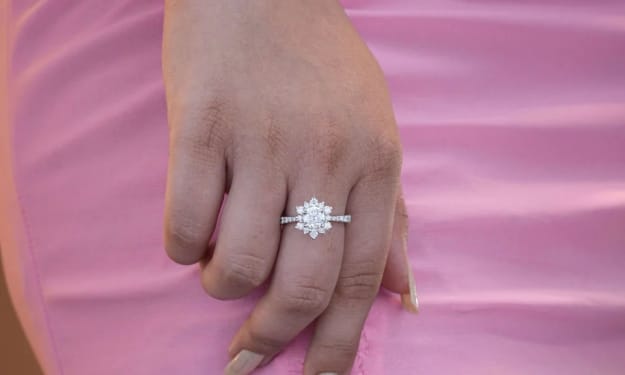
Exploring how sustainable diamonds combine beauty, responsibility, and affordability. Diamonds have always been associated with elegance, celebration, and timeless beauty. For generations, they have symbolized love, commitment, and personal milestones. Today, however, the meaning of diamonds is evolving. Many modern consumers are not only interested in how a diamond looks, but also how it is sourced and produced.
By GemOne Diamond2 days ago in Marriage
Why Lab-Grown Diamond Stud Earrings Are Becoming a Modern Jewelry Essential
Introduction Jewelry trends often change with time, but some pieces remain timeless. Among them, diamond stud earrings continue to hold a special place in everyday fashion. They are simple, elegant, and versatile enough to complement almost any style.
By GemOne Diamond2 days ago in Marriage
A System That Isn’t Working Challenge Winners
Systems promise order. They organize behavior, distribute opportunity, and suggest that if everyone follows the rules, things will work. The entries in A System That Isn’t Working look closely at what happens when that promise begins to slip.
By Vocal Curation Team3 days ago in Resources



Comments
There are no comments for this story
Be the first to respond and start the conversation.