
She was certainly a pioneer in the awakening of marriage
She doesn't have to blow the horn. She's the one who makes it

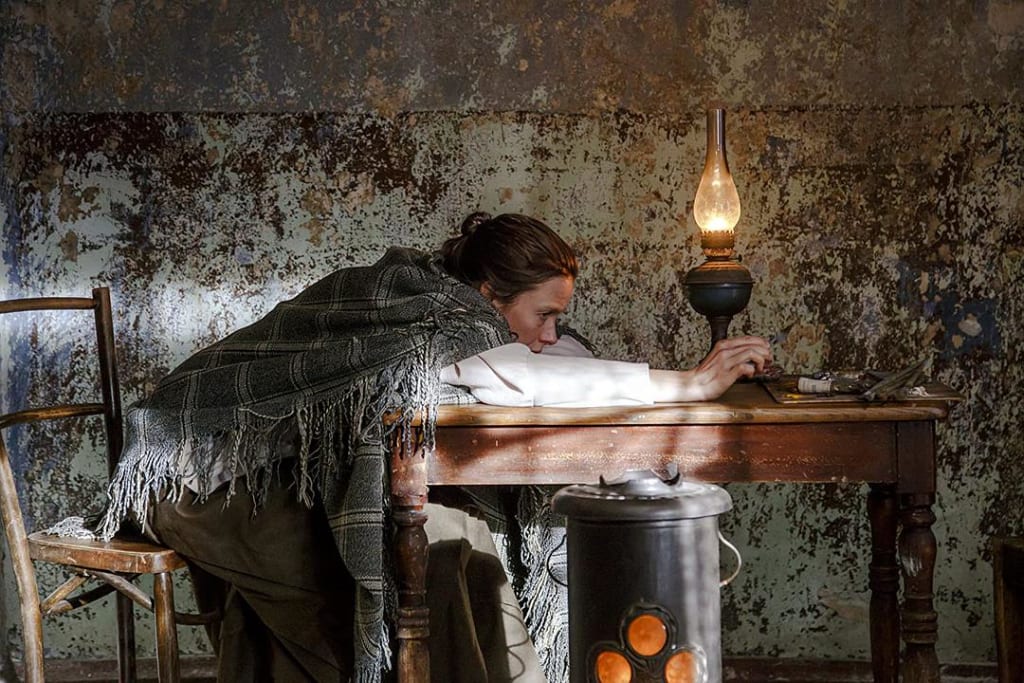
Kate Chopin was born in 1850 in St. Louis, Missouri. At that time, the United States, less than a century old, was still expanding its territory, and the use of black slaves to grow cotton and other crops was still an important economic form in most states. Eleven years later, the Civil War broke out in the name of the abolition of slavery. It was still a frontier, accumulating and growing country, far from becoming a world power, and one important sign was that America had not yet established a great literary tradition. Emerson, Whitman, And Mark Twain have all appeared, but for many readers and writers, it is European literature that represents the highest standards of literature.
That's what happened with Kate Chopin. She grew up in a white family with black slaves, the daughter of an Irish father and a French mother. Brought up by her mother's family due to her father's early death, Kate grew up in a feminine power and bilingual environment. When she began to write in the future, the greatest literary influence on her, is the French novelist Maupassant.
When she was 19, Kate met Oscar Chopin. She wrote in her notebook: "I'm getting married, to the right person. It's not as strange as I thought it would be -- I feel so calm and collected, and everyone is so surprised because I've kept my secret so well! ' They were married the following year. Chopin became Kate's last name.
After their marriage, Kate lived with Oscar in New Orleans, Louisiana. Oscar traded cotton, corn, sugar and so on there. Kate has had five sons and one daughter. One person recalled Kate as an attractive person, short and somewhat curvy but good-looking, with thick curly brown hair and forthright, bright brown eyes. Friends remember her dignified manner and irishwit. She loved to laugh, music and dance, and especially intellectual conversation. In these conversations she was forthright and insightful.
Louisiana was a French colony with a large French immigrant population, including Oscar Chopin's father. In the 1870s, shortly after the Civil War, the Economic and racial problems of the Southern states were severe as they were being rebuilt, and Louisiana was no exception. On another level, as the largest city in the state, New Orleans has a rich cultural life, with a French opera house, a racetrack, and Mardi Gras. French impressionist Painter Edgar Degas lived there for several months in 1872-1873 for his painting "The Cotton Exchange in New Orleans."
Like many writers, Kate showed an interest in reading and writing as a teenager, filling her notebooks with poems and essays. But as a wife and mother, married life -- and especially having six children -- took up most of Chopin's time. Beyond these practical difficulties, the bigger problem was that it was hard for her to imagine herself as a writer in the social environment of the time.
Writing was still a male privilege. The women writers of the 19th century had different strategies to keep writing. George Sand, George Eliot and the Bronte sisters all adopted male pseudonyms. Emily Dickinson never published her poetry; Jane Austen, on the other hand, spent her entire life writing in the public sitting-room, covering her paper when the doorknob rang so that no one would find her writing. It wasn't until 1928 that Virginia Woolf wrote the wisdom that a woman must have money and a room of her own in order to write novels.
The turn came quite dramatically. In 1882, Oscar Chopin died of malaria. Kate took the children back to her hometown of St. Louis to live with her mother. Soon after, my mother died. As Kate sank into grief and depression, her friends encouraged her to use writing as a healing way to release her vitality. Kate accepted the advice.
In 1889, Two of Kate's short stories, "Wiser Than a God" and "Where the Difference Is! (A Point at Issue!) Published in two local newspapers. She was 39 years old.
2
Maupassant was born in the same year as Kate Chopin. He rose to fame in French literature in the 1870s, and in 1880 he published his short story "Ball of Suet", which became a sensation.
In an article, Kate said of Maupassant: "Reading his novels amazed me. It is life, not fiction; I used to fall in love with the latter, which is characterized by vague, thoughtless plots, cliched tricks and organs. Here was a man who broke away from tradition and authority, came into himself, looked at life with his own experience and eyes, and told us simply and forthrightly what he saw."
Maupassant, Chekhov and Jack London, known as the three masters of the short story, laid down the basic techniques of the short story form, such as the cross section of a long life, the unexpected twist at the end, and so on. However, in later literary writing, these are often reduced to routine, in order to reverse, focusing on technique, but forgetting that the core of the technique should be a deep insight into life. As Maupassant paraphrased Flaubert in an essay, "Talent is long perseverance. This means having enough time and enough attention to observe what you want to express, and to find phenomena in it that are less known. There are unknowns in everything, and they remain undiscovered because we are used to seeing things with the preconceived notions of those who came before us. Even the smallest thing can contain something unknown. Seek them out!"
The novelist's task is to discover the unknown, undescribed, unformed mysteries of life, carefully wrapping them in the core of his technique. Without these secrets, the best technique is useless.
Some of Kate Chopin's best novels, such as Desiree's Child, The Story of an Hour, and The Tempest, embody this fictional aesthetic. The smooth narrative, the rapid transition, and finally reveal a secret of life. They are not ordinary novels, they are not bombshells, they are depth charges. By the end of the last line, the reader is not only entertained, it makes you re-evaluate your own life. This is Kate Chopin's literary ideal: to remove the veil of ethics and tradition and reveal the subtle and rich truths of life.
Retelling these novels might spoil the pleasure of reading by betraying the plot. But in general, these novels are about how women really feel about marriage. Rich, well fed, the husband is not a bad man, but life is so ordinary, boring, passion nowhere to go. In the 1960s, Betty Friedan's book The Feminine Mystify was published, describing the life of a housewife as a "comfortable concentration camp". Women's depression and sense of worthlessness in marriage became a widespread topic and an important work in the second wave of American feminist movement. But there were novelists in the late 19th century who described life so accurately, so incisively, and so bravely.
Needless to say, this was shocking at the time. In her short story "The Tempest," Kate Chopin talks about women's sexuality in marriage, and the infidelity in the tempest itself becomes more sexual, and what's more, rather than affecting the marriage, it makes it more stable. "And so, after the storm, everyone was happy." This bold, self-assured and playful novel, never published before Kate's death, was truly written for a drawer.
Unfortunately, at that time, female literature had not formed the pedigree of literary history. Kate Chopin is often classed as a writer of local color -- because her work has local colors and uses dialect. Many of her works were children's stories, which sold well in the booming periodical market.
In 1899, Kate's novel The Awakening appeared. In the novel, a woman in a marriage, feeling trapped and empty, falls in love with another man and wants to escape from her marriage. When the novel was published, it was met with a flood of negative comments, including "sick", "unhealthy", "ugly" and so on.
These reviews are conservative in moral terms, but it must be admitted that "Awakening" is technically less mature than a Kate Chopin short story. Perhaps for Kate Chopin, the book was a sign of greater ambition, a desire not to see her insights as mere epithets, playful, humorous twists, but to see them unfold in a broader, more nuanced, more profound way in everyday life. But writing a full-length novel requires more time, concentration, accumulation and repetition. Did Kate Chopin, a mother of six, have enough time? Will they get enough encouragement and support? Let's not forget that Flaubert worked twelve hours a day for four years and four months on Madame Bovary. What would a woman writer write her own version of Madame Bovary? Perhaps "Awakening" is such an attempt, but unfortunately, we can't see further possibilities from Kate Chopin.
Buffeted by the bad reviews of Awakening, Kate Chopin returned to writing short stories.
In 1904, St. Louis hosted the World's Fair. The world's fair was as spectacular as the Olympics is today. It is said that one hundred thousand tourists from all over the world come to visit it every day, which is a great event. Kate Chopin, 54, went to the fair on August 20 and came back feeling tired. She called her son in the middle of the night, complaining of a headache. The doctor concluded that she probably had a brain hemorrhage. Two days later, Kate Chopin died.
3
For the next half century, Kate Chopin was forgotten.
This forgetfulness is attributed by many to the moral criticism aroused by The Awakening and the unfair evaluation of gender in the literary world. Male writers of the same quality of literature receive higher attention. Of course it is. But the problem doesn't stop there.
In 2013 Charles Johnsmere of the University of Nebraska, Omaha, published a paper. In the late 19th and early 20th centuries, public library catalogs were so important to the circulation of works that the author examined data from eighty PUBLIC libraries in the United States to see how they handled realistic and naturalistic works produced between 1880 and 1914. Charles Johnsmil wrote that he was surprised to find that many librarians -- mostly from cities and larger towns -- would actively buy the boundary-pushing works of the period, like "Maggie the Street Girl," without caring whether they caused an outcry. For "The Awakening," unfortunately, most librarians will choose the safer course: they won't include it.
Literary snobbery exists in every direction. Is it gender, or is it borderline? Or a combination of factors? In the process of the classicization of literary works, there are always various specific, accidental and epochal factors. No matter tao Yuanming and Du Fu in ancient China, or Melville and Kate Chopin in the United States, countless writers have been underestimated and misjudged in contemporary fashion. Once a work is written, it can only merge into the river of time and wait for its fate in history.
In 1969, Kate Chopin was rediscovered. The scholar Per Seyersted wrote a biography of her, saying she broke new ground in American literature. "The Awakening" was included in the Penguin Canon, and scholar Sandra Jelbert wrote an introduction to the book. At that time, it was the second wave of feminism in the United States. In 1979, Sandra Gilbert and Susan Guba published the classic work mad Woman in the Attic, which combed the female writers in the 19th century British and American literary system, such as Jane Austen, the Bronte Sisters, Emily Dickinson... How they struggled to create their own space out of the realm of male writing.
When Kate Chopin enters the pedigree of female literature and writers, a question arises repeatedly: was Kate Chopin a feminist? Later in her life, the first wave of feminism was emerging in Britain and The United States -- the women's movement for the right to vote. Was Kate Chopin part of it?
Every female artist is asked this question. Their answer is mostly no. They tried to defend the independence of art from politics, but in many cases, this denial also showed a fear of feminism.
Kate Chopin was probably not a feminist, and feminism was not a widespread wave in the world at that time. But with her keen intuition and deep thinking, she has insight into the mysteries of women's lives, including repression, pain, and joy. She uses words to Pierce the disguise and show the truth. This originality is flaubert's literature and the important vitality and ideological source of feminism. Feminism is not an empty dogma originally, but a philosophy about life and people.
She was a worthy pioneer, a brave and wise man of her time. She doesn't need to blow the horn, she makes it.
About the Creator
The Bigamist
My heart feels like a ship sinking in the sea. There’s no way to survive. It was my wedding day; I was so happy to become your wife. As I walked with my father to you in church down that red carpet, I was so happy I couldn’t breathe. The family looked so proud of me. My mother was crying tears of happiness. I stood there with you as the ceremony started. You looked proud of me. I looked at you, so handsome. We were the best couple ever.
By George’s Girl 2026 6 days ago in Marriage
Why Didn't Anyone Tell Us
Men, move along. This is not for you. This is for the women. I was forty-five when I began menopause. It is pretty young for that to be going on in a woman’s life, but I had undiagnosed PCOS, my entire life. Thank you to all the gynecologists I had seen my entire life. That in itself should encourage women to keep seeking second opinions, especially when you are not getting correct answers or any at all.
By Alexandra Grant6 days ago in Humans


Comments
There are no comments for this story
Be the first to respond and start the conversation.