
Chosen by Heart, Not by Chance
Why Arranged Marriages Quietly Last Longer Than Love Stories


Exploring the Quiet Strength of a Centuries-Old Tradition
When Priya met her husband for the first time, she didn’t feel butterflies. There were no long conversations under the stars, no secret texts or stolen kisses. It was a formal gathering, with both families seated around a table, sipping chai and discussing horoscopes. She nodded politely. He smiled awkwardly. And two months later, they were married.
Fast forward ten years: Priya and Arjun now laugh together over breakfast, plan vacations, and argue about which movie to watch on Saturday nights. What started as an arrangement grew into companionship—and eventually, love.
This isn’t a fairy tale. It’s the quiet, steady story behind many arranged marriages. But why do such unions, born without romance, often last longer than love marriages? Let’s explore the psychology, the facts, and the deeper reasons behind the enduring power of arranged marriages.
📊 The Numbers Don’t Lie
Multiple studies have shown that arranged marriages tend to have lower divorce rates than love marriages. In India, where over 90% of marriages are arranged, the divorce rate is around 1%. Compare that to countries like the U.S., where 40–50% of love-based marriages end in divorce.
Of course, critics point to cultural stigma and social pressure in countries with low divorce rates. That’s valid—but the full picture is more nuanced.
Researchers at the University of North Texas found in a study that couples in arranged marriages often report equal or higher marital satisfaction than those in love marriages after 10 years. Why? Because of a unique psychological framework that values commitment over chemistry.
🧠 The Psychology of Commitment Over Passion
In love marriages, emotions often run the show in the beginning. Sparks fly, dopamine surges, and couples feel deeply “in love.” But as real life sets in—bills, kids, careers—the initial passion fades, and differences begin to surface.
Arranged marriages, on the other hand, start at a different point on the emotional timeline. Couples enter into marriage with a sense of duty, shared expectations, and long-term commitment, not fleeting emotions.
Psychologist Dr. Robert Epstein conducted a study and found that love in arranged marriages tends to grow over time, while love in most romantic marriages tends to decline. This slow build allows the relationship to be based on trust, patience, and daily respect, rather than idealized fantasies.
👪 It’s a Team Effort
Arranged marriages are rarely a two-person decision. Families play a central role—not just in the matchmaking, but in supporting the marriage afterward. This often provides a strong support system for the couple, especially during conflicts.
Instead of feeling isolated, couples in arranged marriages know they have elders to turn to. This interdependence creates stability, unlike in love marriages where couples may feel they must navigate problems on their own.
🛠️ Effort Becomes a Daily Practice
One of the most compelling aspects of arranged marriages is the intentionality behind them. Couples often go into it knowing they will have to work at love—because it’s not already present in a romantic sense.
This mindset creates emotional resilience. Rather than expecting love to do all the heavy lifting, they build love slowly through actions: cooking together, celebrating milestones, respecting each other's families, and learning how to handle conflict maturely.
In contrast, love marriages can sometimes rely too heavily on the “feeling” of being in love. When that feeling fades, so does the motivation to invest.
❤️ Love That Grows Is Often Stronger Than Love That Bursts
It’s easy to dismiss arranged marriages as outdated or oppressive. And yes, not all arranged marriages are happy or healthy. But many are based on choice, compatibility, and consent—and they work not because of magic, but because of mindset.
In arranged marriages, love is not a prerequisite—it’s a goal.
When you start with shared values, mutual respect, and family support, you create a solid foundation. Over time, affection grows naturally—perhaps not with fireworks, but with a steady flame that keeps burning.
✨ Final Thoughts
Love marriages celebrate the spark. Arranged marriages honor the journey.
There’s beauty in both paths, but arranged marriages remind us that love is less about finding the perfect person and more about creating a perfect partnership. Perhaps that’s why, even in today’s modern world, arranged marriages continue to quietly endure—one conversation, one compromise, and one cup of tea at a time.
📎Writer’s Note:
This article reflects cultural insights and psychological studies, not personal advice. Every relationship is unique—and what works for one may not work for another. If you enjoyed this piece, feel free to share and follow for more explorations into modern love and timeless traditions.
About the Creator
Asad Khan
I'm a passionate researcher exploring topics like technology, AI, healthcare, lifestyle, and travel. My goal is to share valuable insights that simplify complex ideas and help people make informed decisions in everyday life.
Most Wedding Venues Are a Letdown — Here's the One in Essex That Wasn't
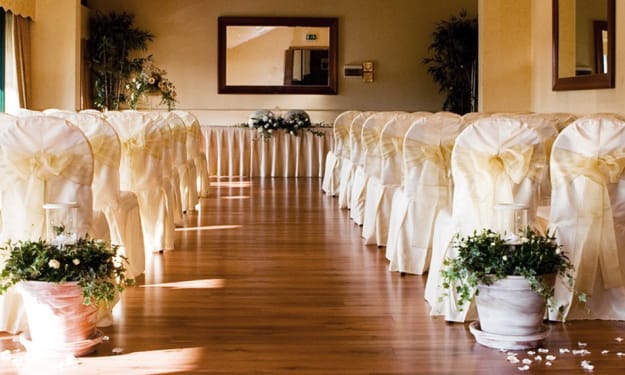
Let's be straight about something. Most venue visits are a waste of a Saturday. Not because the places are awful. They're fine. Presentable, reasonably clean, and the person walking you round is usually perfectly nice. But somewhere around your fourth viewing you start noticing how samey everything feels. Same ceilings. Same round tables. Same laminated menu folder on the same reception desk. You take the leaflet, drive home, and genuinely struggle to remember which one had the nicer car park.
By Andrew Mile2 days ago in Marriage


Comments
There are no comments for this story
Be the first to respond and start the conversation.