
Why Do the Northern Lights Keep Appearing?
How the Sun’s active cycle is lighting up skies across the world Increased solar storms bring auroras to unusual latitudes Space weather explains the recent wave of dazzling night skies Why more people are seeing the aurora borealis than ever before A natural phenomenon driven by the Sun’s energy Experts say the trend will continue for several years What frequent auroras reveal about Earth’s magnetic shield

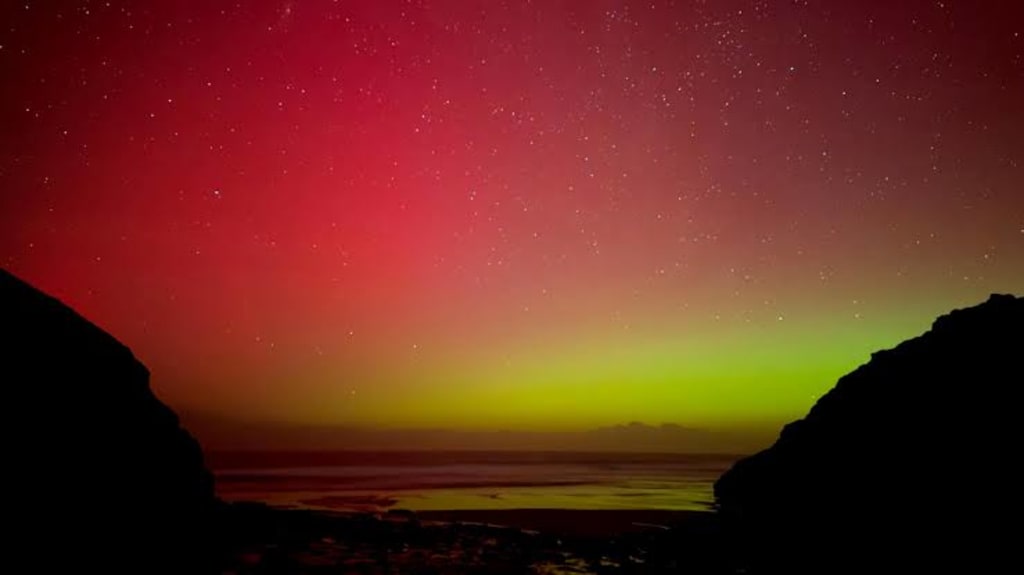
In recent months, the Northern Lights — also known as the aurora borealis — have been appearing more frequently and in places where they are rarely seen. From northern Europe and Canada to parts of the United States and even lower latitudes, skies have been glowing with vivid curtains of green, pink, and purple light. Scientists say this surge in aurora activity is not random. It is closely tied to changes in the Sun and Earth’s magnetic environment.
The growing visibility of the Northern Lights has fascinated skywatchers while raising questions about what is happening in space above our planet.
What Are the Northern Lights?
The Northern Lights occur when charged particles from the Sun collide with gases in Earth’s atmosphere. These particles are carried toward Earth by solar wind and guided by the planet’s magnetic field toward the polar regions. When they strike oxygen and nitrogen molecules high in the atmosphere, energy is released in the form of light.
Different gases produce different colors. Oxygen creates green and red light, while nitrogen produces blue and purple hues. The shimmering patterns are shaped by Earth’s magnetic field lines and the movement of solar particles.
Under normal conditions, auroras are mostly visible near the Arctic Circle. But during periods of intense solar activity, they can be seen much farther south.
The Role of the Sun’s Activity Cycle
The primary reason the Northern Lights have been appearing more often is the Sun’s natural 11-year solar cycle. The Sun goes through periods of low and high activity, known as solar minimum and solar maximum. During solar maximum, the Sun produces more sunspots, solar flares, and coronal mass ejections (CMEs).
Currently, the Sun is approaching or entering a phase of heightened activity. This means it is releasing stronger bursts of charged particles into space more frequently. When these particles reach Earth, they interact with the magnetosphere and intensify auroral displays.
Scientists say this cycle explains why auroras have become brighter and more common over the past year.
Solar Storms and Geomagnetic Disturbances
Large solar eruptions, especially coronal mass ejections, can cause powerful geomagnetic storms when they strike Earth’s magnetic field. These storms compress and disturb the magnetosphere, allowing more solar particles to penetrate the atmosphere.
During such events, auroras can spread across much wider areas than usual. This is why people in regions like the northern United States, the UK, Germany, and even parts of southern Europe have reported seeing the lights recently.
While these storms are visually stunning, they can also disrupt satellites, radio communications, and power grids if they become strong enough.
Why They Seem More Frequent Now
There are several reasons people feel the Northern Lights are appearing more often:
Increased solar activity – The Sun is entering a more active phase of its cycle.
Better monitoring technology – Satellites now track solar storms more accurately and alert the public when auroras are likely.
Social media exposure – Stunning images shared online make auroras feel more frequent and widespread.
Clearer skies in some regions – Reduced air pollution in certain areas has made night skies more visible.
Together, these factors have created the impression of constant aurora events.
Are the Northern Lights Dangerous?
For most people on Earth’s surface, auroras are harmless. They occur high above the ground, usually more than 100 kilometers above the surface. However, strong solar storms associated with intense auroras can affect modern technology.
Airlines sometimes reroute flights away from polar regions during major solar events to avoid radiation exposure and communication disruptions. Power companies also take precautions to protect electrical grids from geomagnetic interference.
Scientists stress that while solar storms can be disruptive, they are a natural part of space weather and are carefully monitored.
What This Means for the Future
Experts predict that auroral activity will remain strong for the next few years as the Sun continues through its active phase. This means more opportunities for people outside polar regions to witness the Northern Lights.
Astronomers and space agencies are using this period to study how solar activity affects Earth’s atmosphere and technology. Understanding these interactions is becoming increasingly important as humanity relies more heavily on satellites, GPS systems, and global communications networks.
Some researchers also see this as a reminder of how closely Earth is connected to space. The glowing skies are not just beautiful displays — they are visible evidence of powerful forces shaping our planet from 150 million kilometers away.
A Rare Gift of Nature
For many, the repeated appearance of the Northern Lights has been a rare gift. Communities that never expected to see auroras have gathered at night to watch the skies in awe. The phenomenon has sparked renewed interest in astronomy and space science among the public.
Despite modern explanations, the Northern Lights still carry a sense of mystery. Ancient cultures believed they were spirits, gods, or messages from the heavens. Today, science has revealed their true origin, but the emotional impact remains the same.
As long as the Sun continues its cycles of activity, the Northern Lights will keep returning — reminding humanity that even in an age of technology, nature still has the power to surprise and inspire.
About the Creator
Fiaz Ahmed
I am Fiaz Ahmed. I am a passionate writer. I love covering trending topics and breaking news. With a sharp eye for what’s happening around the world, and crafts timely and engaging stories that keep readers informed and updated.
Keep reading
More stories from Fiaz Ahmed and writers in Longevity and other communities.
Economic Crisis in 2026: Navigating the Global Challenges
As we step into 2026, the world is witnessing one of the most profound economic crises in decades. The convergence of multiple global challenges—political instability, inflationary pressures, technological disruptions, and environmental disasters—has created an economic storm that is affecting nations, businesses, and individuals alike. Governments and international organizations are scrambling to respond, but many economists warn that this crisis may be unlike any we have seen before. The scale and complexity of the economic downturn raise important questions about the future of global trade, economic recovery, and societal resilience.
By Fiaz Ahmed about 22 hours ago in Longevity
Day 4 of Quitting
If this is how sobriety feels, maybe it’s better to go through life a little buzzed… this, along with other hits like, I want to kill myself, I wish I was dead, and I’m going to throw myself off a bridge have been the only thoughts on rotation these past few days. I promise myself that if, in a month, I still feel like this (‘this’ meaning despondent, full of rage, and simultaneously numb) I can go back to smoking. Until mid-February though? Nicotine is off the table.
By sleepy drafts25 days ago in Longevity
Instructions Included Challenge Winners
For the Instructions Included challenge, we asked writers to tell a story through instructions and to trust the form to carry what could not be said outright. Across the top entries, that trust paid off in many different ways.
By Vocal Curation Team4 days ago in Resources


Comments
There are no comments for this story
Be the first to respond and start the conversation.