
What it's like to be a yoga teacher with a chronic illness
Lessons I've learned

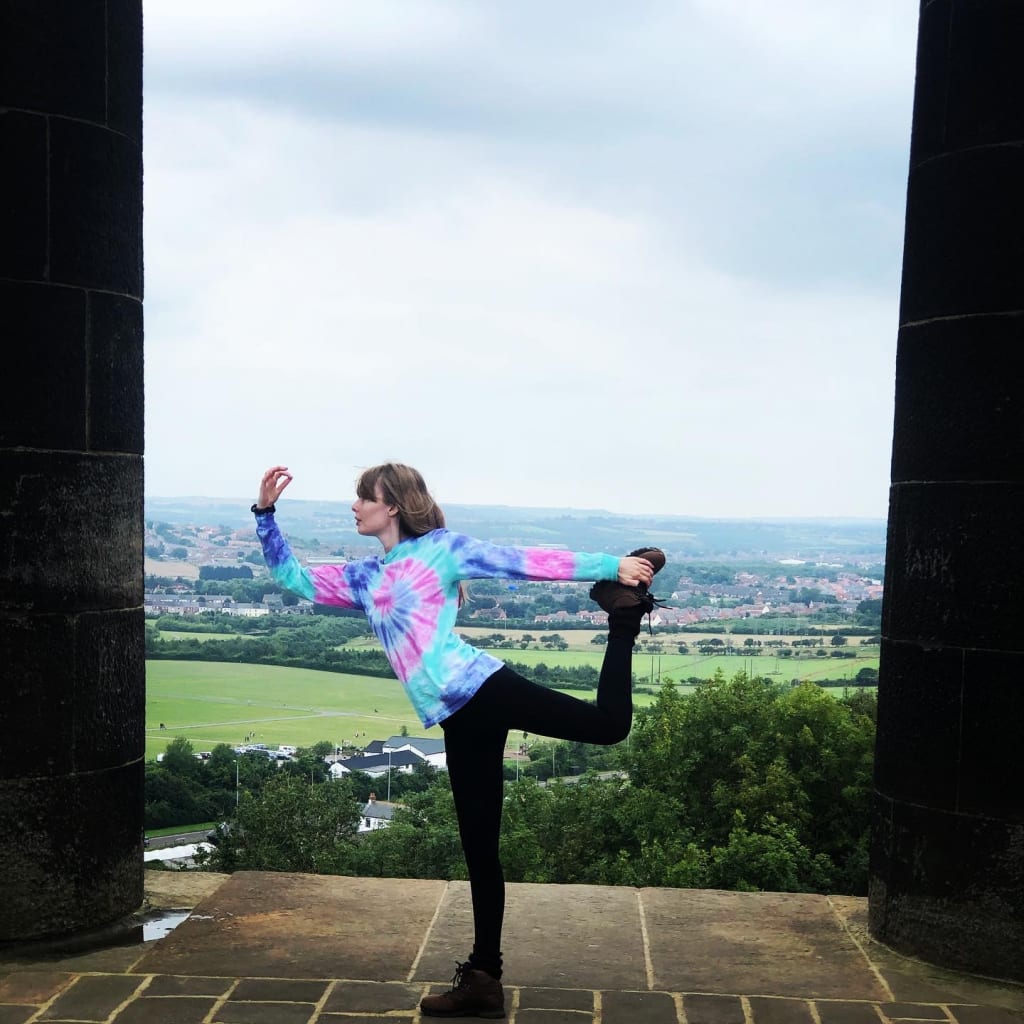
Yoga teachers are often presented as perfect. They are meant to have strong, bendy bodies and clear, peaceful minds...right?
I came to yoga about seven years ago after years of avoiding it. I was in the midst of chronic health problems that had effected my life since I was 11 years old. I had autoimmune disease, was experiencing symptoms from my illness and its treatment, was struggling daily with chronic pain and fatigue and just going to university each day was a battle.
Exercise often felt like an impossibility. I went for short walks, I occassionally went swimming but was usually tired out after five or ten lengths of the pool.
In an effort to build my strength more than one doctor and nurse had mentioned trying yoga but a bad experience at a class had put me off. In my second year as an undergraduate I began to research studios. I really took my time looking into studios and teachers. I wanted somewhere clean and warm and professional. Somewhere that wasn't intimidating - you know the places where everyone is doing handstands or the splits...or both.
I found a studio in Newcastle that is sadly no longer there and a teacher offering a 4 week beginners yoga course. It was in a great location for post lectures, it seemed welcoming and promised that everyone could join in.
So, I signed up.
Looking back on how anxious I was at that first class has helped me to understand my students more. Whether they're expriencing illness, injury or not, they will be nervous as a beginner attending a yoga class for the first time. After all, none of us likes to feel embarassed or out of place. We like to fit in. We hope to seemlessly manage whatever new hobby or skill we try.
Back to my own first proper yoga class. I remember going into that candlelit studio and being warmly welcomed by the teacher. I was silent - my go-to for anxious moments which is ironic considering I now rely on being the loudest person in the room!
The class began with reassurance and throughout there were regular pauses to explain postures or the way the class would run and the expectations and ettiquette in the yoga studio.
I felt a sense of calm and peacefulness wash over me for the first time in what seemed like a very long time.
The movements were HARD. I was slipping on my mat, I was struggling to stay on my hands in down dog for as long as we needed to be, I had no core strength, I couldn't get into childs pose without pain in my hips.
Yet, when we lay down for savasana (not that I knew it was called that at that point), I felt my body relax. I felt my mind relax. I lay on the mat and thought; 'So THIS is what all the fuss is about'.
So yes, it was the rest at the end that got me hooked on yoga.
In fact, the most valuable lesson yoga has taught me is how to relax my body and my mind.
As someone who was always in fight or flight mode because of my health, learning to slowly let go of the tension that was causing me extra pain and anxiety has helped my health so much. I think that most of us could do with learning to rest properly. Not watching TV, not sleeping, but resting. Taking time out to be quiet and still, to allow our bodies to be at ease.
Fast forward six years and I was in a really tricky place. My graduate job wasn't going well (I hated it and was becoming depressed), my health had not miraculously cured itself as had been the plan, I didn't know what to do.
I looked into yoga teacher training but believed it was something for another time - a few years maybe. Once I was well - that famous phrase.
Until everyone I mentioned it to said they thought I'd be great at it and I should go for it.
Now, yoga teacher training isn't cheap and I knew I was on the verge of leaving my job without knowing what came next. However, this course was taught over a year and allowed me to pay in small installments so that in the end...I went for it.
On the first day of the training we sat in a circle and were asked to share any illnesses or injuries. As we went round the circle and my moment grew closer there was an internal battle going on.
Here's the thing, no one with a chronic illness wants that to be the first thing people know about them. Illness can so often take over our lives and we don't want it to take over our identities too.
Yet, here I was. I would either have to lie or share with the room.
The reason for this group sharing was simple - we would be assissting each other, acting as student and teacher as we learned. So we needed to know of any injuries that needed extra care and attention.
So, I took a deep breath. And I rattled off my health problems as quickly and succinctly as I could.
I knew that there were a few people uncertain I should be there. Even the course organisers later told me they debated whether I should do the course.
After all, during intensives I sometimes had to rest and watch, I couldn't do advanced postures, I missed one or two days due to flare ups and had to catch up.
However, I like to think I brought a fresh perspective. There I was with my illness, my inflexible body, my daily pains and tiredness and I was doing it. I did it. I became a yoga teacher.
I work as a yoga teacher, freelance writer and tutor. It's a mixed bag that allows me flexible working so I never have to work the traditional 9-5. It can be tough and Covid has made it even harder. But, I like to think that as a yoga teacher who understands the daily reality of illness, I can bring something extra to my classes.
Because it is daily.
Aches and pains, fatigue, self doubt, bad memories resurfacing at the most surprising moments.
It's very easy to offer classes that 'cater to everyone' but the reality of doing so successfully can be different. For example sometimes teachers leave level 1/beginner students in a posture for ten minutes while advanced students move through their advanced postures. This makes students feel dreadful.They're just hanging around, waiting, because their bodies don't work properly.
Therefore I would ask yoga teachers to always make sure there's a comparable option and phrase it as pick the option that feels right today.
Also, be wary of wild claims like using twists to detoxify the body (our bodies do that themselves), or yoga every day will cure every chronic pain and illness.
I really dislike the idea that if we all just think more positively our problems will go away. I believe in striving for better, in positive thinking, in affirmations and planning and working towards goals.
But no amount of positive thinking will get rid of my chronic illness.
And the idea that if I had just been a more positive person, I wouldn't have become unwell, is one of the biggest things that puts off students with bodies that aren't the perfection we see on Instagram.
Yoga can do some amazing things. It can reduce stress, it can strengthen the body, ease aches and pains, improve balance.
But as a yogi who has been practicing for six years and teaching for one, I know that it can't cure my pains, make me do the splits or make me into an atheltic goddess.
Some studios have hesitated to hire me or questioned my abilities to teach because of my illness. But I question the idea that yoga needs to be fast paced and include every inversion. Instead, slowing down can be a beautiful practice. In fact, slowing down and ensuring allignment and offering different options for different students can help to prevent injury and improve the individual experience of yoga.
It's also important to remember that in some schools of thought, you have only mastered the pose (or asana) when you can slow it right down.
As a yoga teacher with a unique perspective, here are the most valuable lessons I would like other teachers to learn:
- yoga can seem really intimidating, illness or not. This is largely due to the images most often seen on Instagram that make newbies believe yoga is all about handstands!
- leaving new or less able students in a basic posture while teaching multiple postures to more advanced postures isn't good teaching, instead it can make the student feel left out or worthless. Always give fair alternatives for each level.
- suggesting yoga can cure illness isn't helpful. It can help with symptom management, it can improve fitness and reduce stress. It can't cure illnesses!
- always ask before offering hands on assists. Not so important during the current covid reality and something that many yoga teachers are more aware of but I have only been injured twice in yoga classes. Both times when given hands on assists without consent. I think it's best to ask before class has really begun and then again when offering the assist. Pre covid I asked students to close their eyes and raise their hands during the introductory meditation if they'd prefer not to be touched. I then always say, 'am I ok to touch your ____' before guiding the student.
Many students will have body issues and won't like to be touched. Many yogis are now used to hands on assists but try to remember that first lesson. I didn't like to be touched because it brought back memories of hospital appointments and I also felt uncomfortable in my body - as in phsyically and I was nervous that they might do something to make me feel worse. This is a really complex issue that needs special attention.
- At the same time don't completely avoid students because of an injury. If a student hasn't asked not to be touched and you offer every other student an assist but not them, that is exclusitory and unfair. So be aware of making students with injuries and illness feel equal to their able bodied peers.
- make savasana longer. I was taught savasana should be 7-10 minutes and I can honestly say most of my students say they wish it was longer. Some studios recommend just a couple of minutes but I know that I find this too short as a student. It feels like the 'good bit' has been cut short and I haven't been able to enjoy the benefits of the practice to the full.
So please!! Stop cutting savasana short, let your students enjoy their rest before they go back into the outside world.
I hope these little nuggets of advice are helpful.
If you're a teacher, small changes can make your classes more welcoming to people with chronic injuries or illnesses and if your a student know that every teacher - even the bendiest and strongest - started somewhere. We all had to have that first class, that first tentative step into yoga. It's a beautiful practice but the language, the images, the styles can make it seem unfamiliar and unaccessible but know that it truly is a practice for everyone and every body.
About the Creator
Hannah
Old soul creative using past experiences to help others and create. I love writing more than anything and am working on a debut novel while freelance writing.
Reader insights
Outstanding
Excellent work. Looking forward to reading more!
Top insight
Heartfelt and relatable
The story invoked strong personal emotions
Day 4 of Quitting
If this is how sobriety feels, maybe it’s better to go through life a little buzzed… this, along with other hits like, I want to kill myself, I wish I was dead, and I’m going to throw myself off a bridge have been the only thoughts on rotation these past few days. I promise myself that if, in a month, I still feel like this (‘this’ meaning despondent, full of rage, and simultaneously numb) I can go back to smoking. Until mid-February though? Nicotine is off the table.
By sleepy drafts9 days ago in Longevity
Japan Vitamin K2 Market Size and Forecast 2025–2033
Japan Vitamin K2 Market Overview The Japan Vitamin K2 Market is poised for substantial expansion over the next decade, reflecting the country’s growing emphasis on preventive healthcare, healthy aging, and functional nutrition. According to market estimates, the Japanese Vitamin K2 market is projected to grow from US$ 12.68 million in 2024 to US$ 36.20 million by 2033, registering a robust Compound Annual Growth Rate (CAGR) of 12.36% during 2025–2033.
By Aaina Oberoi7 days ago in Longevity



Comments
There are no comments for this story
Be the first to respond and start the conversation.