
What Is Potato "Milk," and Is It Good for You?
This is for you!
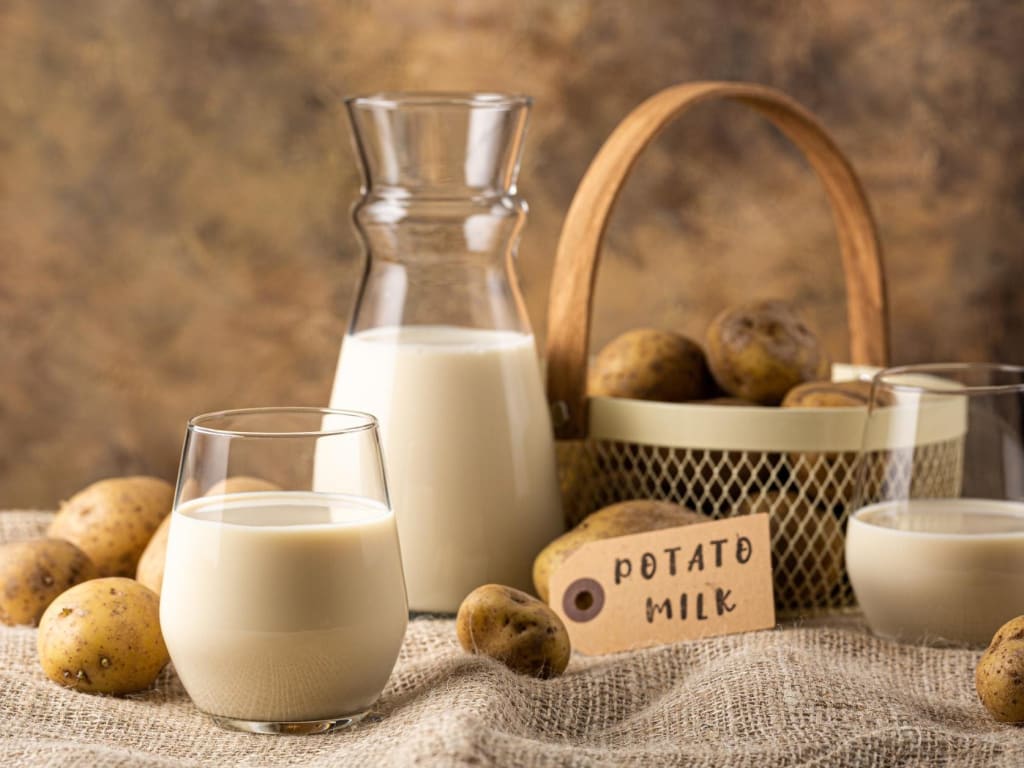
Potato milk is touted as the most environmentally friendly non-dairy beverage choice.
If there's one thing we've learned from the Swedes in recent years, it's that they know how to brew some fantastic non-dairy beverages. Oatly, a Swedish alternative milk company that went viral in Europe and the United States, was the first to pulverize oats into the most popular of all alternative milks, and many of us can't imagine ordering anything else in our morning lattes. Now, Dug, a Swedish potato-based milk brand, wants to be the category's newest innovator—and the most environmentally friendly, too.
Much more so than soybeans, almonds, or oats, potatoes are a highly sustainable crop. According to Dug's website, growing potatoes is also a lot more sustainable venture than dairy. Potato crops are water-efficient, making them weather-resistant, and the site claims that its potato milk has a climate footprint that is 75% lower than dairy milk. In addition, potatoes are high in nutrients such as fiber, vitamins, and complex carbs. While all of this sounds fantastic, is potato milk actually any good? Is potato milk good for you? Let's take a closer look at the details.
What Is Potato Milk?
Potato milk is a creamy, milk-like beverage created from potatoes, comparable to the almond, oat, soy, and coconut milks that have flooded the dairy aisle in recent years. According to the brand's website, Dug's roots (get it?) are based on scientific study, and the product uses a proprietary emulsion technology that uses potatoes and rapeseed oil to give it an allegedly "perfect" texture that keeps milk curdles at bay in your cup of tea or coffee.
Dug appears to be the only company in this area right now, and it comes in three flavors: Original, Barista, and Unsweetened. While the brand is now only accessible in Sweden and the United Kingdom, there are ambitions to grow if things go well across the pond. So, while we haven't yet had our hands on a bottle, we did peek at some of the Dug reviews on Amazon UK. Overall, opinions on the deliciousness (or lack thereof) of the potato milk were divided, while many people agreed that it was an excellent milk to use in coffee. However, several of those individuals stated that Oatly or oat milk in general was still their preferred non-dairy beverage.
Is Potato Milk Healthy?
Let's look at the nutrition information now that we've seen what potato milk is made of. It's crucial to remember that these figures are for 100 mL of potato milk, which is roughly half a cup of serving size. Most milk nutrition information in the United States are presented per 8-ounce, or one-cup serving, so you'll need to double them to compare to a favored alternative milk brand in the United States.
Original taste 100 mL (about 1/2 cup) 39 calories, 1.5 grams of fat (0.1 grams saturated), 4.4 grams of carbohydrates (1.8 grams from added sugar), 1.1 grams of fiber, and 1.3 grams of protein make up dug potato milk. In terms of micronutrients, a half-cup of Dug provides 15% of our daily calcium, vitamin D, riboflavin, and folic acid requirements. The fat content of the barista and unsweetened variants is similar, however the unsweetened has less added sugar and hence less carbohydrates.
When the nutritional values of Dug Original are doubled to achieve near to an 8-ounce serving, they compare favorably to other popular plant-based milks like oat and almond. Dug's potato milk, on the other hand, contains less protein than soy or cow's milk, which typically contain 7-8 grams per cup. There are a few other components on the list that are problematic.
The following is a list of what's on the ingredient label: Water, Maltodextrin, Pea Protein, Chicory (Vegetable) Fiber, Rapeseed Oil, Fructose, Sucrose, Acidity Regulator (Di- and Mono-Sodium Phosphate), Calcium Carbonate, Emulsifier (Sunflower Lecithin), Natural Flavor, Vitamins (D, Riboflavin, B12, Folic Acid).
The majority of the components listed here are food additives that don't provide the same benefits as naturally acquiring fiber and vitamins. Furthermore, highly processed components such as maltodextrin and di- and mono-sodium phosphate may have a detrimental impact on sensitive tummies, as well as other health implications.
"I'm all for getting more vegetables in wherever you can," says Jessica Ball, M.S. RD, associate nutrition editor at EatingWell. "However, potato milk (like other non-dairy milks) is a highly processed meal," she adds. "If you are lactose intolerant or prefer non-dairy milks, they can be a nutritious addition to your diet. There's no need to switch to a non-dairy substitute like potato milk if you like cow's milk. Non-dairy milks are also sometimes more expensive and difficult to obtain."
Potato milk is a fascinating new frontier, especially in terms of sustainability, and we are always eager to try new products. However, when potato milk becomes more widely available, we hope Dug and any other rivals who emerge can develop more natural means to manufacture.
About the Creator
Keep reading
More stories from Shashini Thennakoon and writers in Longevity and other communities.
Increasing resiliency to lower the risk of heart disease
On Nutrition What would you say if I asked you what variables assist you lower your risk of heart disease? Diet, exercise, and quitting smoking are all good things to do... Perhaps a glass of red wine in moderation? Of course, you're correct on all counts, but here's one you probably didn't think about: psychological resilience, or the ability to recover from stress.
By Shashini Thennakoon4 years ago in Longevity
Day 4 of Quitting
If this is how sobriety feels, maybe it’s better to go through life a little buzzed… this, along with other hits like, I want to kill myself, I wish I was dead, and I’m going to throw myself off a bridge have been the only thoughts on rotation these past few days. I promise myself that if, in a month, I still feel like this (‘this’ meaning despondent, full of rage, and simultaneously numb) I can go back to smoking. Until mid-February though? Nicotine is off the table.
By sleepy drafts10 days ago in Longevity
Center Stage with Paul Stewart
*** I'm keen to republish the interviews I did for my series with Vocal creators. It's been a few years and I thought it might be nice to revisit these wonderful conversations. I'll be releasing them one at a time for a few weeks/months.
By Heather Hublera day ago in Interview



Comments
There are no comments for this story
Be the first to respond and start the conversation.