
What are the lesser known diseases - vascular chapter
Early varicose veins only appear as worm-like veins protruding from the legs


1, venous insufficiency - a uniquely human disease, the most common vascular surgery disease.
It manifests clinically as varicose veins in the lower extremities and has a prevalence of about 7% to 10% in China. There are certain family aggregation characteristics (considered to be related to genetics), and I have seen up to five families with varicose veins. Varicose veins are caused by damage to the venous valves and backflow of blood (as shown in the diagram) and are related to upright walking, which is a uniquely human disease.
In the early stages, varicose veins appear as worm-like protrusions on the legs with no symptoms; over time, they can lead to darkening of the skin, thrombosis, bruising dermatitis, and ulcers on the lower legs. The treatment is mainly surgical treatment, and the effect is sure.
Prevention Tips】Control your weight; increase walking exercise; avoid sitting and standing for a long time; get up and move around when sitting for a long time; avoid stretched legs; wear less high-heeled shoes and tight clothes; diagnose and treat early
2、Deep vein thrombosis - the silent killer
Case: A Shanghai girl married into a wealthy family, after giving birth to the fifth generation of the family's baby son, she was treated like a star, and her mother-in-law did not allow her to go to the ground. After sitting for ten days, she found that her legs were swollen and she could not breathe, so she rushed to the hospital and found that she had deep vein thrombosis combined with pulmonary embolism.
Deep vein thrombosis (DVT) refers to the occurrence of blood clots in large deep veins, often in the lower extremities. The patient's first complaint is often unilateral swelling and pain in the lower extremity.
DVT can develop in all age groups, and the incidence is increasing every year. In the United States, the incidence of DVT ranks third after coronary heart disease and hypertension. No statistics are available in China.
Prolonged sitting, long flights, major surgical procedures, tumors, prolonged bed rest, and trauma are all factors that contribute to DVT. I found that the incidence of DVT among business travelers is increasing recently. Also, in my country, menstruation is a common trigger for DVT in women! (This data is presumably not available abroad). The Department of Vascular Surgery also receives referrals of DVT patients from various departments, including inpatients and post-operative patients from critical care medicine, orthopedics, oncology, and gynecology.
Delayed or unregulated treatment of DVT can lead to an increased probability of PE and post-thrombotic sequelae (PTS).
The most serious consequence of DVT is fatal pulmonary embolism (PE), which many people would be scared to hear about. Because of the high rate of sudden death from PE, 43% of patients die suddenly within 2 hours of onset, including 10% within 1 hour and 36% within 2 to 24 hours. Early diagnosis of DVT and immediate initiation of treatment can prevent the occurrence of PE.
Another consequence of DVT is to cause post-thrombotic sequelae (PTS), which is also one of the causes of old rotten feet.
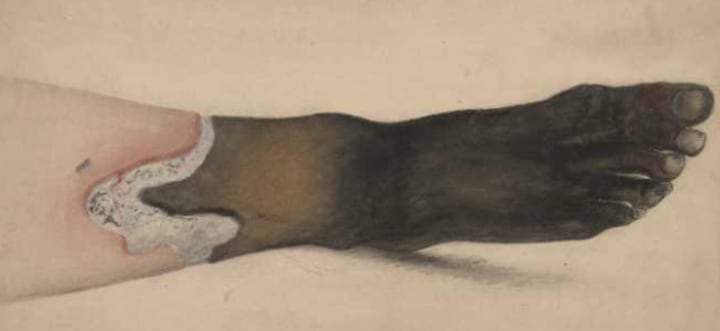
The keywords for DVT: are early diagnosis, early treatment, standardized treatment, and emphasis on prevention.
Unfortunately, I found that domestic patients' awareness of DVT often starts only after they get the disease, however, most DVT can be prevented. Therefore, it is also an important duty of vascular surgeons to increase the education and popularization of DVT.
3, lower extremity atherosclerosis occlusive disease (PAD) - one of the reasons why the elderly do not go far
This is a disease of the elderly. Hypertension, smoking, hyperlipidemia, and diabetes are important factors of atherosclerosis-occlusive disease.
Just like heart and cerebral vascular hardening, atherosclerosis is a systemic disease. Heart artery blockage causes heart attack, brain artery blockage causes brain attack, and if the leg artery blockage causes the leg can not to supply blood, it leads to lower limb atherosclerosis occlusive disease.
The early clinical manifestations are: "intermittent claudication", that is, walking for a certain distance and then lower limb soreness and swelling forced to rest, and after a few minutes can walk again.
If the disease progresses, there can be resting pain (whole XIU whole XIU pain to sleep and pain.) If the disease progresses, it may even become gangrenous and require amputation.
4, abdominal aortic aneurysm - deep in the abdomen of the menace
An abdominal aortic aneurysm, to put it bluntly, is a large artery in the stomach bulging into a balloon.
Most patients have no symptoms and are often detected during a physical examination. Once ruptured, abdominal aortic aneurysms are extremely dangerous, causing immediate hemorrhage with shock and a mortality rate of 50% to 80%. Once the aneurysm is more than 5.5 cm in diameter, surgical intervention should be considered.
5, congenital vascular malformations and K-T syndrome - the gift of God "gift"
Vascular surgery has a large category of diseases is congenital vascular malformations, which were recorded and described in ancient medical and literary works thousands of years ago, for example, the trapezius aneurysm was described as Medusa's snake hair.
The classification and typing of vascular malformations are very complex, and K-T syndrome is one of the specific vascular malformations.
Klippel-Trenaunay syndrome abbreviated KT syndrome or KTS
First reported in the early 20th century, it typically presents with a triad of symptoms: (1) wine stains; (2) hypertrophy of the affected limb; and (3) varicose veins that involve the entire limb and are thick and stringy.
This is a "gift" from God and there is no good medical treatment to cure it completely. The disease is innate and for most patients, KTS can be treated conservatively and for life, affecting the appearance but mostly without serious consequences.
However, despite this knowledge, there are still a large number of parents who carry their children around the country in search of a cure, which has more of a psychological impact on the children. Behind the parents' thirst for a cure are silent children with fearful eyes and cowering figures, many of whom feel sick, have ugly legs, and are afraid to participate in social activities, make friends, or even interfere with marriage or childbirth.
6、Infant hemangioma
Some mothers find that their newborn babies have "little red moles" on their faces or bodies, and they are growing bigger and bigger. It is quite worrying.
This is an infant hemangioma (also known as strawberry hemangioma). Features: They often occur on the surface of the head, face, torso, and limbs. They are not abnormal or have very small lesions when they are first born, and then rapidly increase in size within the next few months, becoming bright red and slightly protruding from the body. At this time, many parents are very anxious and afraid, and have a strong desire for treatment, fearing the consequences of delayed treatment.
Strawberry hemangioma is a disease that tends to heal itself. In other words, it can subside on its own without any treatment. More than 90% of strawberry hemangiomas in children shrink and disappear with age, leaving no scar. Generally speaking, strawberry hemangioma enters a stable phase within 1~3 years of yearend entering terms a receding phase between 3~8 years of age.
7、Takayasu arteritis, also known as multiple aortitides (TA).
It was asked by a knowledgeable friend, and I have little clinical exposure to being a knowledge mover.
The name of this disease sounds like a Japanese name, and yes, the incidence is high in Asia worldwide, especially in Japan. There are about 150 new cases per year in Japan. The incidence rate in North America is 2.6/1,000,000.
It occurs mostly in young women: 6 to 8 times more often in women than in men, and the average age of diagnosis is 25 years.
Why do you get this disease? It is generally believed that TA shares common pathogenesis with autoimmune system diseases such as lupus erythematosus (SLE) and rheumatoid arthritis (RA). TA is an internal disorder that targets the aorta.
The early clinical manifestations are particularly atypical: fever, muscle pain, loss of appetite, etc. (how to sound like the symptoms of the flu), and therefore the diagnosis is rarely confirmed. If the disease progresses, vascular pain, carotid pain, hypertension, syncope, visual disturbances, etc. can occur. The symptoms of TA are so vague and atypical that they make the diagnosis more difficult. Statistically, 1/3 of Takayasu arteritis patients are advised to see a psychiatrist.
Interestingly 12-20% of patients have a self-limiting course of the disease (that is, they get better on their own without treatment). It came and went without leaving any trace (which is also a good ending). Except for the lucky ones who get well on their own before they are treated, the rest of the patients need hormones to go into remission. More than half of the patients will relapse. A part of them even needs to be treated with vascular surgery.
8, Buerger's disease, thrombo-occlusive vasculitis (commonly known as vasculitis)
Prevalent in young male smokers!
It occurs in young male smokers!
It occurs in young male smokers!
The increase in female smokers in recent decades has also changed the male-to-female ratio of Buerger's disease.
The pathogenesis is also immune-mediated, leading to thrombosis of small and medium-sized arteries and/or veins.
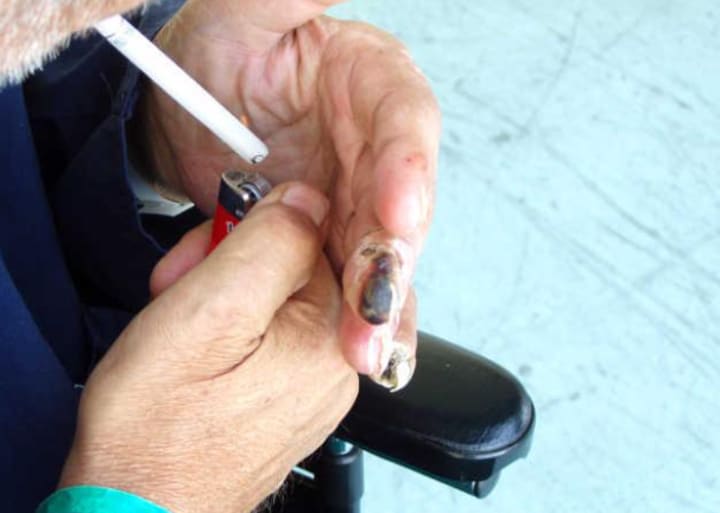
It manifests as pain and pallor in the hands and feet and progresses to ischemia and necrosis.
The only effective treatment for this disease is complete and permanent abstinence from smoking!
About the Creator
Tanoria
no rose without a thorn.
Community Asked to Step In as Aging Mental‑Health Residence Desperately Needs Renovations
Start writing...A long‑standing mental‑health residence in [City/Region] is sounding the alarm as urgent renovations are needed to ensure the safety, health, and well-being of its residents. Established more than four decades ago, the facility has provided shelter, care, and therapy for individuals with severe mental‑health challenges. Over the years, it has become a cornerstone of community support for vulnerable populations. However, time has taken a toll on its infrastructure, and the building now faces serious safety and accessibility concerns. The residence’s leadership described the situation as critical, emphasizing that some areas of the facility no longer meet modern safety or accessibility standards. Outdated plumbing, deteriorating roofs, and malfunctioning heating and ventilation systems are just a few of the pressing issues. Fire safety equipment is nearing the end of its operational life, and certain living spaces remain difficult to access for residents with mobility challenges. “Maintaining a safe and comfortable environment is not optional — it’s essential for the well-being of our residents,” said [Executive Director Name], the facility’s director. “Without immediate renovations, we risk compromising the care and security that people with severe mental-health conditions rely on every day.” The Importance of Renovations The residence serves individuals with a range of mental-health conditions, including schizophrenia, bipolar disorder, severe depression, and anxiety disorders. Many residents require round-the-clock care and structured routines to thrive. For them, a stable living environment is not simply about comfort; it is integral to their mental and physical health. “Every leak, every cold room, every unsafe staircase affects our residents’ ability to live safely and with dignity,” explained [Program Manager Name]. “These renovations are not cosmetic — they are lifesaving.” Funding Challenges While the facility receives government funding, it covers only basic operations and staffing, leaving a significant shortfall for major repairs. Rising construction and materials costs have further strained budgets, making external support critical. To address the gap, the residence has launched a community-driven fundraising campaign to cover essential projects, including roof repairs, updated bathrooms, fire safety upgrades, and improved accessibility features. The campaign seeks both financial contributions and volunteer support. Local residents and businesses are encouraged to donate, organize fundraising events, or assist with minor repairs and landscaping. Officials hope that public engagement will not only provide the necessary funds but also increase awareness of the ongoing challenges faced by people living with severe mental-health conditions. Community Engagement and Support The residence is actively reaching out to the community, hosting open days, workshops, and awareness campaigns to educate the public about mental health and the importance of supportive housing. By involving the community directly, officials hope to foster a sense of shared responsibility and solidarity. “Community support is vital,” said [Executive Director Name]. “Even small contributions of time, skills, or funds can make a meaningful difference in ensuring a safe, nurturing environment for our residents.” Local health experts point out that aging residential facilities face similar challenges nationwide. Many operate with limited funding, outdated infrastructure, and staffing shortages, relying on community involvement to maintain essential services. [Local Health Official Name] noted that the situation reflects a broader need for sustained public investment in mental-health care. Broader Implications Neglecting facilities like this can have far-reaching consequences. Substandard housing conditions can exacerbate mental-health symptoms, hinder recovery, and reduce the effectiveness of therapeutic programs. Additionally, compromised infrastructure can create safety hazards for both residents and staff, increasing the likelihood of accidents and emergencies. “The well-being of our residents is intertwined with the broader community,” said [Program Manager Name]. “Supporting this residence means supporting public health, safety, and social cohesion.” Next Steps Facility leadership hopes that renovations can begin as soon as funding and volunteer support are secured. Interim measures are being implemented to safeguard residents, including temporary repairs, enhanced monitoring, and stricter safety protocols. “The urgency is real,” emphasized [Executive Director Name]. “We want to ensure that residents continue to have a safe, dignified, and supportive environment. Community action now can make the difference between survival and thriving.” The residence invites anyone interested in helping — through donations, volunteering, or advocacy — to contact its administrative office or visit its website for more information. The goal is to mobilize the community quickly so renovations can begin before conditions deteriorate further.
By Fiaz Ahmed 6 days ago in Longevity
Caffeine and Anxiety: How Much Is Too Much for Students?
Coffee before class. Energy drink before assignments. Another coffee for night study. Sound familiar? For many students, caffeine feels like survival. But what if your daily cup is quietly making your anxiety worse?
By Being Inquisitive4 days ago in Longevity
This Is What I Do When People Throw Rocks At Me
Rocks have been thrown at me for a greater part of my life. Some have been small and missed hitting me. When people don't get a reaction from me, they throw bigger rocks with a better aim. Many have been hurled at me with precision over the years. For a long time, I thought my only options were to dodge them or be crushed by them.
By Margaret Minnicks3 days ago in Confessions



Comments
There are no comments for this story
Be the first to respond and start the conversation.