
What All Can Lead To The Failure Of A Hair Transplant?
Here are some of the most common and prominent reasons for a transplant not being successful

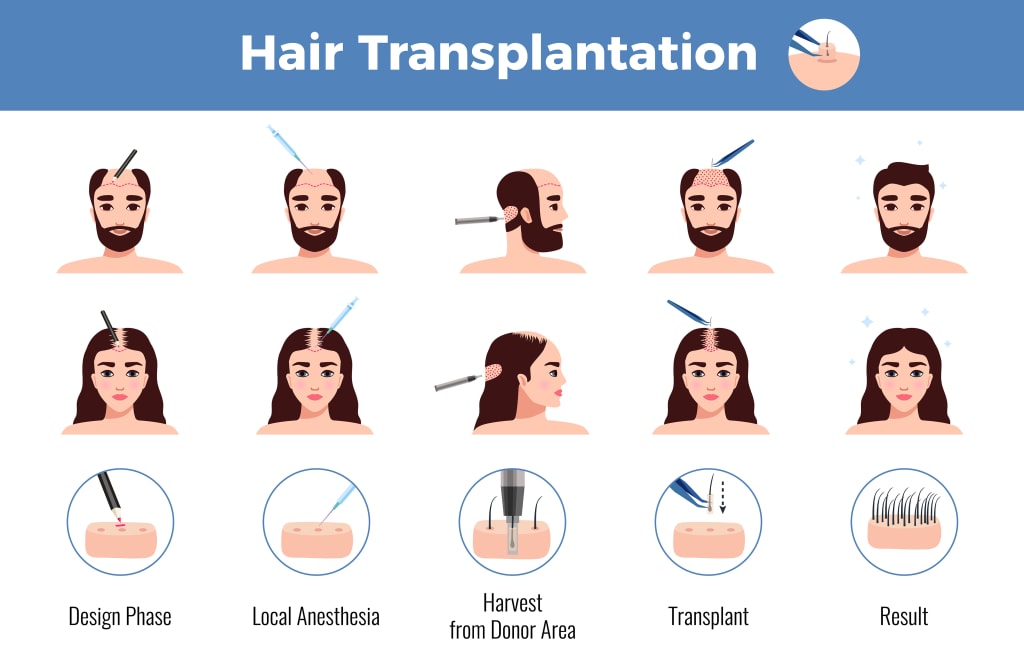
Losing hair is always a tough thing to accept and while many people will choose to ignore it initially, there are several who will immediately head to a transplant clinic to get a transplant. Simply put, both approaches are wrong – if you are noticing severe hair loss, you need to make sure that you go meet a specialist or a doctor, to figure out exactly what is causing the hair loss. Alternately, directly jumping into a hair transplant is also wrong, because not all people with hair loss will prove to be ideal candidates for a transplant. The latter is one of the most common reason for transplants not being successful, but this just one amongst many.
Here are some of the most common and prominent reasons for a transplant not being successful:
• You are not an ideal candidate: As mentioned before, just because you are losing hair, does not mean that you are a candidate for a hair transplant. The decision for whether you can get a transplant or not, will be dependent on what kind of factors are leading to your hair loss, where the hair loss is happening from a particular region on the head and whether there is enough donor hair for the transplant to be completed successfully. Many a times, the transplant fails, because one of these reasons has not been taken into consideration.
• The surgeon is not experienced enough: Practice makes a man perfect, and that is absolutely true in the case of hair transplant surgeons – the more experienced they are, the better the transplant will be. As a matter of fact, studies have shown that many a times, the reason for failure of a transplant procedure is the inexperience of the surgeon. This is why, when you are considering a hair transplant clinic, you need to first find out whether the surgeons on their team are experienced enough or not. If an inexperienced surgeon does your transplant, they will not be able to complete the extraction or implanting properly – in either cases, the possibility of your transplant failing will be high.
• Improper methods of doing the procedure:A hair transplant is more than just taking hair from one part of the head and placing it into another – a transplant is about understanding the structure of the head, how the hair is placed, in which direction the hair grows naturally. More importantly, a transplant is about extracting the hair grafts very carefully, ensuring that these remain viable at the time when the recipient site is being prepared. And then finally, when the implants have to be done, they have to be done in the same direction as the natural hair and with proper spacing. When all this is not done at all or is not done in the proper way, it leads to the failure of the transplant.
• Post-operative care is not done properly: While the actual procedure itself is very important, the post-operative care is just as important. No matter how well the procedure has been done, if the post-operative precautions are not taken care of, the transplant is bound to fail. For instance, if you have been asked not to touch the grafts for a certain number of days, you need to make sure that you don’t touch them; if you have been instructed not to wash your hair for a certain number of days, you need to make sure that you don’t because that could damage the follicles. Many a times, these details and information are not passed onto the patient properly and this leads to loss of freshly implanted grafts and eventually, the failure of the transplant.
• The actual clinic is not up to the mark: If the surgeon is important, the clinic is just as important – so for instance if you are looking for a hair transplant in Bangalore, you need to consider the actual clinic, the infrastructure as well. For a surgeon to be able to do his or her work properly, they need to have state of the art equipment and hygienic procedure rooms, which should be sanitised regularly. If the transplant is done in unhygienic conditions or without the use of proper instruments, the chances of the procedure going perfectly are slightly diminished.
These are some of the main causes that could lead to a transplant not succeeding and factors that you will need to keep in mind at all times.
About the Creator
Keep reading
More stories from Pradeep AK and writers in Longevity and other communities.
Laser hair removal Clinic in Delhi
The sight of unwanted hair on your arms and legs is a cause of distress for most women – talk to any woman, and chances are that they will tell you that they get extremely conscious about their unwanted hair being visible at an important event. It was perhaps having understood this need that laser hair removal was first created and today, it has become an extremely popular method of permanent hair removal, all over the world. If you too are considering laser hair removal, then there are some things that you need to keep in mind first.
By Pradeep AK4 years ago in Blush
Day 4 of Quitting
If this is how sobriety feels, maybe it’s better to go through life a little buzzed… this, along with other hits like, I want to kill myself, I wish I was dead, and I’m going to throw myself off a bridge have been the only thoughts on rotation these past few days. I promise myself that if, in a month, I still feel like this (‘this’ meaning despondent, full of rage, and simultaneously numb) I can go back to smoking. Until mid-February though? Nicotine is off the table.
By sleepy drafts11 days ago in Longevity
Foods to Avoid After Whitening Teeth
A professional teeth whitening treatment can dramatically boost your confidence, whether you’re heading to a business meeting downtown, enjoying a night out in the Blue Dome District, or getting ready for a family event in Broken Arrow. Right after whitening, however, your teeth are more porous and vulnerable to staining. What you eat and drink during the first few days plays a huge role in how long your results last.
By Good health to everyone3 days ago in Longevity
Wild Card Weekend Recap: What Happens Now?
I think I figured out why I love Wild Card Weekend so much. It's because it's the first playoff anything of the calendar year. The NFL season starts in the fall, and once upon a time, the champion was crowned either on or slightly before New Year's. The evolution of the NFL schedule has resulted in the playoffs starting just into the New Year, and currently, the final week of the season falls on the first weekend of the New Year, with Wild Card Weekend coming a week after that. So yes, chronologically, the NFL's Wild Card Weekend serves as the first playoff anything of the calendar year.
By Clyde E. Dawkins6 days ago in Unbalanced



Comments
There are no comments for this story
Be the first to respond and start the conversation.