
Vulcan Centaur Rocket Launches ‘Neighborhood Watch’ Satellites for the U.S. Military
U.S. Space Force expands orbital surveillance capabilities

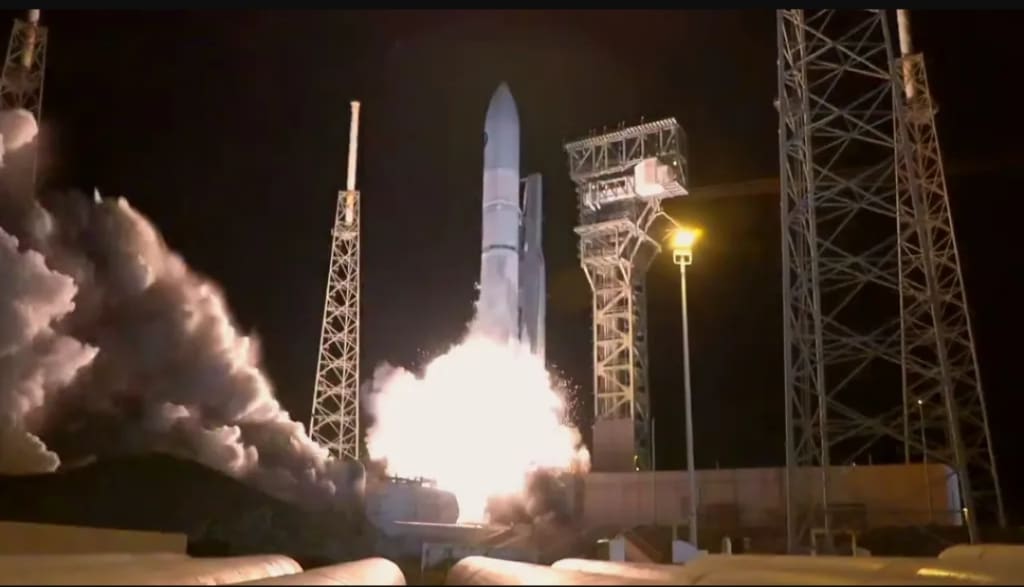
Cape Canaveral, Florida — February 12, 2026 — Early Wednesday morning, a United Launch Alliance (ULA) Vulcan Centaur rocket lifted off from Cape Canaveral Space Force Station, carrying a pair of surveillance satellites for the U.S. Space Force (USSF). The mission, known as USSF‑87, deployed two Geosynchronous Space Situational Awareness Program (GSSAP) satellites designed to monitor objects and activity in geosynchronous orbit (GEO), often referred to as a “neighborhood watch” in space.
Mission Overview
The Vulcan Centaur launched at 4:22 a.m. EST (0922 GMT) in near-perfect conditions. The primary payload consisted of GSSAP‑7 and GSSAP‑8, which will observe satellite activity in GEO — approximately 22,236 miles (35,785 km) above Earth. GEO is a critical orbital region where satellites remain fixed relative to the planet, supporting communications, weather, and surveillance operations.
According to the U.S. Space Force, these satellites act as a high-tech monitoring network, improving awareness of orbital positions, predicting potential collisions, and ensuring the safety of U.S. and allied space assets.
About GSSAP Satellites
The Geosynchronous Space Situational Awareness Program has been operational since 2014, steadily expanding its fleet to provide continuous observation of space objects. Built by Northrop Grumman, GSSAP satellites offer high-resolution data on satellite locations, trajectories, and orbital behavior.
By operating above Earth’s atmosphere, these satellites reduce distortion that can affect ground-based radars and telescopes. They provide precise measurements that allow the U.S. and allied operators to:
Track satellites with high accuracy
Detect potential collision risks
Offer early warnings for orbital maneuvers
Characterize satellites and debris in GEO
The USSF‑87 launch adds two more “eyes” to this network, enhancing both the accuracy and timeliness of orbital tracking.
The Vulcan Centaur Rocket
The Vulcan Centaur is ULA’s next-generation launch vehicle, developed as a replacement for older systems like Atlas V and Delta IV. Standing 202 feet (61 meters) tall, it combines liquid-fueled engines with solid rocket boosters to deliver heavy payloads to a variety of orbits, including GEO.
For this mission, the rocket flew in a VC4S configuration, using four solid rocket boosters to provide the additional thrust needed to deliver the satellites to precise orbits. This was the fourth flight of the Vulcan Centaur, following its debut in 2024 and subsequent national security missions.
The Centaur upper stage, equipped with highly efficient engines, ensured accurate placement of the GSSAP satellites, a critical factor for geosynchronous operations.
Additional Payloads
Alongside the GSSAP satellites, the USSF‑87 mission carried an EELV Secondary Payload Adapter (ESPA) ring, hosting smaller experimental and research payloads. These are designed to test new technologies and refine on-orbit maneuvers, giving U.S. Space Force personnel valuable experience for future missions.
Importance of the Mission
Space has become increasingly congested as governments and commercial entities launch more satellites. The GSSAP satellites act as a “space neighborhood watch”, monitoring activity to prevent collisions and maintain operational safety.
By providing real-time situational awareness, these satellites protect critical infrastructure, including communications, weather monitoring, and navigation systems — technologies essential to everyday life.
The mission underscores the growing importance of space situational awareness and the need to safeguard orbital environments for both military and civilian use.
Global Implications for Space Safety
The successful launch of the Vulcan Centaur with GSSAP‑7 and GSSAP‑8 satellites underscores a growing global concern for orbital safety. As more countries and private companies deploy satellites into geosynchronous and low-Earth orbits, the risk of collisions increases dramatically. Even a small piece of debris traveling at thousands of miles per hour can destroy satellites and trigger cascading collisions known as the Kessler Syndrome.
Programs like GSSAP provide essential situational awareness. By tracking satellites and debris in real time, these “neighborhood watch” satellites give operators the information they need to perform avoidance maneuvers, protect expensive infrastructure, and maintain uninterrupted communications, navigation, and weather monitoring services that billions of people rely on daily.
Moreover, such surveillance capabilities can support international collaboration. Sharing orbital data with allied nations and commercial satellite operators can enhance global space safety, reduce the risk of accidents, and establish norms for responsible behavior in orbit.
The Role of the U.S. Space Force
The launch also highlights the strategic role of the U.S. Space Force in ensuring the security of U.S. space assets. While space has traditionally been viewed as a domain for science and exploration, modern satellites are critical for national security, commerce, and daily life. The Space Force’s responsibility now includes monitoring orbital activity, protecting satellites, and preparing for contingencies that could threaten vital space infrastructure.
By maintaining and expanding programs like GSSAP, the Space Force strengthens the United States’ ability to detect, track, and respond to potential threats in orbit. This proactive approach ensures that U.S. military and civilian satellites can continue to operate safely in increasingly crowded orbital regions.
What This Means for Commercial and Civil Space
The growing number of satellites in orbit is not limited to military programs. Commercial mega-constellations, scientific research satellites, and private space ventures all share crowded orbital lanes.
With these launches, the GSSAP satellites contribute to a safer operating environment not just for the military, but for commercial and civil space operators worldwide.
Companies like SpaceX, OneWeb, and Amazon rely on accurate orbital data to maintain satellite networks for broadband internet, Earth observation, and navigation services. By enhancing situational awareness, the U.S. military’s space assets indirectly support the sustainability and growth of commercial space ventures, making GEO and other key orbital zones safer for everyone.
Looking Forward
The USSF‑87 mission is part of a broader effort to modernize the United States’ space capabilities. With additional GSSAP satellites planned for future launches, the U.S. is building a comprehensive network that ensures 24/7 monitoring of critical orbital regions.
These missions also provide testing opportunities for new technologies, from improved satellite sensors to advanced orbital maneuvering techniques. As the Space Force gains more experience operating in these complex environments, future satellites may be able to track objects more autonomously, predict orbital interactions with greater accuracy, and even actively respond to potential hazards without human intervention.
In essence, the GSSAP program represents a paradigm shift in space safety, moving from reactive monitoring to proactive management of orbital traffic.
Conclusion
The launch of Vulcan Centaur carrying GSSAP‑7 and GSSAP‑8 satellites is a milestone in the ongoing effort to safeguard space operations. By acting as a high-tech “neighborhood watch,” these satellites enhance situational awareness, reduce collision risks, and support the safety of critical infrastructure that underpins modern life on Earth.
The mission also demonstrates the reliability of the Vulcan Centaur rocket for national security payloads, while highlighting the strategic importance of programs like GSSAP in the new era of space operations.
As orbital traffic continues to grow, initiatives like the USSF‑87 mission will play a crucial role in maintaining safe, sustainable, and cooperative use of space, ensuring that satellites can continue to provide essential services for both military and civilian purposes.
With programs like this, space is no longer a vast and uncontrollable frontier. Instead, it is becoming a monitored and managed domain, where advanced satellites and careful planning ensure that Earth’s orbital environment remains safe, reliable, and accessible for generations to come.
About the Creator
Asad Ali
I'm Asad Ali, a passionate blogger with 3 years of experience creating engaging and informative content across various niches. I specialize in crafting SEO-friendly articles that drive traffic and deliver value to readers.
The Missing Link in Stable Walking: Why Dynamic Stability Matters More Than Strength
When people start noticing changes in their walking, they often assume the problem is muscle weakness or aging joints. While strength plays a role, a lesser-known factor called dynamic stability is usually at the center of the issue. Dynamic stability refers to the body’s ability to stay balanced while in motion — adjusting to shifts in weight, changes in direction and uneven ground.
By AhmedFitLifea day ago in Longevity
When True Love Never Questions Your Soul
“And she’s going to learn that this life will hit you, hard, in the face, wait for you to get back up, just so it can kick you in the stomach but getting the wind knocked out of you is the only way to remind your lungs how much they like the taste of air.” — Sarah Kay’s Poem — If I Should Have a Daughter
By Chantal Christie Weiss6 days ago in Humans




Comments
There are no comments for this story
Be the first to respond and start the conversation.