
United States DIY Furniture Market Size & Forecast 2025–2033
Customization Meets Affordability as America Embraces the New Era of Build-It-Yourself Living

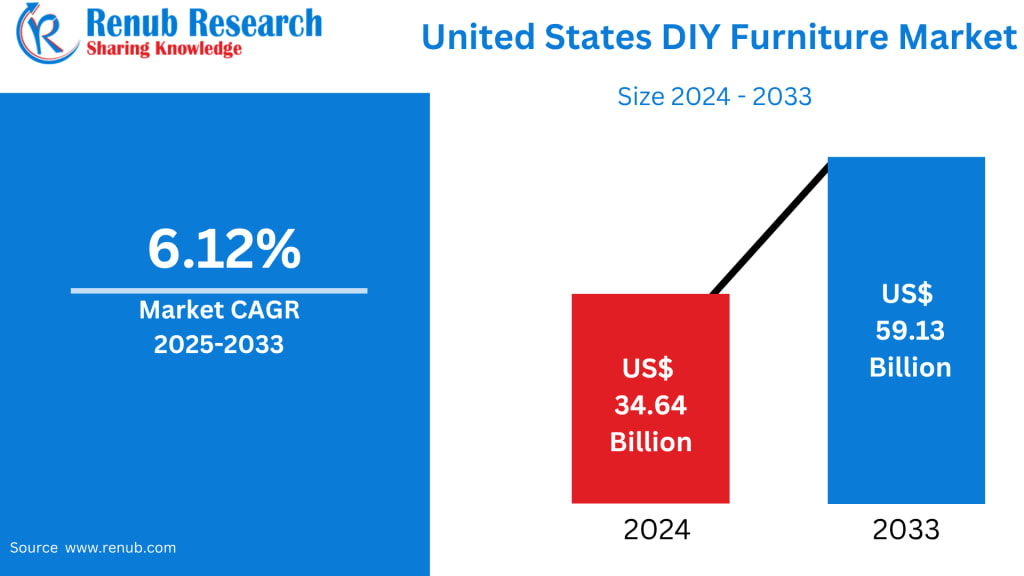
The United States DIY Furniture Market is entering a defining growth phase—one shaped by creativity, cost-consciousness, and a changing lifestyle culture. According to Renub Research, the market is projected to climb from US$ 34.64 billion in 2024 to US$ 59.13 billion by 2033, expanding at a healthy CAGR of 6.12% from 2025 to 2033. As consumers seek personalization, sustainability, and convenience, DIY furniture has evolved from a niche hobby into a mainstream furnishing solution reshaping American homes.
This shift reflects more than a design trend—it’s a cultural movement fueled by urbanization, digital retail, and the rising preference for multifunctional living spaces.
DIY Furniture: The New Face of American Home Living
The U.S. DIY Furniture Market is undergoing a notable transformation as self-assembly and modular design become everyday essentials rather than novelty purchases. For millions of consumers—especially young homeowners, renters, and remote workers—DIY furniture offers the perfect blend of style, affordability, and flexibility.
The surge in home improvement culture, amplified during the pandemic, never slowed down. Instead, it evolved. Today’s consumers want furniture that fits smaller spaces, adapts to changing layouts, and reflects personal taste—without the high price tag or professional installation.
E-commerce platforms, social media inspiration, design influencers, and augmented reality tools are reshaping how people shop, design, and assemble furniture. As furniture becomes simpler to order, ship, and build, DIY solutions have emerged as a natural fit for modern American lifestyles.
Sustainability, too, is redefining preferences. From responsibly sourced wood to recyclable composites, eco-friendly materials are no longer optional—they’re expected. Manufacturers are responding with greener designs, modular systems that extend product life, and packaging that reduces waste.
Despite rising competition and raw material challenges, the momentum is undeniable. The DIY movement is here to stay.
Key Growth Drivers Boosting the U.S. DIY Furniture Market
✅ 1. Customization Without the Price Tag
American consumers are increasingly drawn to products that feel personal and unique. DIY furniture allows:
Modular layouts tailored to room size
Choose-your-own finishes, colors, and hardware
Reconfigurable pieces as needs evolve
With home prices increasing and living spaces shrinking—particularly in major cities—DIY furniture offers the ability to make more out of less, both spatially and financially. Eliminating assembly labor reduces overall costs, making DIY options especially attractive to students, renters, and first-time homeowners.
✅ 2. The Digital Retail Revolution
Online retail has become one of the market’s strongest growth engines. Platforms now offer:
Extensive product comparisons
Step-by-step tutorials
Customer reviews
Augmented reality previews
The rise of direct-to-consumer brands has further intensified competition, introducing sustainable and stylish designs at lower price points. Younger demographics, accustomed to online shopping and DIY culture, are driving this shift—and they’re bringing long-term purchasing power with them.
✅ 3. Sustainability Takes Center Stage
Eco-conscious living is no longer a fringe interest; it’s mainstream. Buyers want products that are:
Responsibly sourced
Recyclable or reusable
Energy-efficient to ship
Flat-pack designs reduce shipping carbon footprints, while modular parts make it possible to repair rather than replace. As environmental expectations rise, sustainable DIY products are becoming both a consumer demand and a market differentiator.
Challenges the DIY Furniture Market Must Navigate
❗ Durability and Quality Perceptions
Some consumers still view DIY furniture as less sturdy than pre-assembled pieces. Frequent assembly and disassembly can accelerate wear, especially when low-cost materials are used. Brands that fail to deliver on quality risk damaging reputation and repeat business.
Improved engineering, stronger joints, ergonomic designs, and better instructional support will be crucial to overcoming this barrier.
❗ Raw Material Volatility and Supply Chain Pressures
With heavy reliance on wood, metal, and plastics, the market remains vulnerable to fluctuating material prices and regulatory changes. Supply chain disruptions—whether due to economic, geopolitical, or environmental factors—can increase production costs and delay delivery.
Diversified sourcing, sustainable materials, and efficient logistics will be key to long-term stability.
State-by-State Market Pulse
The United States DIY Furniture Market shows strong uptake across major urban and suburban regions, with key states leading growth.
⭐ California
Driven by:
High urban density
Eco-conscious lifestyles
Remote work culture
Californians favor space-saving modular designs and sustainable materials. A strong DIY culture, fueled by social media and design creativity, keeps California at the forefront of innovation and demand.
⭐ Texas
Growth fueled by:
Rapid population expansion
Housing development
E-commerce adoption
Texans appreciate affordable, functional furniture suited for larger homes and diverse décor preferences. Suburban growth and rising homeownership are major demand drivers.
⭐ New York
Demand shaped by:
Smaller living spaces
Compact and multifunctional designs
Strong online retail presence
New Yorkers prioritize sleek, modern, space-efficient furniture. Younger renters and professionals are key consumers, driving momentum toward minimalist and modular solutions.
⭐ Florida
Market boosted by:
Real estate growth
Rental and vacation property furnishing
Home renovation culture
Lightweight, stylish, easy-to-assemble furniture aligns with Florida’s interior aesthetic trends. The state’s thriving tourism and rental sectors further amplify demand.
Market Segmentation Snapshot
By Material
Wood
Metal
Plastic
Glass
Others
Wood remains the most popular due to sustainability and durability, while metal and plastic support lightweight, modern designs.
By Product Type
Storage & Organization
Seating
Tables & Desks
Shelving Units
Beds & Bedroom Furniture
Kitchen & Dining
Others
Storage and workspace furniture have surged, driven by remote work trends and small-space living.
By End User
Individual Consumers
Retailers
Contractors
Interior Designers
Others
Individual buyers dominate, though interior designers are increasingly using modular DIY solutions in modern projects.
By Distribution Channel
Offline
Online
Online sales are rapidly outpacing traditional retail due to convenience, variety, and digital visualization tools.
Competitive Landscape: Key Players Shaping the Market
Major national and global players include:
IKEA
Williams-Sonoma
Steelcase
Herman Miller
Global Upholstery
Wipro Furniture
Godrej & Boyce
Creative Wood
Kinnarps
Kokuyo
These companies are investing in:
Modular and ergonomic designs
Sustainable materials
Flat-pack engineering
Digital customization tools
Partnerships, influencer collaborations, and AR-based retail experiences are emerging as competitive strategies.
SWOT Analysis
Strengths
High affordability
Customization options
Wide online availability
Eco-friendly design potential
Weaknesses
Perceived lower durability
Assembly challenges for some consumers
Opportunities
Smart and tech-enabled furniture
Partnerships with e-commerce giants
Growth in rental and student housing markets
Threats
Raw material inflation
Competition from ready-to-use furniture
Supply chain risks
Revenue Outlook
With continued innovation, expanding online retail, and rising consumer awareness, the U.S. DIY Furniture Market is expected to maintain steady long-term growth. By 2033, the market will reach US$ 59.13 billion, reinforcing DIY as a central pillar of the future home furnishings industry.
⭐ Final Thoughts
The rise of DIY furniture reflects a broader cultural shift—one defined by personalization, sustainability, and smart spending. As Americans seek to create homes that reflect who they are, DIY furniture provides both empowerment and affordability.
This market represents more than a business opportunity; it signals a new era of design freedom where consumers aren’t just buying furniture—they’re building it, shaping it, and making it their own.
With digital retail accelerating, sustainable materials evolving, and consumer creativity thriving, the future of DIY furniture in the United States looks not just promising—but transformational.
About the Creator
Sushant. Renub Research
I’m Sushanta Halder, Digital Marketing Manager at Renub Research with 15+ years in SEO, content, PPC & lead generation. Passionate about data-driven growth strategies.
Keep reading
More stories from Sushant. Renub Research and writers in Longevity and other communities.
Age-Related Macular Degeneration (AMD) Market Trends & Summary
Introduction The Age-Related Macular Degeneration (AMD) Market is on track to reach US$ 20.88 billion by 2033, rising from US$ 11.42 billion in 2024, and expanding at a CAGR of 6.94% from 2025 to 2033, according to Renub Research. The accelerating burden of AMD worldwide—driven by aging demographics, lifestyle-associated risks, advances in screening, and rapid innovation in ophthalmic therapeutics—is reshaping global eye-care markets.
By Sushant. Renub Research2 months ago in Longevity
Day 4 of Quitting
If this is how sobriety feels, maybe it’s better to go through life a little buzzed… this, along with other hits like, I want to kill myself, I wish I was dead, and I’m going to throw myself off a bridge have been the only thoughts on rotation these past few days. I promise myself that if, in a month, I still feel like this (‘this’ meaning despondent, full of rage, and simultaneously numb) I can go back to smoking. Until mid-February though? Nicotine is off the table.
By sleepy drafts4 days ago in Longevity




Comments
There are no comments for this story
Be the first to respond and start the conversation.