
The Ultimate Expression of Grace: A Comparison of 1 , 2 , and 4 Carat Diamonds
Explore the beauty and value of 1, 2, and 4 carat lab diamonds, offering sustainable and stunning options for any occasion.

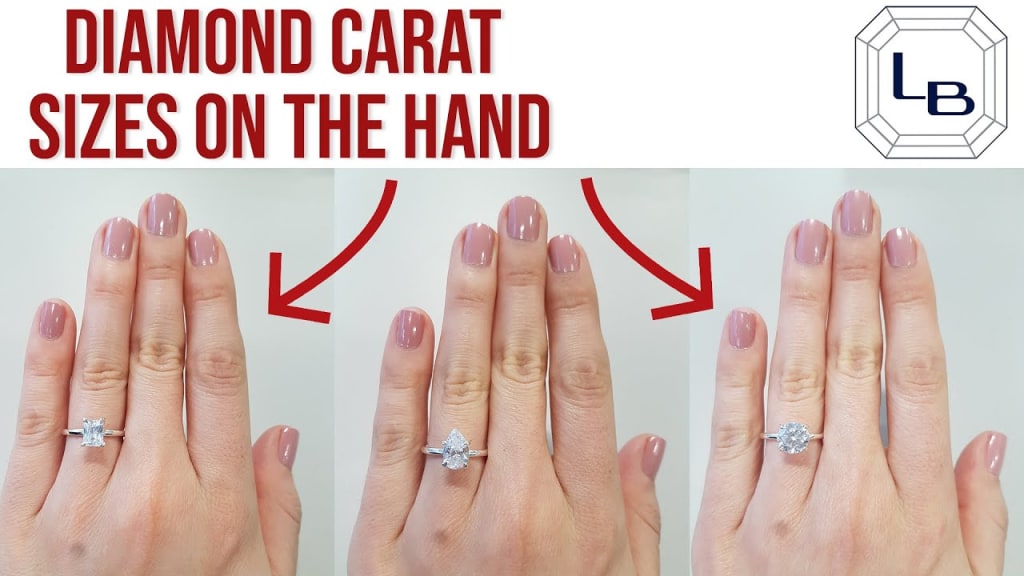
When it comes to buying a diamond for an engagement ring, anniversary present, or family heirloom, the choice between diamonds has to be made considering the carat size. It is therefore necessary to know the differences between the three carat sizes mentioned above (1 carat, 2 carat, and 4 carat) regarding appearance, value, wearability, and emotion. A detailed comparison of these three major carat benchmarks—1 carat, 2 carat, and 4 carat diamonds—is provided below.
What is a "carat"?
• A carat (ct) is a unit of measure for the weight of gemstones. 1 carat = 0.20 grams (200 milligrams).
• Note: Carat refers only to weight, not necessarily visual “size” (diameter) or brilliance.
• Other key factors: the “4 Cs” — Cut, Color, Clarity, Carat. A larger carat with poor cut or low clarity may look less impressive than a slightly smaller, better cut stone.
1. 1 Carat Diamonds
Visual & Wearability
• A round brilliant 1 carat diamond typically measures around 6.5 mm in diameter.
• On many hands, this size offers a balanced presence—elegant and not overly ostentatious. Many-people choose to buy 1 carat lab diamonds for their balance of size and affordability, offering a high-quality option for those seeking a beautiful yet sustainable gemstone.
• Because it’s a popular size, there are many setting styles and price points.
Value & Rarity
• Though large, 1 carat stones are more common than higher carats, which makes them somewhat more budget friendly in comparison.
• Because of the high demand, you’ll find many high quality options (good cut, clarity, color) in this size.
Best For
• Someone who wants a classic, well balanced look that works for everyday wear.
• Smaller hands or those who prefer something refined rather than dramatic.
• Maximizing quality (cut/clarity) rather than just size.
2. 2 Carat Diamonds
Visual & Wearability
• A round brilliant 2 carat diamond will typically measure around 8.1 mm in diameter.
• Visibly larger than 1 carat. On the hand it has greater presence — more “wow” factor.
• Because it’s significantly larger, it tends to make a bold statement rather than a subtle one.
Value & Rarity
• The price per carat increases non linearly as carat goes up. A 2 carat diamond of similar quality to a 1 carat often costs much more than double.
• Less common are larger stones, particularly those with high clarity and color, and therefore they are more expensive.
Best For
• People looking for an impressive piece—either to celebrate a momentous event or to make a refined statement.
• Big hands or in case the stone is the center of attraction.
• When your budget is sufficient and size takes precedence over other factors.
Two carat lab diamonds are often selected for their impressive size and sparkle, providing a stunning yet ethically sourced alternative for those looking for a more significant stone.
3. 4 Carat Diamonds
Visual & Wearability
• A 4 carat stone is very significant in size — its diameter might be roughly in the 10 mm+ range (depending on cut and shape).
• On the hand it commands attention; it’s a luxury piece.
• With such size, one must also consider: proportion to finger size, comfort (height of setting), practicality (snagging risk, daily wear).
• Setting style and metal matter even more to ensure the stone is secure and well‐balanced.
Value & Rarity
• Much more rare than 1 or 2 carat stones. Large stones in good color/clarity are very desirable and thus expensive.
• Because of high cost, every notch in clarity/color becomes more meaningful. A slight improvement in clarity/color in a 4 carat stone can translate to very large additional cost.
• Often acts more as a statement or heirloom than a daily discreet piece.
Best For
• A very high budget investment piece or special milestone.
• Someone who doesn’t mind bold size and wants the largest impact.
• For special occasions or heirloom roles, rather than “I’ll wear this every day without thinking”.
• A 4ct lab diamond has an amazing presence and is able to attract people who want a big stone that looks luxurious and has the additional advantage of being ethically and sustainable made.
Comparison 1 Ct vs 2 Ct vs 4 Ct: Main Factors
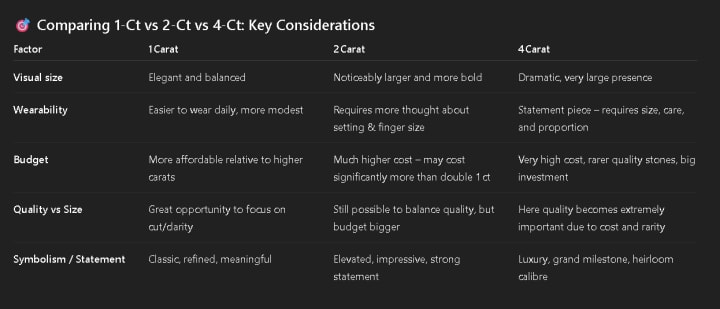
• Cut should be your first priority: A diamond that has a good cut will shine brighter and may look bigger than a heavier stone with a poor cut.
• Trying the different carat sizes: A big size might look smaller or vice versa depending on the hand it is on. The finger size and hand shape are important factors.
• Take into consideration the finger size & lifestyle: If you are using your hands all the time (for work, daily chores), a smaller carat with perfect proportions might be better than a big stone that is always in the way.
• Be realistic with your budget: If you go for a larger diamond (1 → 2), don’t think the price will simply go up by the same amount. The price frequently more than doubles because of the stone's rarity.
• The kind of setting is important: Halo or bezel may make the main stone look bigger; the color of the metal (white or yellow) can influence its perceived size.
• Go slightly under a “milestone” carat: For example, a 1.8 ct or 3.8 ct might cost significantly less than 2 ct or 4 ct thresholds but look very similar.
• Resale and value: Larger high quality diamonds hold value well because of rarity—though exact resale will depend on market, certification, condition.
Final Thoughts
• A 1 carat diamond is often the perfect choice if you seek for elegance that lasts and great value at the same time.
• However, if you want something that is more noticeable and daring, and budget permits, a 2 carat diamond would be a good choice.
• If you are looking for a future luxury statement piece or an heirloom, a 4 carat diamond gives one a huge and very dramatic presence—but with a lot more cost, size, and other factors to consider.
• Eventually, the size of the diamond is just one of the factors. Quality (cut, clarity, color), hand proportion, setting, and personal style may be as important as (if not more than) size considerations.
About the Creator
Keep reading
More stories from CEO A&S Developers and writers in Longevity and other communities.
Day 4 of Quitting
If this is how sobriety feels, maybe it’s better to go through life a little buzzed… this, along with other hits like, I want to kill myself, I wish I was dead, and I’m going to throw myself off a bridge have been the only thoughts on rotation these past few days. I promise myself that if, in a month, I still feel like this (‘this’ meaning despondent, full of rage, and simultaneously numb) I can go back to smoking. Until mid-February though? Nicotine is off the table.
By sleepy drafts10 days ago in Longevity


Comments
There are no comments for this story
Be the first to respond and start the conversation.