
“The Silent Struggle: How the ‘Strong Man’ Myth Is Harming Men’s Mental Health”
Why emotional suppression isn't strength—and how breaking the silence can save lives


From the time boys can walk and talk, many are handed an invisible rulebook—one that shapes how they speak, act, and most importantly, feel. It’s filled with phrases like “man up,” “don’t be a baby,” and “real men don’t cry.” These seemingly harmless lines become the foundation of the “strong man” myth, a cultural script that tells men to be tough, silent, and emotionally bulletproof. But behind the armor, there’s a crisis unfolding—one that’s costing lives, relationships, and inner peace.
The idea that strength means silence has pushed generations of men to suppress their feelings and ignore their mental health. Vulnerability is labeled as weakness, while stoicism is praised as maturity. But emotional suppression doesn’t make pain go away—it buries it. And eventually, it erupts in harmful ways. Anger, addiction, emotional numbness, and even suicide are all downstream effects of the pressure to appear strong at all costs.
Take Jason, a 35-year-old father of two. On paper, he had it all—a stable job, a family, a home. But inside, he was struggling with overwhelming anxiety and burnout. “I didn’t want to burden anyone,” he said. “I thought I was supposed to handle it. That’s what a man does.” It wasn’t until he had a panic attack in his car, away from his family, that he admitted something was wrong. Even then, his first instinct wasn’t to reach out—it was to hide it better.
Jason’s story isn’t rare. Men are far less likely than women to seek therapy or even talk about their mental health. According to global health data, men make up nearly 80% of suicide deaths worldwide, yet they represent a small fraction of mental health patients. This disconnect isn’t just about access or awareness—it’s about shame. Many men fear being judged as weak or unstable if they open up. They’ve been taught to equate masculinity with emotional control. So instead of processing pain, they internalize it—or lash out.
These harmful beliefs don’t form in a vacuum. They’re passed down through families, communities, media, and even workplace culture. Boys are often told to “tough it out” instead of talk it out. Male characters in movies rarely cry without being mocked or broken. Even in sports or blue-collar jobs, emotional stoicism is often expected. “We were taught to keep our heads down and keep moving,” says Raul, a 47-year-old construction manager. “There was no space for emotions. You just did your job.”
But the tide is starting to turn. Younger generations, particularly Gen Z and Millennials, are beginning to challenge these outdated norms. More men are speaking publicly about mental health—from athletes like Kevin Love to artists like Kendrick Lamar. Social media has also become a space where vulnerability is being redefined. There are now countless communities, podcasts, and therapy-friendly influencers encouraging men to speak up, not shut down.
Still, progress is slow—and stigma runs deep. Even in therapy, some men struggle to express themselves. Therapists report that male clients often begin sessions with skepticism, worried they’ll be judged. But with time and trust, something powerful happens: they talk. And when they talk, they heal. It’s not that men lack emotions—it’s that they’ve been taught to mistrust them.
It’s time we rewrite the definition of strength. True strength isn’t about hiding your pain—it’s about facing it. It’s about having the courage to say, “I’m not okay,” and the wisdom to know you’re not alone. Emotional honesty is not a weakness; it’s a life-saving skill.
If you’re a man reading this and you’ve been carrying silent pain, you’re not broken—you’re human. You don’t have to go it alone. Opening up might feel like the hardest thing you’ve ever done. But in doing so, you might just discover the strongest version of yourself.
And if you know a man in your life who seems “fine” but distant, irritable, or exhausted—check in. Not with judgment, not with pressure, but with care. Sometimes the bravest thing anyone can do is ask a simple question: “How are you really doing?”
Because being a man shouldn’t mean suffering in silence. It should mean being human, whole, and free to feel.
About the Creator
The Healing Hive
The Healing Hive| Wellness Storyteller
I write about real-life wellness-the messy, joyful, human kind. Mental health sustainable habits. Because thriving isn’t about perfection it’s about showing up.
Keep reading
More stories from The Healing Hive and writers in Longevity and other communities.
Why Gen Z & Millennials Are Burned Out
Burnout Isn’t Just About Being Tired — It’s About Being Done If you’re in your 20s or 30s and constantly feel exhausted, unfocused, or emotionally detached from work, you’re not alone — and you’re not lazy. Burnout has become a shared experience for Millennials and Gen Z, so much so that it’s practically a cultural identity at this point.
By The Healing Hive9 months ago in Longevity
Day 4 of Quitting
If this is how sobriety feels, maybe it’s better to go through life a little buzzed… this, along with other hits like, I want to kill myself, I wish I was dead, and I’m going to throw myself off a bridge have been the only thoughts on rotation these past few days. I promise myself that if, in a month, I still feel like this (‘this’ meaning despondent, full of rage, and simultaneously numb) I can go back to smoking. Until mid-February though? Nicotine is off the table.
By sleepy drafts11 days ago in Longevity
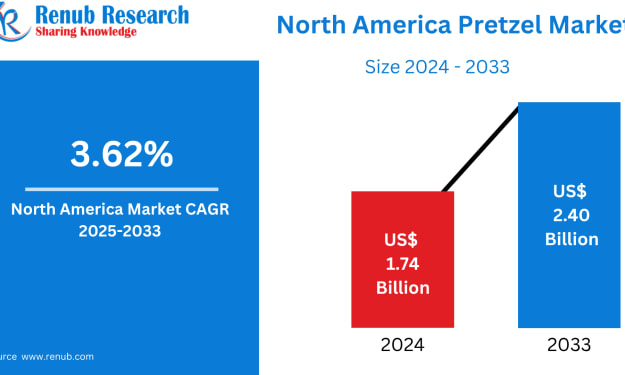
North America Pretzel Market Size and Forecast 2025–2033
The North America Pretzel Market is expected to reach US$ 2.40 billion by 2033, up from US$ 1.74 billion in 2024, expanding at a CAGR of 3.62% from 2025 to 2033, according to Renub Research. This steady growth reflects the enduring appeal of pretzels as a convenient snack, combined with evolving consumer preferences for healthier, premium, and flavor-forward food products.
By Marthan Sir5 days ago in Longevity



Comments
There are no comments for this story
Be the first to respond and start the conversation.