
The Pros of Pro Bono
Understanding the Role of Legal Charities in Providing Free or Low-cost Legal Services

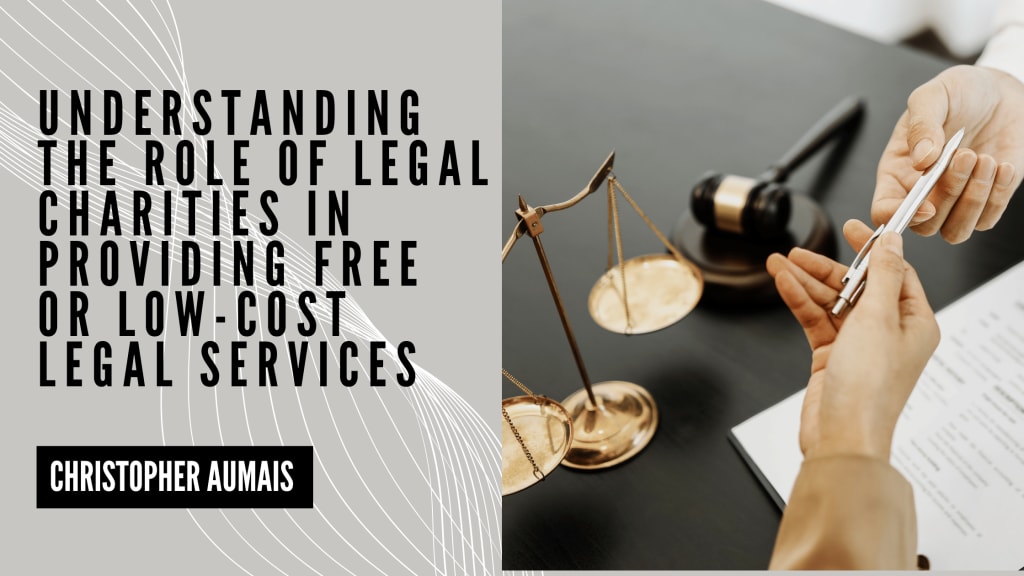
Access to justice is a fundamental right, yet many individuals find themselves unable to afford legal representation when faced with legal challenges. This gap in access is where legal charities play a crucial role, providing free or low-cost legal services to those in need. These organizations bridge the divide between the legal system and underserved communities, ensuring that justice is accessible to all, regardless of their financial situation.
Legal charities encompass various organizations, including nonprofit law firms, legal aid societies, and advocacy groups. Their primary mission is to assist low-income individuals and marginalized populations who might otherwise be unable to navigate the complexities of the legal system. These charities often focus on specific areas of law, such as family law, housing, immigration, or consumer rights, tailoring their services to address the pressing legal needs of their communities.
One of the significant contributions of legal charities is their ability to provide direct legal representation. Many organizations employ attorneys who are dedicated to serving those who cannot afford legal fees. These attorneys offer legal advice, draft legal documents, and represent clients in court, ensuring that individuals receive competent legal support. For example, a legal charity specializing in family law may assist domestic violence survivors in obtaining restraining orders or navigating custody disputes. By offering these services, legal charities empower individuals to assert their rights and seek justice.
In addition to direct representation, legal charities also provide valuable educational resources to help individuals understand their legal rights and responsibilities. Many organizations conduct workshops, create informational materials, and offer online resources to educate the public on various legal issues. By increasing legal literacy, these charities enable individuals to make informed decisions about their legal matters, whether they choose to pursue representation or handle their cases independently.
Collaboration is another essential aspect of how legal charities operate. Many organizations partner with other nonprofits, community groups, and governmental agencies to expand their reach and resources. For instance, a legal charity might collaborate with a domestic violence shelter to provide legal assistance to survivors, ensuring that they receive holistic support. These partnerships help legal charities leverage additional resources and expertise, enhancing the overall effectiveness of their services.
The impact of legal charities extends beyond individual cases; they play a vital role in advocating for systemic change. Many organizations engage in policy advocacy to influence legislation and promote reforms that enhance access to justice for marginalized communities. By conducting research, mobilizing community members, and collaborating with other advocacy groups, legal charities strive to address the root causes of legal inequities and promote broader societal change.
Despite the critical role they play, legal charities often face significant challenges. Funding is a persistent issue, as many rely on grants, donations, and government support to sustain their operations. The demand for services frequently outstrips available resources, leaving many individuals without the legal assistance they desperately need. Legal charities must continuously seek innovative funding solutions and community support to meet these growing needs.
As the legal landscape evolves, so too does the role of legal charities. The rise of technology has led to new opportunities for service delivery, such as online consultations and virtual legal clinics. These advancements can help legal charities reach more individuals and streamline their operations, making legal assistance more accessible than ever.
Legal charities are indispensable in providing free or low-cost legal services to individuals in need. Through direct representation, education, collaboration, and advocacy, these organizations work tirelessly to ensure that access to justice is a reality for all. As we continue to confront systemic inequities within the legal system, supporting legal charities becomes essential to fostering a more just and equitable society. Their commitment to serving the most vulnerable among us is a testament to the belief that everyone deserves a fair chance in the pursuit of justice.
About the Creator
Christopher T Aumais
Based in Los Angeles, CA, Christopher Aumais is a distinguished trial lawyer and the Founder and Partner at GGA LLP, where he has practiced since 2020. Learn more by visiting christopheraumais.org.
Keep reading
More stories from Christopher T Aumais and writers in Longevity and other communities.
The Ripple Effect: How Small Acts of Giving Create Waves of Change
When Maria started volunteering at her local food bank three years ago, she had no idea that her two hours every Saturday would spark a movement that would feed thousands. What began as a personal desire to give back during a difficult period in her life has now evolved into a community network of over 200 volunteers, three satellite locations, and partnerships with local farms and restaurants. Maria's story illustrates a fundamental truth about philanthropy and community involvement: the most profound changes often begin with the smallest gestures.
By Christopher T Aumais6 months ago in 01
A wildflower in California reveals a newly documented evolutionary process
In a remarkable breakthrough for evolutionary biology, researchers studying wildflower populations in California have documented one of the clearest cases yet of rapid genetic evolution occurring in nature. The findings, centered on the bright red scarlet monkeyflower (Mimulus cardinalis), reveal how some plant populations were able to adapt and recover following the region’s most severe drought in over a millennium — providing tangible evidence of an evolutionary process known as evolutionary rescue. The scarlet monkeyflower, a wildflower native to moist areas along streams and springs in California, has long been familiar to botanists and hikers alike for its vivid blooms and distinctive habitat. However, during the early 2010s, California experienced an unprecedented megadrought that lasted several years, killing hundreds of millions of trees and dramatically altering the ecological landscape. While many plant species suffered catastrophic declines, some populations of Mimulus cardinalis showed a surprising resilience. Scientists from multiple institutions undertook a long‑term study to understand how this wildflower weathered such extreme conditions. Over eight years, researchers tracked 55 populations of the monkeyflower across its natural range, closely monitoring their numbers and health. They also conducted whole‑genome sequencing to observe genetic changes over time, looking for evidence that natural selection had acted on specific traits. The results were illuminating. At sites where populations had nearly collapsed — with numbers dropping by as much as 90% — genetic analysis revealed consistent shifts in allele frequencies across the genome. These shifts were not random; they were associated with traits that likely enhanced drought tolerance, enabling some individuals to survive and reproduce where others perished. As these “advantaged” genotypes became more common, the population as a whole began to recover, a hallmark of what biologists call evolutionary rescue. Evolutionary rescue occurs when the genetic variation present within a population allows it to adapt fast enough to avoid extinction under sudden environmental stress. While theoretical models have long predicted such processes, direct evidence in the wild—especially involving plants—has been limited. This study is among the first to document genomic changes in natural plant populations that are clearly linked to a major environmental crisis. For decades, evolutionary biologists have debated how quickly natural selection can operate in real‑world scenarios. Classic case studies like Darwin’s finches in the Galápagos have demonstrated adaptive changes in beak shape over a few generations. But plant studies have often lagged behind, in part because many species have long lifecycles or reproduce clonally, making rapid evolution harder to detect. The California wildflower case breaks new ground by combining long‑term fieldwork with cutting‑edge genomic analysis. Researchers noted that the recovery of the monkeyflower populations did not happen overnight — it took roughly two to three growing seasons for numbers to rebound significantly. Yet in evolutionary terms, this pace is considered rapid. The drought likely imposed intense selective pressure, filtering out less drought‑tolerant genotypes and leaving behind a smaller cohort better suited to the harsh conditions. As these were the individuals contributing more seeds to the next generation, their genetic traits spread through the population. The implications of this research extend beyond wildflowers. As climate change accelerates and extreme weather events become more frequent, scientists are increasingly interested in how species will respond — whether through behavioral changes, migration, or evolutionary adaptation. Cases like Mimulus cardinalis suggest that some species may harbor the genetic diversity necessary to adapt swiftly when environments change dramatically. However, not all species will be so fortunate, and the mechanisms of evolutionary rescue are still not fully understood. “This is one of the clearest cases we've seen where a wild plant species shows genomic evidence of adapting to extreme environmental stress,” said one of the study’s lead authors. “It gives us hope that under certain conditions, natural selection can work fast enough to help populations persist — but it also raises many questions about the limits of such adaptation.” The study’s methods also signal a new era in ecological research. By combining consistent field monitoring with high‑resolution genetic data, scientists can now track evolution as it happens rather than inferring processes from fossils or distant historical records. This “real‑time” view of evolution may become vital for conservation efforts, helping biologists identify which populations are most at risk and which may have the inherent capacity to adapt. For conservationists, the findings underscore both the resilience and vulnerability of natural ecosystems. While some populations like the scarlet monkeyflower demonstrate extraordinary adaptive potential, others with limited genetic diversity may face a greater threat of decline or extinction as climates shift. Understanding the genomic underpinnings of adaptation could therefore inform strategies to protect biodiversity in a warming world. As research progresses, scientists hope to explore similar evolutionary dynamics in other species and regions. The California wildflower study stands as a testament to the power of modern genomics and long‑term ecological research — and a reminder that evolution, far from being a slow, imperceptible force, can sometimes unfold before our eyes.
By Fiaz Ahmed 3 days ago in Longevity
Hundreds of GPs Tell BBC They Have Never Refused a Sick Note Over Mental Health Concerns
Hundreds of general practitioners across the United Kingdom have told BBC that they have never refused to issue a sick note when a patient presented with genuine mental health concerns, highlighting how medical attitudes toward psychological illness have evolved in recent years. The statements emerged during a broad inquiry by the broadcaster into the practices of family doctors working within the National Health Service (NHS). The findings suggest that many physicians now treat mental health conditions with the same seriousness as physical illnesses when determining whether a patient should be excused from work. General practitioners—often referred to as GPs—are typically the first point of contact for patients seeking medical help in the UK. Under NHS rules, doctors can issue a “fit note,” a document confirming that an individual is not well enough to work or may need adjustments in their job responsibilities. Doctors interviewed said that refusing such notes for mental health issues would contradict modern medical understanding. Conditions such as anxiety disorders, severe stress, depression, and burnout can significantly impair a person’s ability to perform daily tasks, including employment duties. One GP from northern England told the BBC that mental health complaints have become one of the most common reasons for patient consultations. “When someone sits in front of you describing overwhelming anxiety or panic attacks, it’s no different from someone presenting with a physical injury,” the doctor explained. “Our role is to assess their health and help them recover, not to question whether their illness is legitimate.” Data from NHS England show that mental health conditions now account for a large proportion of sick leave certificates issued each year. Experts attribute the increase partly to improved awareness of psychological well-being and a greater willingness among people to seek help. However, the issue has also sparked debate among policymakers and employers. Some business groups have raised concerns about rising absenteeism, arguing that the system could be vulnerable to misuse. In response, doctors insist that medical professionals carefully evaluate each case before issuing documentation. A senior GP speaking anonymously said that while there is occasional pressure from employers or government agencies to tighten controls, most physicians prioritize patient welfare. “We are trained to identify when someone is struggling mentally,” the doctor said. “The idea that doctors are casually handing out sick notes without assessment simply doesn’t reflect reality.” Medical associations have also defended the current approach. Representatives from the Royal College of General Practitioners emphasized that mental health problems can be as debilitating as physical diseases and should be treated with equal compassion and professionalism. Experts note that work-related stress has increased significantly in recent years due to economic pressures, digital workloads, and changing employment patterns. The aftermath of the COVID-19 pandemic also contributed to widespread psychological strain, with many individuals experiencing lingering anxiety, isolation, or grief. Public health specialists argue that allowing patients time away from work can actually speed recovery and prevent conditions from worsening. Short-term absence, they say, may reduce the risk of more serious long-term mental illness that could require extensive treatment. Nevertheless, doctors acknowledge that balancing patient care with workplace responsibilities remains challenging. Some GPs said they prefer to recommend modified duties or gradual returns to work when possible, helping patients maintain routine while still protecting their mental health. The conversation around mental health and employment has gained momentum across the UK in recent years. Campaigns promoting psychological well-being in the workplace have encouraged employees to speak openly about stress and burnout, reducing the stigma historically associated with mental illness. Advocates believe the testimonies from hundreds of doctors reinforce the need for compassionate medical policies. Rather than questioning the legitimacy of mental health-related sick leave, they argue that employers and governments should focus on creating supportive environments that prevent stress and exhaustion from escalating into serious conditions. As awareness continues to grow, medical professionals say the central principle remains unchanged: a patient’s health—whether physical or psychological—must always come first. For many GPs, issuing a sick note for mental health concerns is not simply administrative paperwork but an essential step in helping individuals recover and regain stability in their lives.
By Fiaz Ahmed 4 days ago in Longevity



Comments
There are no comments for this story
Be the first to respond and start the conversation.