
The future of the health industry is now
Surgical Robots Market Growth is at a Rise
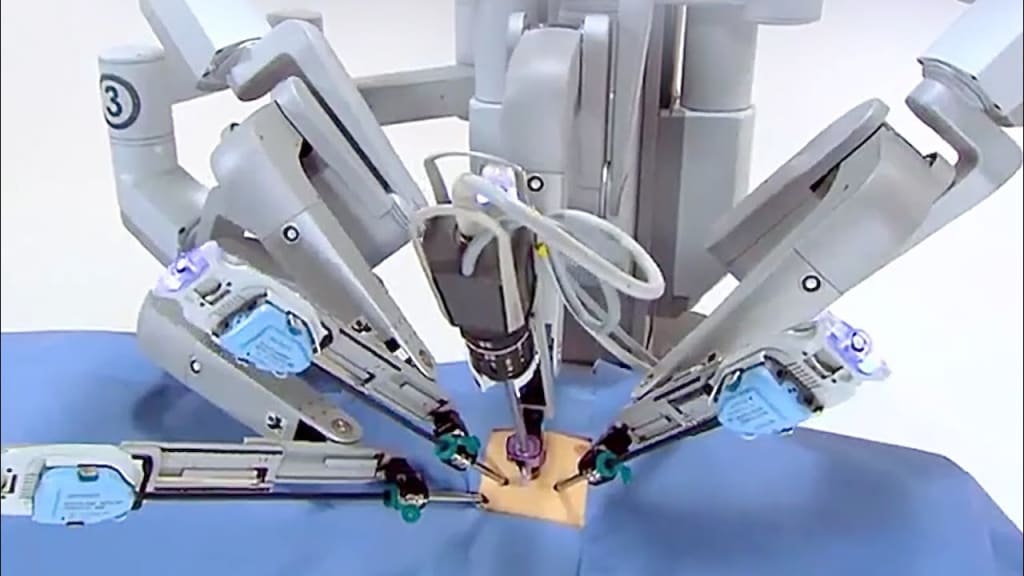
Technology develops in a constant and rapidly move, for this reason society needs to adapt to this fast changes. That was a time when performing a surgery was out of cogitation and now, is not only possible to perform painless surgeries but also the improvement in technology is even creating new ways to make it more precise, effective, easily to recover and less invasive. This is possible with the use and assistance of surgical robots. Surgical robots are a high-technology device/tool that holds the surgical instruments and a camera, while a doctor executes the surgery manipulating a console while watching the procedure in the screen, which provides the professional with a better and limped vision of the patient, leading to a more precise surgery and, consequently, result.
In point of fact, this method is known for being less invasive compared to the traditional method, in which the surgeon conducts the surgery with only its hands and vision. As UC Health states in its article: “Compared to open surgery (traditional surgery with incisions), robotic and minimally invasive surgery results in smaller incisions resulting in less pain and scarring.” Aside from being better for the health care team as well as to the patient, the reasons why this market is expanding in a rapid pace, it is an outcome of its benefits, such as less time staying at the hospital, which is a fair approach, especially taken into consideration how fast people will be allowed to go back to their normal life, in another words, going back to its duties and jobs, also, the greater cost-benefit offered by the manufactures, supplying superior technology for hospitals and healthcare centers in general.
It is also crucial to bear in mind that, although the first type of surgery using this method is dated in 1985 (using the PUMA 560 in a neurosurgical biopsy surgery), it was in the year of 2000 that FDA – Food and Drug Administration approved the device Da Vinci, that became the first robotic surgery system for general laparoscopic surgery, a minimal invasive procedure. With the need for being more precise, more effective and having patients staying less time in the hospital, so they can go back to their normal lives, the growing in demand of this specific type of surgery is increasing over time, as the non-profit magazine Undark states: “Last year Intuitive Surgical, the leading manufacturer of surgical robot systems, shipped more than 900 units of its most popular model, the da Vinci, each priced at roughly $1.5 million. In 2018, the global market share for surgical robotics was $5.4 billion, and it’s predicted to leap above $24 billion by 2025.”
Surgical Robots Market Segmentation as per Researchers:
Product Outlook (Revenue, USD Million, 2020 - 2027)
• Laparoscopy
• Orthopedics
• Others
Application Outlook (Revenue, USD Million, 2020 - 2027)
• Open Surgery
• Minimal Invasive
In the final analyzes, it is possible to see that although the first dates utilizing this method are in the 1980 and early 2000, it took time for this technology to become what it is in the present, it can possibly be as a consequence of the limited resources they had access to back at a few decades ago. On the other hand, nowadays there are multiple and infinite amount of resources to make every tool twice as much precise to perform even the more meticulous and dangerous procedure, resulting in a less invasive surgery, in addition, the high demand is also the result of the society development, that means, in a certain way, that modern times leads to more complex and difficult-to-overcome diseases. It is now time to embrace and support the development of technologies that can improve and make life better and lighter to live.
About the Creator
Keep reading
More stories from John D'Souza and writers in Longevity and other communities.
How electric wheelchair help people pursued a normal life
Electric Wheelchairs - also commonly known as power chair - were first created to help wounded war veterans, to make traveling easier and to allow them to do simple daily tasks by their own. Technically speaking, the electric version has the same structure as the regular wheelchair, however, the structure is powered with motors or batteries, to keep it functioning without any human effort as all the movements are controlled by the user, automatically. Although this tool was very helpful since when it was first created (internet records dates the year 1595!), before being upgraded by George Klein during World War II, there will always have room from improvement. That is why this is a market growing consistently, mainly as a result of an intense rising in numbers of elderly population (caused by the modern longevity), continual accidents injuries and even obesity cases, in such cases mobility is compromised, requiring the government and accessibility affairs to provide a better structure in most countries, allowing people to travel safely and, at the same time, injecting money in the economy.
By John D'Souza6 years ago in Longevity
What Are the Long-Term Effects of ADHD Medications?
Medications used to treat ADHD are among the most commonly prescribed psychiatric medications in the world. Drugs like Adderall, Ritalin, Vyvanse, and Concerta are taken by millions of children and adults to improve focus, impulse control, and executive functioning.
By Navigating the Worlda day ago in Longevity
Beyond Exhaustion: What Happens to Your Body and Brain After 72 Hours Without Sleep?
We've all experienced the grogginess of a poor night's sleep or the heavy eyelids that follow an all-nighter. But what happens when you push the human body to its absolute limits? Staying awake for 72 hours—three full days and nights—is a severe shock to your system. It shifts from a simple matter of feeling tired to a profound physical and psychological crisis. Here is a chronological breakdown of what happens to your mind and body when you stop sleeping.
By The Glitch Archive6 days ago in Longevity



Comments
There are no comments for this story
Be the first to respond and start the conversation.