
The 13 Tortures of Saint Eulàlia: A Testament of Faith and Martyrdom
Understanding the religious and cultural impact of Barcelona's patron Saint


In the annals of Christian martyrdom, few figures embody the spirit of unwavering faith and resilience, like St. Eulàlia of Barcelona. Born in Spain during the late 3rd century, Eulàlia's short life was defined by her profound devotion to Christianity and unyielding courage in the face of brutal persecution.
The Short Life of Eulàlia
Eulàlia was born into a Christian family around 290 A.D. in Sarrià, a land near what we now know as modern-day Barcelona. From a tender age, she exhibited a profound seriousness and stoicism, regularly preaching the Word of God with unwavering conviction and grace.
However, in those days, the Christian community faced immense trials under the brutal Diocletian persecutions. This was a perilous era for followers of Christ, as many sought refuge from the relentless oppression while others were compelled to leave their homes in search of safety.
Her mother, deeply aware of Eulàlia's unyielding commitment to her faith, tried to shield her from the harsh public scrutiny. She secluded Eulàlia from the outside world, hoping to protect her precious daughter from the dangers that loomed.
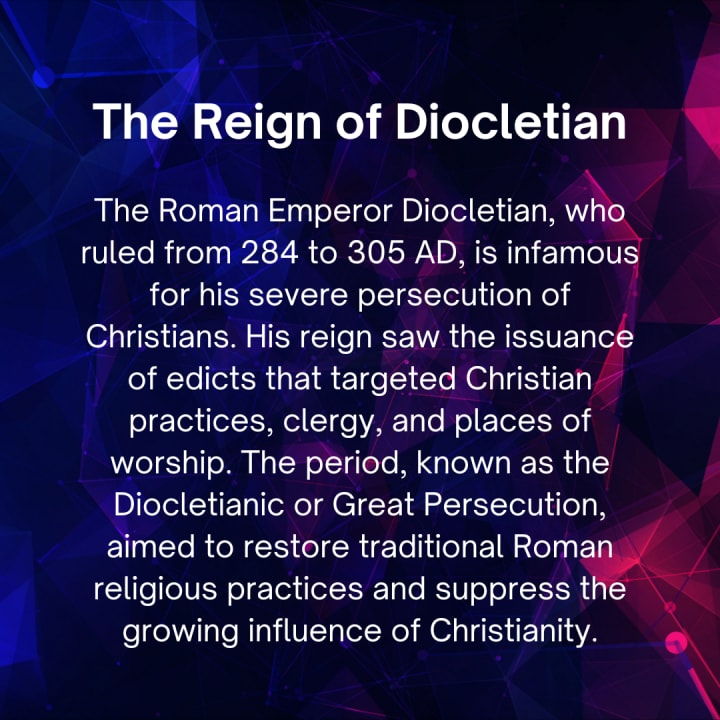
In 303 A.D., during a time of great trial and tribulation for the early Christian church, the Roman Emperor Diocletian issued a series of edicts to eradicate Christianity from the empire. These harsh decrees mandated the destruction of sacred churches, the burning of holy scriptures, and the merciless execution of those who steadfastly refused to renounce their Christian faith.
Despite her mother's desperate attempts to keep her hidden and safe, when Diocletian sent Dacian, the governor of Barcelona, to hunt down and persecute Christians, Eulàlia felt a strong sense of purpose that she could not disregard. With resolute courage, she broke free from her seclusion and fearlessly confronted the Roman authorities, knowing full well that this act would ultimately result in her martyrdom.
Standing before the governor, Eulàlia did not cower. She delivered impassioned, eloquent speeches defending Christianity and vehemently denouncing the Roman gods. Her words were infused with divine inspiration, a testament to her unshakeable faith. But her defiance was met with brutal threats.
The governor, enraged by her steadfastness, ordered her to be subjected to excruciating tortures until she renounced her Christian faith.
The 13 Tortures
Driven by a desire to make Eulàlia renounce her faith, the Roman authorities subjected her to 13 unspeakable tortures, one for each year of her young life.
First, she was imprisoned in a dark cell that never saw the light of day. She was then whipped and later had her skin peeled away by hooks. Next, she was forced to stand in a burning fire, enduring the searing flames, and her breasts were burned in an attempt to disfigure and humiliate her.
Even as her body was covered in wounds, rough stones were rubbed into them, intensifying her agony. One might think such torment would suffice, but her captors were relentless. Burning oil and molten lead were sprinkled upon her, and she was thrown into a pit of quicklime. Each act of cruelty served only to fortify her resolve.
One of the most infamous tortures came next. Stripped of her clothing, Eulàlia was placed inside a barrel filled with broken glass, nails, and sharp rocks. The barrel was then rolled down a steep street in Barcelona's Jewish quarter.

Although her body was battered and bruised, Eulàlia's spirit remained unbroken, a testament to her unwavering faith in the face of persecution.
Seeking to further humiliate her, her tormentors paraded her naked through the streets of Barcelona on an ox-driven cart. Yet, the heavens would not allow such indignity to befall one of His faithful servants. According to legend, snow began to fall, enveloping Eulàlia's body in a beautiful coat of white snowflakes, as if God Himself were shielding her from disgrace.
Unfortunately, Eulàlia's reprieve didn't last long. Upon being discovered still clinging to life, the authorities decided not to mess around any longer. She was crucified on an X-shaped cross before finally being decapitated and dying on February 12, 303 A.D. Legend has it that a white dove emerged from her neck at the moment of her death, symbolizing the purity of her soul and her ascent to heaven.

After her death, Eulàlia's body was buried, only to be lost for centuries. However, by the time the Moorish invasion rolled around in 713 A.D., Saint Eulàlia's remains had been found and were subsequently concealed to protect them from desecration. They were rediscovered in 878 A.D. by Bishop Frodoino in the church of Santa Maria de las Arenas, today's Basilica of Santa María del Mar.
In 1339, her remains found their final resting place in the crypt of the Cathedral of the Holy Cross and Saint Eulalia, also known as Barcelona Cathedral, where they have remained ever since.
This magnificent structure was built in her honour and remains a significant religious and architectural landmark in Barcelona.
Enduring Legacy
Eulàlia's unwavering devotion and bravery became a symbol of resistance and inspiration for the early Christian community in Barcelona.
In 663 A.D., Eulàlia was canonized by Pope Vitalian, forever enshrining her among the revered saints of the church. Since the late 17th century, she has been celebrated as a patron saint of Barcelona, a city that holds her memory in the highest esteem.
Now, every year, on February 12, the faithful of Barcelona come together to commemorate Saint Eulàlia's martyrdom. The city pulses with vibrant festivities, including parades, solemn religious ceremonies, and communal gatherings that honour her memory and contributions to the city's spiritual heritage. These annual celebrations are a profound reminder of her ultimate sacrifice and the divine values she embodied.
Conclusion
St. Eulàlia's story is a powerful reminder of the strength of faith and the enduring legacy of martyrs. Her 13 tortures, endured with unwavering courage and conviction, serve as a testament to the profound impact of religious belief. As we reflect on her life, let us find inspiration in her example and strive to embody the same unwavering faith and resilience in our own lives.
About the Creator
Chelsea Rose
I never met a problem I couldn't make worst.
Reader insights
Outstanding
Excellent work. Looking forward to reading more!
Top insights
Easy to read and follow
Well-structured & engaging content
Excellent storytelling
Original narrative & well developed characters
Eye opening
Niche topic & fresh perspectives
Keep reading
More stories from Chelsea Rose and writers in Longevity and other communities.
The Illusion of Serenity: Navigating the Ironies of Modern Destination Meditation Retreats
In a fast-paced world filled with constant demands and pressures, it's no wonder that people are increasingly turning to activities that offer a sense of calm and serenity. Destination meditation retreats in breathtaking locations worldwide have experienced a significant rise in popularity, providing a peaceful haven for individuals seeking solace and tranquillity.
By Chelsea Rose2 years ago in Longevity
Day 4 of Quitting
If this is how sobriety feels, maybe it’s better to go through life a little buzzed… this, along with other hits like, I want to kill myself, I wish I was dead, and I’m going to throw myself off a bridge have been the only thoughts on rotation these past few days. I promise myself that if, in a month, I still feel like this (‘this’ meaning despondent, full of rage, and simultaneously numb) I can go back to smoking. Until mid-February though? Nicotine is off the table.
By sleepy drafts5 days ago in Longevity
France Artificial Intelligence in Diagnostics Market Size and Forecast 2025–2033
France Artificial Intelligence in Diagnostics Market Outlook The France Artificial Intelligence in Diagnostics Market is undergoing a significant transformation as healthcare providers increasingly embrace advanced technologies to improve diagnostic accuracy, efficiency, and patient outcomes. According to Renub Research, the market is expected to grow from US$ 46.73 million in 2024 to US$ 180.76 million by 2033, registering a strong compound annual growth rate (CAGR) of 16.22% from 2025 to 2033.
By Marthan Sir3 days ago in Longevity


Comments (2)
Oh wow, this was very intriguing and I learned so many things!
A truly fascinating story!