

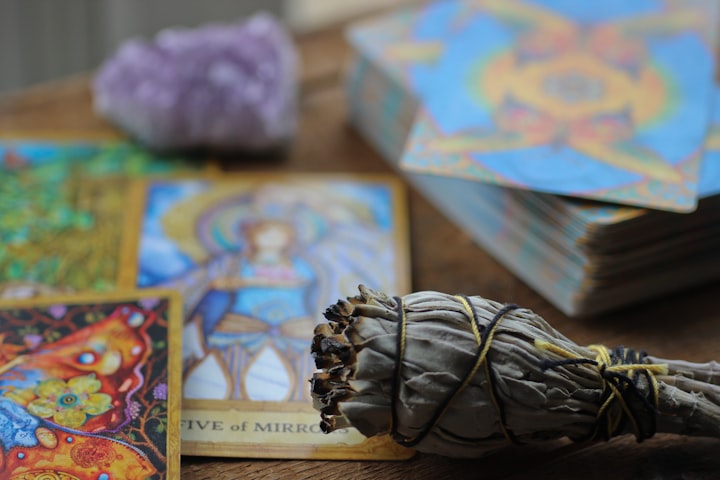
Starting to read the Cards
Okay, we've talked about getting a deck and some of the myths around the cards. I've advised you to keep your cards where your dog won't eat them. Now, we're going to start in on the actual act of reading the cards.
You should have a Tarot journal ready from this point on. It doesn't have to be fancy, and it doesn't even have to be a proper journal. It can be a plain ruled notebook from the dollar store, or even a word processor file if you find that typing is better for you than hand-writing. Or make a note in your phone, whatever you are the most comfortable doing.
Make sure to keep your Tarot journal handy when you are doing any work with your cards. You're going to want to take notes, especially when you do self readings, so that you have something to refer back to later.
First thing you want to do, and this is the boring part that no one likes, is to give the book that came with your deck a read. You don't have to memorize it, there won't be a test later and you can always refer back to it when you are working with the cards later. I just want you to get a feel for the deck, so you could skip the part with the card interpretations even. Just give the introduction, the first bit that lets you get to know the intentions of the author and artist a bit better.
Don't have a book? Or only have one of those little white guidebooks that you need a magnifying glass to read? That's fine. You can usually find somewhere online to read the information we're looking for (such as the preview function on Amazon or a pdf download from the author or artist's website).
Don't have that option? It's not a big deal. You will be able to figure it out as you go, it's just that the book would be the shortcut method. You can just skip to the next part of this lesson.
Once you've given the guidebook a cursory glance, we're going to spend a couple minutes getting to know the physical cards. And you may have already done this, which would be the normal reaction to getting a shiny new deck. But let's do it again with intention.
What you're going to do is sit with the deck and flip through the cards, one at a time, nice and slow. Flip the top card, look at it, then put it in a face up pile and go on to the next.
As you go, look at each card and make a note in your journal about any cards that you find particularly interesting, or that spark something in you. Sometimes, this will mean a few words about every card in the deck, and sometimes, it will be just a few of them.
There's no right or wrong way to do this exercise. You're just getting to know the deck, creating associations that you will use later when you're doing readings. This could be "oh, the Lovers card is so pretty" or "wow the queen of swords looks like my mom."
These notes might be something you refer back to later when assessing your deck. If you start to feel like you are losing your connection to the deck, or need a reminder of what your initial thoughts were, this is going to be an invaluable resource. And I recommend repeating this as a sort of check in to your development and connection to this deck every six months or so. It may be longer for some people and shorter for others.
And remember, there's no shame in using a deck for a few months, then determining that you need a different one that suits you better. That happens frequently as readers learn and grow. Part of being a reader is inevitably doing shadow work that helps you develop as a person too.But now, back to getting to know the deck.
Once you've spent however long it takes to go through the deck (there's no set time, it takes as long as it takes) and make notes on it, the best thing to do is shuffle it for a couple minutes, just getting used to the feel of it in your hands.
I don't recommend doing that poker shuffle where you split the deck and flip them with your thumbs to mix them. Most decks are too large or too stiff to do that with. And you don't want to end up with a bowing in your deck. I learned the hard way that this can happen to decks and I had to leave one of my faves under a huge book for like a month to get the bow out, and it's still not entirely gone.
If the note taking was long or exhausting for you, then you can put the deck away for now, once you've shuffled it a bit. There's no rush to get into this. You have to work at the pace that suits you. Overwhelming your system can be a good way to end up disliking the process of reading Tarot and if you are really into this, you don't want to burn out before you even really start.
When you're ready to do the next step, then get your cards out and shuffle them again. You should shuffle your cards every time you get them out or before you put them away. It just helps to clear off the energy of what you were using them for and helps you reconnect to them when you're about to do something new.
What we're going to do next is a sort of interview with the deck. The goal of this is to get to know the deck and feel comfortable with it. Every deck has its own personality and you might find that the one you have picked out isn't good for self reading but is great for doing love readings. Or that it is eager to work with shadow issues but isn't keen on day to day "mundane" readings. Whatever you find out, this is a good way to get started with any new deck.
Feel free to customize the reading from this one, but it's a good start for beginners.
How to do a Deck Interview.
The first thing to do is to read through this process before you try it for yourself. There are several ways you can alter the interview reading for your own purposes, but if this is your first time working with cards ever, maybe stick to the format here.
Shuffle your deck, keeping the intent of this reading in mind - to familiarize yourself with the deck - until you feel comfortable using it. Chose 4 (or 5 if appropriate) cards without looking at the faces.
You can do this by either fanning them out and picking them from the deck. Or you can shuffle and stop when you are ready and just take the top cards on the deck. Or you can cut the deck and take the top cards of the lower half. You can spread them out Go Fish style. Or really, do it however you are comfortable choosing. It's your deck and your reading, that means it's your rules.
Once you have the cards picked out, put them in a straight line, face down, in the order you selected them, with the first one on the far left and moving right as you go.
As you do the reading, you are going to flip each card one at a time and analyze it as it relates to the position it is in. That means, treat the position like the question and the card like the answer. This is how you are going to do most readings.
When you have a card face up, study it, feel it out and write down the answer that you are getting from the impressions that it is giving you. If you are struggling with this, feel free to grab your guidebook and look it up. You'll get more comfortable with this process as you gain experience.
With each card, repeat this process, making notes of the impressions you get from the cards as answers to the questions. This may take a little deep thought, because when you're looking at a card, the obvious meaning may not make any sense at all in the context of your question. This is where your intuition, the powerful force inside you that helps guide you, can help you feel out how it fits into the question you're asking.
And don't give yourself a hard time as you do this! Remember, you are just beginning. You may not be great at first. You weren't too good at walking when you starting doing that either, were you? But if you had insisted that you couldn't walk until you were perfect at it, you'd still be sitting on your butt in the middle of your parent's living room!
Some of these cards will have multiple questions listed, and that is just for clarification of the position. You don't need to draw extra cards to fill in the extra questions. The final question is optional, and you can chose a 5th card if you want to determine if this deck is going to be good for you doing self work or if you will be able to use it with other people. If you already know what you are intending to do with it in that regard, I wouldn't bother with that last question. You might end up making things harder on yourself with overthinking and anxiety.
Card 1 - Introduce yourself! What card best represents your voice as a deck?
Card 2 - What kinds of topics do you prefer to discuss? What types of questions are you good at answering?
Card 3 - What kind of topics do you not like to discuss? What questions are you not suited to answering?
Card 4 - What is the best way I can work with you?
Card 5 (optional, depending on your intentions) - Are you better suited for working with me for self-readings or reading for other people?
Once you've done this interview, I'm going to recommend not throwing your cards out the window if they don't give you clear answers or answers that you like. You'll learn over time that sometimes answers are not clear. We need to learn, as readers, to interpret and decipher messages that aren't always delivered in nice, neat ways. This is another skill that will come with experience.
Here are a few tips for this first reading that will help you develop good habits that you can carry over into future readings ---
- Your first instinct is usually the right one. Even if it isn't what you want to hear, or doesn't make sense. Exploring the direction it is pointing you towards should create clarity.
- If you find that your reading(s) are overly optimistic or overly pessimistic, you may want to take a step back and examine your ability to tell yourself the technical truth. That is, are you "doom-seeing" or "sparkle reading" (both my terms, I doubt you'll see them in other texts).
By which I mean are you "sparkle reading" by telling yourself (or your clients) the happiest, sparkliest thing you can possibly draw out of the cards? Are you only telling yourself (or your clients) what you/they want to hear? Because that's a nice feeling, it really is, but you are doing everyone a disservice and wasting your time if you want to just tell everyone what they want to hear and not what they need to hear.
On the other hand, if you are "doom-seeing" then you are doing the same thing except with the harshest, most pessimistic view possible. I've seen many readers end up in this zone, especially in self-reading, because they are trying to not be a sparkle reader. They believe that if everything comes up as dark and miserable as possible then they are obviously not lying to themselves by finding the sparkle in everything.
What you are going to find is that in reality, readings fall right in the middle of those two extremes. There are going to be good and bad things, things you like to hear and things you wish you didn't have to face. They're just like life that way. The important part of reading is to learn the difference between telling yourself what you want to hear, or expect to hear and telling yourself the technical truth.
I did a blog about honesty and technical truths you can check out for a deeper discussion of this topic, but for now, I'm going to leave it at this - every reader is also a human being. They have a collection of experiences and prejudices that come from their lives. Even you. So you have to watch out for doing your readings from behind those preconceived notions of what a reading is going to say.
This is one of the reasons to keep a journal. If you notice a pattern of advice or themes in your readings, you have the opportunity to examine what's up with that? Are you just in a funk or are you stuck in some wound in your psyche? Do you need to do some shadow work or maybe get some kind of therapy to help you get through this block?
There's nothing wrong with you if you find these blocks and patterns. It's part of being a Tarot reader. If you are doing readings for yourself, it is with the intent of developing yourself and that comes with lots of shadow work and sometimes therapy, which is a great tool. And even if you are reading mainly for others, you can't be in touch with the kind of energy and higher knowledge that goes along with being a reader without it affecting you.
You only need to do this interview reading one time with a new deck, but once you have done it, congrats! You've done your first reading. You've broken the ice!
Working with the Cards
One of the practices that you can do everyday is to draw one card in the morning as a sort of clue about how your day is going to go, what themes to be on the look out for, that kind of thing.
What I do is shuffle the deck, draw one card and do a quick journal entry about it. I don't spend more than 2 or 3 minutes on this. Then at the end of the day, I refer back to the card and the entry, adding on where I saw the card's themes play out.
A variation on this that seems to work well for others I've seen is to do the journaling before bed, starting by filling in how the card you drew showed up in your day then drawing a card for the next day and doing the quick notes about it before you go to bed. Sometimes, this generates interesting and enlightening dreams (not all dreams are relevant to your inner work, but sometimes you do get one that feels different). When you have a dream that feels important to the theme of the day, you can take a minute or two in the morning to scribble down the details.
Not only does this exercise encourage mindfulness in your daily life, it will also help you get familiar with your deck and the cards by applying their symbolism to your everyday life. After a while, you may find that you don't need to make many notes at all in your daily journal when you draw a card. You'll know what the three of wands means in your life because you'll have worked with it for so long.
While this daily exercise is by no means mandatory, but I do highly recommend it.
Next time we'll get into some other readings you can do for yourself. You can find my earlier lessons and other blogs at my profile page. If you have any questions or comments about these lessons, you can leave them on the pinned post on my facebook page or DM me there. I'll add the answers to later lessons.
About the Creator
Dani Hermit
Author.
Tarot Reader.
Crochet enthusiast.
But mostly a big ass nerd-bomb who likes to hear myself talk and will spout unsolicited advice at the drop of a hat. Also, you will probably learn more about my cats than you ever wanted to know.
Keep reading
More stories from Dani Hermit and writers in Longevity and other communities.
Tarot Lesson 6
DeBunking Tarot Myths, Part 2 So, what we're going to be tackling in this lesson are myths about reading the cards and the people who read them. This is a jump off from my last lesson, though I suspect it will hardly be the last time I do a lesson focused on debunking myths.
By Dani Hermit5 years ago in Longevity
Day 4 of Quitting
If this is how sobriety feels, maybe it’s better to go through life a little buzzed… this, along with other hits like, I want to kill myself, I wish I was dead, and I’m going to throw myself off a bridge have been the only thoughts on rotation these past few days. I promise myself that if, in a month, I still feel like this (‘this’ meaning despondent, full of rage, and simultaneously numb) I can go back to smoking. Until mid-February though? Nicotine is off the table.
By sleepy drafts12 days ago in Longevity
The Devil's Cut
“Comrade, finally you’re awake.” The voice was smooth, sensual. A flickering incandescent bar was all that lit the white, sterile room. All Vladimir remembered was everything going black. He tried to move his arms and found them strapped to the gurney.
By Matthew J. Fromm5 days ago in Fiction



Comments
There are no comments for this story
Be the first to respond and start the conversation.