
Re-Entry Reluctance A.K.A. "Cave Syndrome"
Have We Rejected the Pre-Pandemic Lifestyle?

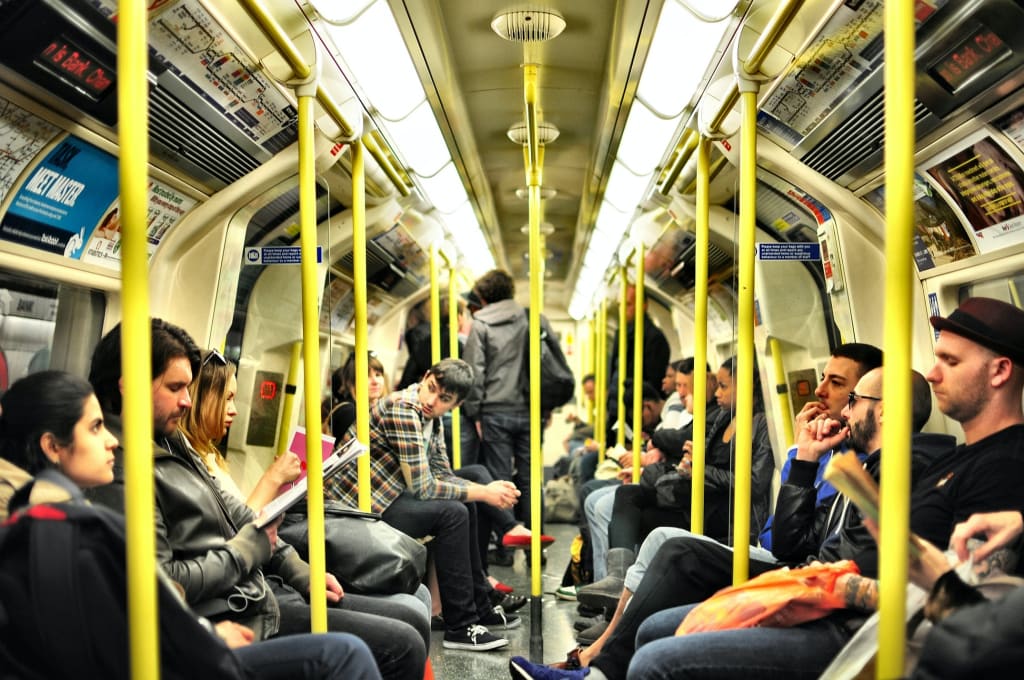
As I write this, the US has fully vaccinated over 107 million people. Three out of four of our personal friends are fully vaccinated. People we haven't seen in over a year are now, supposedly, safe to be around.
Yet, they, and we, stay mostly in seclusion.
Why?
There seem to be two widespread reasons for post-vaccination re-entry reluctance.
- Anxiety
Dr. Arthur Bregman, a psychiatrist in Miami, has coined a phrase for this phenomenon: "Cave Syndrome".
"A lot of people are scared to death of going out. It's really agoraphobia. Even people that didn't have agoraphobia, which is the fear of open spaces, have it now." -Dr. Arthur Bregman
- Habit
It's also become habit for many people, one that's hard to break.
"It has to do with the isolation you crave. In other words, people have gotten into being isolated alone. They love being home." -Dr. Arthur Bregman
-------------------------------------------------------------------------------------
I'm seeing both reasons play out in my circle of friends and family.
In the last thirteen months, my partner and I have grown used to each other's constant company… and even more used to avoiding the company of others.
We make trips out to the nearest town only once or twice a week.
We go to get our groceries early in the morning before other shoppers may have crowded the stores, staying fully masked.
We try to consolidate our errands into one excursion. We use hand sanitizer after every tactile contact we have… stores, gas pumps, ATMs.
We still grumble quietly to each other when we are confronted with "the maskless" and give them a wide berth.
It's only recently that I've been pointing out to my mate that perhaps "the maskless" are already vaccinated, but it's a hard habit to break.
We have not been vaccinated.
I've automatically attributed our abundant caution to this factor, until recently, when we've been noticing a similar behavior in our vaccinated friends.
Even the fully vaccinated seem hesitant to completely emerge from isolation.
We were recently among a group of a dozen couples who received an online invitation to an annual event that we all used to take part in.
It was always an exciting, circle-on-the-calendar, count-down-the-days type of get-together.
I remember last year, everyone was so sad when the event was canceled, consoling each other with the assurance that things would be back to normal soon. We'd catch up in 2021.
Yet, here we are in 2021, and though that highly expected event is now scheduled for mid-summer, no one seems willing to commit. Only one or two people sent an immediate acceptance RSVP.
My partner and I were surprised.
At least two-thirds of our fully vaccinated friends hemmed and hawed, saying they'd have to wait and see.
"We don't know what will be happening with the pandemic, or the mutations, months down the road. Maybe we'll be in another surge. Too soon to tell." -our vaccinated friends
Although it is possible the mutations might escalate and render the vaccine ineffective on a large scale, I don't believe that is the main reason people are still reluctant to get back to normal.
I believe there's a third reason for re-entry reluctance, A.K.A. "Cave Syndrome", one that goes beyond agoraphobia and habit.
I believe we are now (subconsciously) questioning the quality of life we had pre-pandemic.
----------------------------------------------------------------------------------------
Re-evaluating
I think we've all seen what life is like without the hustle and bustle, the frenetic pace we had all become so used to… and we're not ready to step back in those rat-race shoes.
The pandemic was horrible because of the sickness, the suffering, and death, but the pandemic also forced us to stop rushing through life thoughtlessly.
We've had plenty of time to think. Plenty of time to listen to our hearts, to realize what was really important in life. Time to spend with those we love, and time to re-examine where we were letting life take us.
Is it possible that the long-term implications of the 2020 pandemic will include a less ambitious lifestyle?
Are we focusing less on "doing more, making more, getting more?"
Maybe we're afraid that if we dip a toe in the water of "normal life", we'll get swept up in the current, suddenly finding ourselves back in that place where we were only existing ; a life where we were tired, stressed, and over-worked . Not really living life, just getting through it.
I, for one, am not ready to get back on the merry-go-round.
I've seen an enormous difference in my sense of contentment, and my connection to the natural world. I feel more in touch with my partner. More in touch with myself. I feel more spiritual.
I am happier. And that is a good feeling.
Only time will tell if the rest of the world will get back to its materialistic, dog-eat-dog mentality.
My partner and I will stay on the outskirts, content to continue with our slower pace of life, in the interest of fully living.
------------------------------------------------------------------------------------
www.nbcmiami.com%2Fnews%2Flocal%2Fpeople-with-cave-syndrome-are-reluctant-to-return-to-normal-life-after-covid%2F2400730%2F
About the Creator
Shell St. James
Shell St. James is a New England author living in an 1895 farmhouse with her musician soulmate, feline muse, and a benevolent ghost. Her novel, "The Mermaid of Agawam Bay", is available on Amazon. Find out more at www.shellstjames.com
Keep reading
More stories from Shell St. James and writers in Longevity and other communities.
Unlocking the Secrets of Longevity: How to Live a Longer, Healthier Life
Longevity is a topic that has fascinated humans for centuries. Everyone wants not only to live longer but to maintain vitality, strength, and mental clarity throughout their years. Modern science, combined with the study of ancient lifestyles, provides clues about how some people consistently live well beyond 90 or even 100 years.
By Lukáš Hrdlička6 days ago in Longevity
I was in a Toxic Relationship, with my Workplace
“You got that?” My ex yelled. His hands were balled into fists at his side. At six foot three, he towered over me. A normal person would have been afraid, but I looked up a video of George Lopez repeatedly saying, “I got this,” and showed it to him. I had grown used to this treatment, so much so that I didn’t blink when he ripped the phone from my hand and threw it across the room.
By Jade M.5 days ago in Confessions


Comments
There are no comments for this story
Be the first to respond and start the conversation.