
Phage Are All the Rage
A SARS-CoV-2 Virus Wary Public May Not React Well to Virus Reverse Genetics Being Used in Covid-19 Research

Background
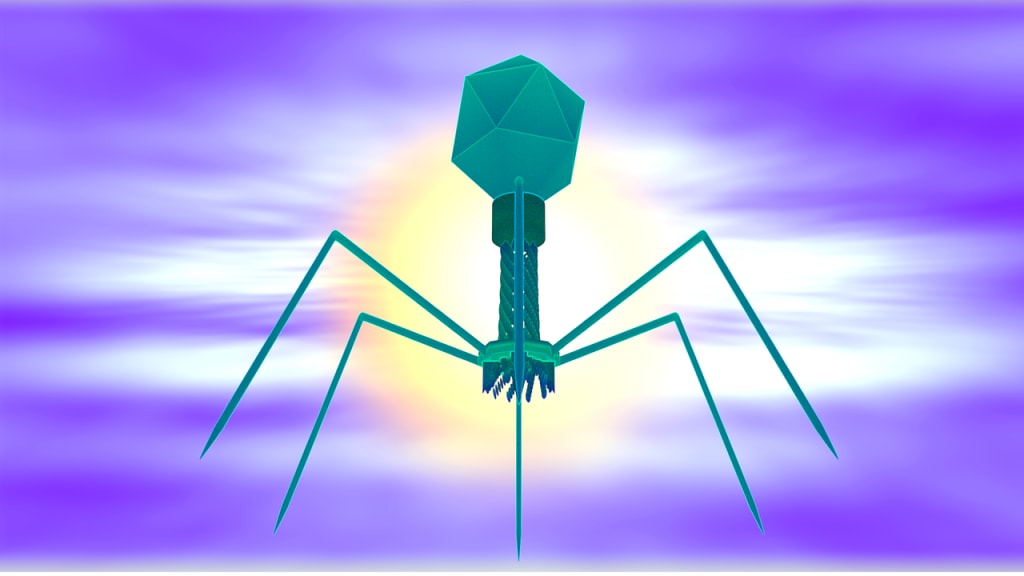
In recent years both viruses and bacteriophage (viruses that specifically bind to and infect bacteria, often referred to simply as 'phage' The term phage is sometimes used interchangeably with virus. Strictly speaking this is incorrect and in this post when I say phage I am referring to bacteriophage and will limit the use of the term virus to those which infect animals and humans) have seen their use rise considerably in a wide variety of applications impacting many sectors of our economy. Bacteriophage are used in the food industry to control the spread of the human pathogens Listeria monocytogenes, Salmonella spp. and shiga-toxin producing E. coli (STEC) in food production facilities, and in assays which exploit their highly specific host range to detect those same pathogens and others. Despite concerns that have been raised, about which I have published previously, the use and acceptance of bacteriophage in food focused applications has continued to grow. On the clinical side the uses of bacteriophage are even more numerous. As with food pathogens, they have been used in pathogen detection assays, but also as therapeutics which act much like antibiotics for treating certain infectious diseases (phage therapy or IPATH), as a means of rapidly determining the antimicrobial susceptibility of pathogens involved in infections, and as carriers of alternative therapeutics, delivering the therapeutic agent or agents directly to the infectious organisms of concern.
Nature paper describing the use of virus reverse genetics (see below) in SARS-CoV-2 research can be found here.
Advantages of Phage
Bacteriophage have many advantages which make them ideal for the various applications described above and many others I did not mention. First, naturally occurring phage that semi specifically or specifically infect certain bacteria are (relatively) easy to identify and isolate from a variety of natural sources. Once a source is identified they can be obtained, essentially for free, from that source, and (relatively) easily propagated in huge numbers in the laboratory. Once propagated they are generally quite stable and fairly easy to maintain over extended periods of time (years to decades or longer). However, naturally occurring phage are limited in their capabilities and usefulness. Their ubiquitousness in nature is not the main reason they have seen such widespread use. What has made them so attractive is the fact that they are very amenable to genetic modification by any number of fairly straightforward genetic engineering approaches. Without the ability to genetically modify phage and viruses their usefulness would be greatly limited.
Viruses
Viruses share some of the advantageous features described above for phage though they have seen much more limited use. There are two main reasons for this. First, they are more difficult to propagate and work with in the lab. Second, there are ( some legitimate and some not so legitimate) safety concerns related to their infective potential, especially if genetic modifications are to be made. One area where viruses (or at least virus mimics) have seen some limited application is in the area of synthetics, sometimes referred to as synthetic viruses, other times called pseudoviruses. Synthetic viruses, fully constructed from the ground up in laboratories have been quite useful as surrogates for SARS-CoV-2 in research labs who do not have the capabilities to work with BSL-3 level hazardous materials like native, infective, SARS-CoV-2. These synthetic viruses typically only contain a limited segment of the DNA or RNA of the native virus which they are intended to mimic. Most often this would be the particular segments of DNA or RNA that are useful from a diagnostic perspective. They may or may not be encased in a proteinaceous or lipid shell. My own research lab and many others in the company where I work used synthetic SARS-CoV-2 (along with various forms of inactivated SARS-CoV-2) extensively as we developed and tested clinical and environmental detection methods early in the pandemic. Much like phage, viruses are also relatively easy to manipulate with genetic engineering approaches. However, genetic engineering of viruses, particularly those that infect humans, is fraught with hazards both real and imagined.
Achilles Heal and Virus Reverse Genetics
It is this main strength of phage and viruses as research and treatment tools that is their Achilles heal, at least as far as the general public is concerned. Genetic modification of viruses just 'feels' like a very bad idea to a covid-19 weary populace, many of whom still believe SARS-CoV-2 itself was the result of virus genetic engineering research gone wrong. Even an explanation of the benefits and long safety record of existing phage based products has done little to assuage the public and fear of genetic modification of viruses remains extraordinarily high outside, and even inside, of academia and industry research labs.
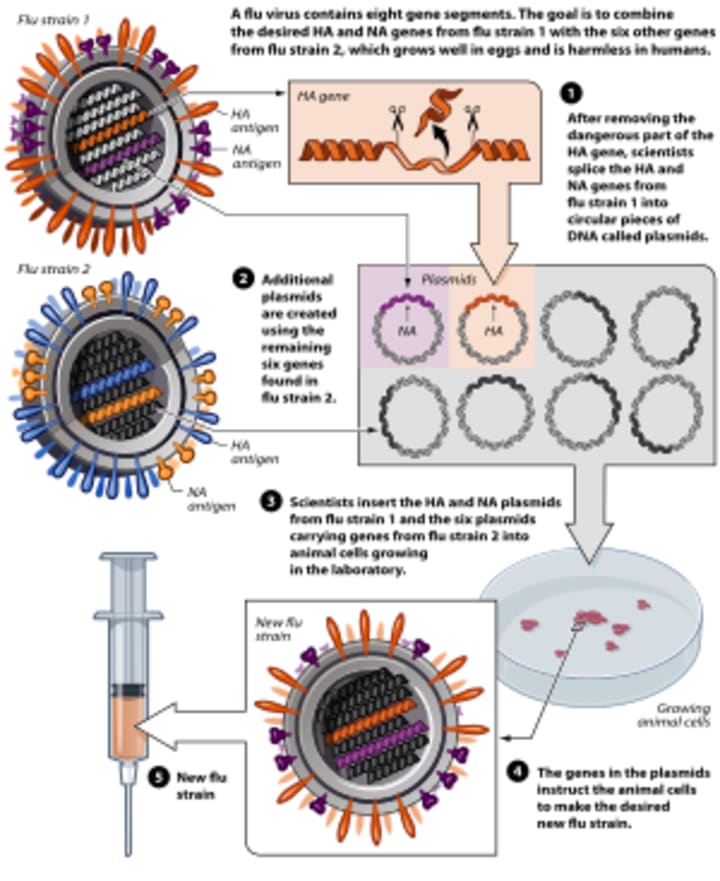
One area of phage/virus research deserves special mention because it relies entirely upon our ability to genetically modify phage and viruses for its very existence. This technology, which in my humble opinion is terribly and confusingly named virus reverse genetics, involves the manipulation of viral genomes at the cDNA level (for RNA viruses), followed by procedures to produce live infectious progeny virus (wild-type or mutated) after transfection of cDNAs into cells. To achieve this end, co- or superinfection with a helper virus have typically been used. If this all sounds ultra confusing to you, welcome to the world of virus reverse genetics. Below are just a few of the definitions of reverse genetics I pulled from various websites. Italics are mine.
Reverse Genetics Definitions
Wikiversity - "Reverse genetics is an approach to discovering the function of a gene by analyzing the phenotypic effects of specific gene sequences obtained by DNA sequencing. This investigative process proceeds in the opposite direction of so-called forward genetic screens of classical genetics. Simply put, while forward genetics seeks to find the genetic basis of a phenotype or trait, reverse genetics seeks to find what phenotypes arise as a result of particular genes."
News Medical Life Sciences - "Reverse genetics is an experimental molecular genetics technique that enables researchers to elucidate gene function by examining changes to phenotypes (of cells or organisms) caused by genetically engineering specific nucleic acid sequences (within DNA or RNA). In forward genetics, the genetic bases responsible for a particular phenotype are established – i.e. by examining naturally occurring mutations or mutations induced by radiation or chemicals. Mutant individuals (cells or organisms) are isolated based on their phenotype, and their genome is mapped to confirm phenotype to genetics. Altering the genetic sequence in reverse genetics typically involves directed deletions and point mutations (site-directed mutagenesis) to create null alleles (non-functional); such as gene knockouts."
Encyclopedia.com - "Any approach to genetic investigation that aims to find the function for some known protein or gene. It contrasts with the more traditional forward genetics approach, in which an unknown gene is sought for a known function (identified by the effect of a mutation). For example, analysis of gene sequences reveals open reading frames, which are the hallmarks of functional genes....Reverse genetics methods can be used to discover the function of such genes. For example, the gene can be cloned, subjected to mutation, and then reinserted into the organism (e.g. a bacterium or yeast cell) to see what effect the mutation has on function. A similar approach can be taken starting with a protein of unknown function. The amino-acid sequence can be back-translated into genetic code, a DNA probe constructed for part of the DNA sequence, and the relevant gene selected from a DNA library of the organism."
Wikipedia - "Reverse genetics is a method in molecular genetics that is used to help understand the function(s) of a gene by analysing the phenotypic effects caused by genetically engineering specific nucleic acid sequences within the gene. The process proceeds in the opposite direction to forward genetic screens of classical genetics. While forward genetics seeks to find the genetic basis of a phenotype or trait, reverse genetics seeks to find what phenotypes are controlled by particular genetic sequences. Automated DNA sequencing generates large volumes of genomic sequence data relatively rapidly....Reverse genetics attempts to connect a given genetic sequence with specific effects on the organism. Reverse genetics systems can also allow the recovery and generation of infectious or defective viruses with desired mutations. This allows the ability to study the virus in vitro and in vivo."
MedicineNet - In molecular genetics, identifying genes purely on the basis of their position in the genome, with no knowledge whatsoever of the gene product. In classic genetics, the traditional approach was to find a gene product and then try to identify the gene itself. Also known as positional cloning.
Risks of Virus Reverse Genetics
While the definitions are variable the the main core element is shared. Historically, traditional genetics has looked to some observable feature (phenotype) of a living thing first and then tried to determine what gene or genes are responsible or partly responsible for that feature. Reverse genetics turns this on its head, and instead looks to the genome first (genotype) and using various genetic engineering approaches determines the impact on phenotype of changes to that genome. Sometimes these changes are random and sometimes not. In most cases the outcome of these changes (the effect on phenotype) is unknown. Ultimately this is from where the concern arises. The large majority of virus reverse genetics research is performed with perfectly harmless non infective viruses, however some work is done with viruses which do infect and sicken and kill humans. Virulence is one phenotype that may be impacted by reverse genetics. A particular virus could become less, or problematically, much more virulent when used in reverse genetics research. The idea that SARS-CoV-2 is being subjected to this type of experimentation is justifiably frightening to some. Count myself among the group with concerns though I think the chances of a very bad outcome are extremely low. Not only would an unintended mutation to increased virulence need to happen that particular virus would then also need to somehow escape the high security (BSL-3 or higher in the case of SARS-CpoV-2) lab where the work is being conducted. As someone intimately familiar with how these labs operate I know exactly how unlikely that is. All that said the risk is not zero, and the potentially world altering, devastating consequences of such a low probability event suggest that extreme caution is in order. Virus reverse genetics has great promise but researchers in the field need to remain ever vigilant to the risks, and importantly need to do whatever they can to assuage public fears. This means first and foremost being open and honest about the possible dangers and sharing specific details of what procedures are in place to mitigate those risks. Being cagey or secretive about work in this area will do nothing but stoke further public fears and no doubt result in even more wild conspiracy theories propagating around the globe. Ironically it seems conspiracy theories about viruses spread as quickly as the viruses themselves.
About the Creator
Everyday Junglist
About me. You know how everyone says to be a successful writer you should focus in one or two areas. I continue to prove them correct.
Keep reading
More stories from Everyday Junglist and writers in Longevity and other communities.
Bacteriophage and Probiotics for Pathogen Control in Food Production Facilities
Introduction and background In recent years the use of bacteriophage (viruses that specifically bind to, infect, and ultimately kill bacteria) and probiotics (mixtures of what are often called ‘good’ bacteria) to control the food pathogens Listeria monocytogenes, Salmonella spp. and shiga-toxin producing E. coli (STEC) in food production facilities has become increasingly commonplace. The fear of foodborne disease outbreaks and the devastating economic consequences for the companies associated with them has sparked a “we are willing to try anything” mentality among food producers in every major industry sector. This has led to the implementation of some questionable practices without a full understanding of the potential for unintended consequences. The intent of this article is not to impugn the good intentions of the companies and people involved in promoting and using these newer approaches for pathogen control. They are (almost) all motivated by the same desire to do the right thing and protect the public health. That said, in their zeal to do something, it may be that some have moved too quickly, and it is possible that at least two of these newer (newer in this particular application at least) technologies (bacteriophage and probiotics) have the potential to do more harm than good. Going further, the potential for unintended harm is so great that a moratorium on their further use may be warranted until we have a much better understanding of the potential consequences of the adoption of these technologies on such a wide scale. That will require the generation of much more data than currently exists which proves their safety and efficacy to the satisfaction of the food microbiology and greater scientific community.
By Everyday Junglist4 years ago in Longevity
Day 4 of Quitting
If this is how sobriety feels, maybe it’s better to go through life a little buzzed… this, along with other hits like, I want to kill myself, I wish I was dead, and I’m going to throw myself off a bridge have been the only thoughts on rotation these past few days. I promise myself that if, in a month, I still feel like this (‘this’ meaning despondent, full of rage, and simultaneously numb) I can go back to smoking. Until mid-February though? Nicotine is off the table.
By sleepy drafts9 days ago in Longevity
Global Nepheline Market Size and Forecast 2025–2033
Introduction The global nepheline market is steadily gaining attention as industries seek more efficient, sustainable, and cost-effective raw materials. According to Renub Research, the global nepheline market is expected to grow from US$ 179.25 million in 2024 to US$ 230.63 million by 2033, registering a compound annual growth rate (CAGR) of 2.84% from 2025 to 2033. This growth reflects the increasing use of nepheline in glass, ceramics, and refractory applications, as well as a broader industrial shift toward energy-efficient and environmentally responsible production processes.
By Aaina Oberoi4 days ago in Longevity


Comments
There are no comments for this story
Be the first to respond and start the conversation.