
I Had A Heart Attack - Part 2
It could happen to you.

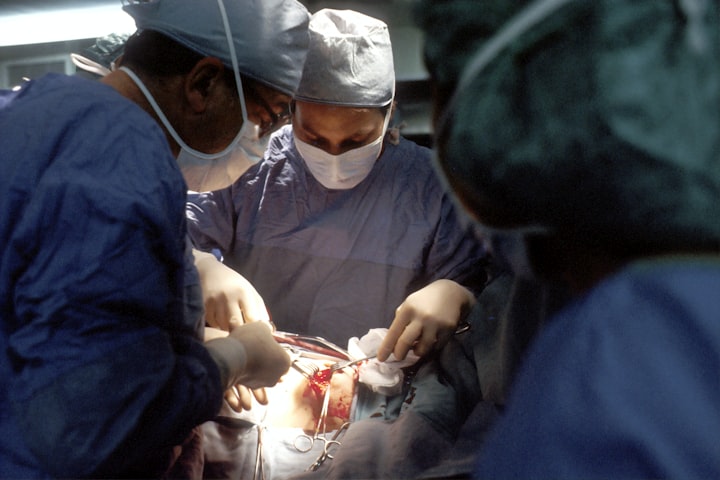
I spent all of today as a patient at one of the cardiac hospitals in Vancouver. As anyone who has spent time in the diagnostic part of a hospital knows, it is "hurry up and wait." Note: If you want to read Part 1 first, click here.
We have two cardiac hospitals in Vancouver. I was in the downtown one, a 25-minute drive from our local hospital. I was driven downtown in an ambulance by a very cheery couple; a man and woman who when I mentioned that my three and a half-year-old grandson loved ambulances, police cars, and fire trucks presented me with a promotional teddy bear to pass along to him.
Upon arrival at the hospital, I was escorted up to the cardiac unit and deposited in a bed. I was immediately attended to by a trio of nurses who fussed around me, asked a myriad of questions, poked and prodded me and got me ready for an angiogram. They needed to find out how many stents would be required to open up my heart's partially blocked arteries. What is a stent? Very simply, it is a tiny tube that a surgeon places in an artery to help keep it open to restore the full flow of blood to its destination.
There are two places an angiogram can start from. One is the wrist and the other is from the groin area. In either case, they have to be shaved. Mine was being carried out on my right wrist but they also shaved me in the groin area on both sides, just in case they needed a backup area, or in my case, two backup areas.
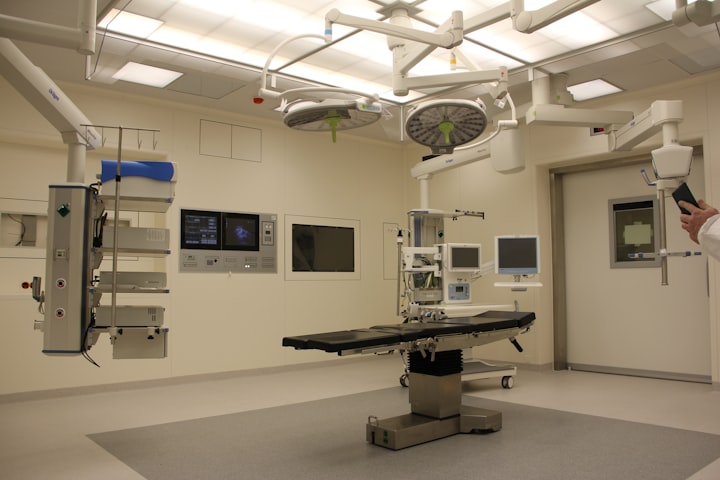
Then it was, " hurry up and wait time". Eventually, I was wheeled into the operating room or OR. Awaiting me was a team of nurses and several doctors and a lot of equipment. An incision was made on my wrist and it appeared I was good to go. As advised on the angiogram link, an angiogram is a diagnostic test that uses x-rays to take pictures of the body's blood vessels. A long flexible catheter tube is inserted into the bloodstream. It delivers a contrast agent or a dye into the arteries making them visible on the x-ray. This test helps locate or diagnose strokes, aneurysms, arteriovenous malformations, tumors, and blood clots.
It works like an x-ray. The body casts a shadow on a film when exposed to the x-ray, just like the shadow you see on a regular x-ray at your dentist or doctor's office. Blood vessels cannot be seen in an x-ray. Adding a dye or contrasting agent into the bloodstream makes the body's arteries and veins visible. These contrasting agents contain iodine, a substance that x-rays cannot pass through.
In my case, the doctor ended up with an image of my heart showing the blockages. All told, there were 9 blockages ranging in size from 40% up to 90 % as follows:
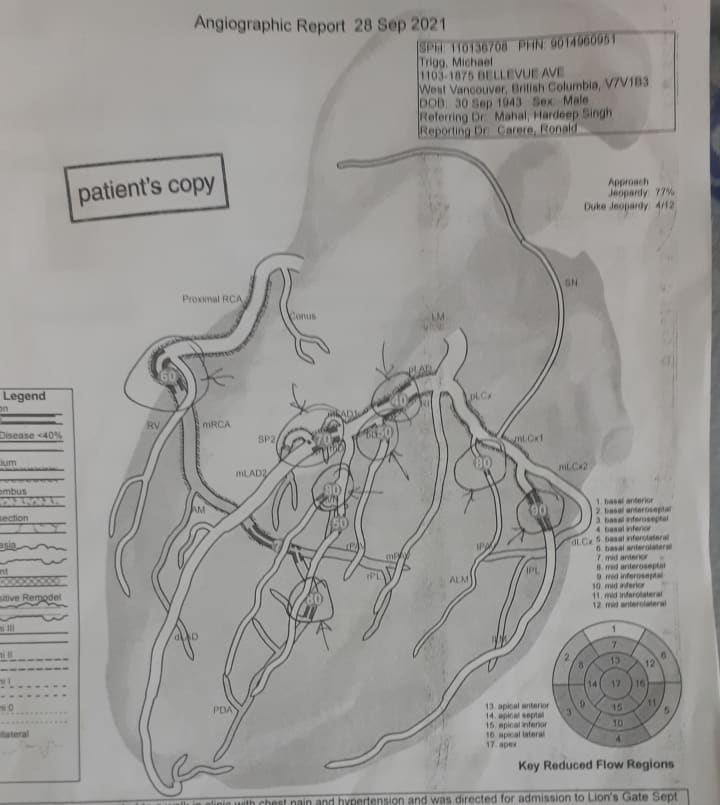
Forty Percent X 1
Fifty Percent X 2
Sixty Percent X 1
Seventy Percent X 1
80 Percent X 3
90 Percent X 1
I went into the hospital for an angiogram to find out how many stents I would need to unblock my heart's arteries and will end up leaving with quadruple (or more) bypass arteries.
The procedure is quite simple I have been told. The surgeon and his team remove enough arteries from my legs to replace the damaged ones in my heart. The operation takes around five hours and there is a 5-day post-op stay in the hospital and a 6-week recuperation at home.
I was completely blindsided by this event. Every year I have had an annual check-up where all my blood tests have come back normal. My weight is normal for my age and height. I am not a vegetarian but I eat a healthy diet, I exercise, 10,000 steps a day, and my wife and I are avid hikers. So these past few years I have assumed I have been healthy.
BIG MISTAKE!
All this while, the plaque has been building up in my heart arteries and I didn't know about it.
My question is; How many thousands of people are out there living a similar lifestyle to my wife and me, thinking they are healthy but unknown to them, disease is eating away at their insides somewhere. In my case, it was plaque on my heart arteries. In other people's cases, it could be cancer. In fact, it could be a myriad of things.

We are all responsible for our own bodies. What we eat. Whether we exercise - or not. Our mental state. In my case, I did look after my body but I fell victim to a very insidious disease.
I should note that one of my sisters has had angioplasty and my brother who is younger than me has had two stents installed in his heart arteries. So, there is an incidence of it in my family history, though my mother lived to the grand old age of 98, dying of pneumonia.
What is the solution to insidious disease? I don't know. In my case, had I had an angiogram, say 5 years ago, I could be rolling out of hospital now with a few stents, not having to undergo open-heart surgery. The issue is, however, neither a public nor a private healthcare system will pay for having an angiogram carried out if you are (apparently) healthy. The cost of an angiogram in Canada is $2,500 dollars for uninsured people.
About the price for a couple for a week at Cabo or a week for one in Hawaii?
Right now, I know which one I would have chosen if I knew 5 years ago what I know now.
By the time I am out of the hospital and back home, my medical costs (paid by my public health care system) will be around the $125,000 mark.
TO BE CONTINUED.

If you have any comments, disagreements, or additional information on this post, please contact me through my website or through my email. [email protected]
About the Creator
Michael Trigg
I love writing and I think it shows in my posts. I also enjoy feedback, particularly of the constructive kind. Some people think I am past my "best before date" but if that is true, it just means I have matured.
Keep reading
More stories from Michael Trigg and writers in Longevity and other communities.
I Had A Heart Attack - Part 1
I am writing this article from a bed in the cardiac ward of my local hospital. They do not do surgery here; it is a diagnosis and pre-op ward. Patients are parked here while waiting for a bed to free up in one of the city hospitals that carry out heart surgery. I have been diagnosed with arterial heart blockage and require quadruple bypass heart surgery. A scan of my heart revealed a total of 9 blockages ranging from 40% up to 90%.
By Michael Trigg4 years ago in Longevity
The Real Cost of Vehicle Accidents in the U.S.A
An automotive industry perspective grounded in data, history, and lived experience on America’s roads. Vehicle crashes are woven into the fabric of daily life in the United States. To many motorists, they’re a tragic “accident” but shift your lens toward the long arc of automotive history and economics, and a much larger picture emerges: one that touches families, business, government balance sheets, and the very structure of American mobility.
By Jane Smith5 days ago in Longevity
me, me, me
when i read back my poetry it screams “me, me, me” on my screen in bold letters and i can’t shut it up — most days, i cannot make any other words out; i want to throttle a thousand versions of the me gone by, i want to throw myself from a figurative balcony, i want to sink a sword into every pen i’ve held
By angela hepworth4 days ago in Poets


Comments
There are no comments for this story
Be the first to respond and start the conversation.