
Forget Burj Khalifa and Shanghai Tower: Saudi Arabia Now Readies a Bold 1km-Tall Skyscraper
The ambitious project signals Saudi Arabia’s push for futuristic engineering, global prestige, and a post-oil economic vision.

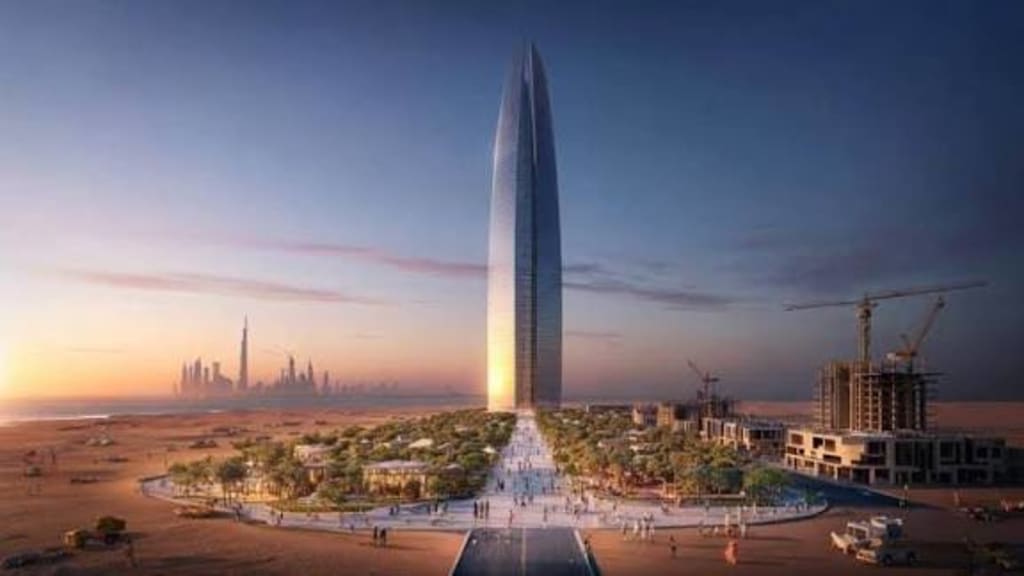
Saudi Arabia is once again turning heads in the world of architecture and urban development, this time with a plan that could redefine the global skyline. Forget the Burj Khalifa in Dubai or Shanghai Tower in China—both marvels of modern engineering. The Kingdom is reportedly preparing to construct a skyscraper that will soar an astonishing 1,000 meters (1 km) into the sky, setting a new benchmark for ambition and innovation.
The announcement comes amid Saudi Arabia’s Vision 2030 initiative, a sweeping plan to diversify the country’s economy, reduce its dependence on oil, and establish itself as a hub for tourism, technology, and global investment. Building the world’s tallest skyscraper is both a symbol of national pride and a statement of intent, signaling Saudi Arabia’s desire to compete with other global metropolises in terms of architectural prowess and urban sophistication.
The proposed tower, still in its early conceptual stages, promises to be a landmark on multiple fronts. Engineers and architects are reportedly exploring cutting-edge construction techniques, including ultra-lightweight materials, reinforced steel frameworks, and innovative wind-resistance systems. At 1 kilometer tall, the building will require a foundation capable of supporting immense weight while withstanding seismic activity and extreme weather conditions. The project is expected to push the boundaries of engineering much like the Burj Khalifa did when it was completed in 2010.
Beyond engineering, the skyscraper is intended to be a multipurpose vertical city. Early designs suggest a combination of luxury residences, office spaces, hotels, observation decks, and entertainment facilities. Developers envision it as not just a building but a destination, capable of attracting tourists from around the globe while providing state-of-the-art amenities for residents and businesses. The concept of a self-contained vertical city is increasingly popular in mega-cities around the world, and Saudi Arabia aims to demonstrate that such ambition is possible in its own backyard.
However, the challenges are significant. Constructing a 1 km skyscraper involves tackling wind forces that increase dramatically at higher altitudes, ensuring the safety and comfort of elevators over unprecedented heights, and creating systems to supply water, electricity, and emergency services efficiently. The logistics of construction, from transporting materials to coordinating thousands of workers, will require meticulous planning and the latest in project management technologies. Experts say that every detail, from the shape of the tower to its façade design, will be critical in ensuring that it is both structurally sound and visually iconic.
Financial considerations are equally important. Mega-projects of this scale often require tens of billions of dollars in investment. Saudi Arabia has a track record of funding large-scale developments, from the futuristic city of NEOM to massive cultural and tourism projects. Yet, the economic viability of the skyscraper will depend on its ability to attract tenants, visitors, and businesses over the long term. Analysts suggest that incorporating mixed-use features and tourist attractions is key to making the investment sustainable.
Culturally, the skyscraper represents a shift in perception for Saudi Arabia. Historically known for its conservative approach to urban development, the Kingdom is embracing bold, globally visible projects to enhance its soft power and showcase modernization. Such landmark buildings are more than infrastructure—they are symbols of ambition, progress, and technological prowess. If completed, the 1 km tower could redefine the city skyline, drawing comparisons not only to Dubai or Shanghai but to other global centers of innovation.
Critics, however, have raised environmental concerns. The construction and maintenance of a super-tall skyscraper have significant energy demands and ecological footprints. Questions around sustainability, water use, and energy efficiency will be under scrutiny, particularly as Saudi Arabia positions itself as a player in renewable energy and environmental innovation. Integrating green technology, smart energy systems, and sustainable urban design will be crucial to ensuring that the project aligns with global expectations of responsible development.
Despite these challenges, excitement is palpable. Architects, engineers, and urban planners worldwide are watching Saudi Arabia’s ambitions with keen interest. The project is expected to attract international expertise, foster innovation in construction technologies, and inspire a new generation of skyscraper designs. Beyond its physical stature, the tower promises to be a symbol of Saudi Arabia’s future—a bold statement that blends tradition with futuristic ambition.
In a world where cities compete for global attention through landmarks and architecture, Saudi Arabia’s 1 km skyscraper could be the next iconic symbol. It reflects a country striving to diversify its economy, assert its presence on the global stage, and redefine what is possible in urban design. From the Burj Khalifa to the Shanghai Tower, the race for the sky has been ongoing—but Saudi Arabia may soon take it to an entirely new level.
About the Creator
Fiaz Ahmed Brohi
I am a passionate writer with a love for exploring and creating content on trending topics. Always curious, always sharing stories that engage and inspire.
Keep reading
More stories from Fiaz Ahmed Brohi and writers in Longevity and other communities.
Nuclear Bunker Nears Collapse Due to Erosion: A Cold War Relic at Risk
A once-formidable nuclear bunker, built during the height of Cold War tensions, now faces an unexpected and insidious threat: erosion. Experts warn that without urgent intervention, the structure could collapse entirely, posing safety risks and highlighting the fragility of even the most heavily fortified human constructions. Constructed decades ago to withstand nuclear attacks, the bunker features thick concrete walls, reinforced steel frameworks, and subterranean chambers. It was a symbol of security during an era defined by the fear of global conflict. However, while designed to resist bombs and blasts, it was not engineered to endure the gradual, relentless forces of nature over half a century. Recent inspections have revealed alarming signs of structural degradation. Cracks snake along the concrete walls, corroded steel beams are exposed, and the surrounding soil has been washed away in sections. Environmental engineers attribute the deterioration to a combination of heavy rainfall, fluctuating groundwater levels, and repeated freeze-thaw cycles. These factors have compromised the bunker’s foundation, leaving it vulnerable to potential collapse. “The irony is stark,” said Dr. Elena Kostova, a structural engineer specializing in Cold War architecture. “This facility was designed to survive nuclear war, yet it’s threatened by rain and wind. Immediate action is essential to prevent a catastrophic failure.” The location of the bunker compounds the problem. Often sited in remote or elevated areas for strategic advantage, these sites were difficult to maintain even during active use. Since the end of the Cold War, many bunkers were abandoned or decommissioned, leaving them exposed to natural elements. Without regular maintenance, erosion has quietly and progressively weakened the structure over decades. While long out of operational use, the bunker still holds potential hazards. Some chambers contain remnants of chemicals, outdated fuel, or other toxic substances. A sudden collapse could release these materials into the surrounding environment, contaminating water sources and soil. Authorities caution that the public should stay away from the site until stabilization measures are implemented. Local governments and heritage organizations are currently debating the best course of action. Proposed solutions include reinforcing the walls with modern concrete and steel supports or diverting water away from the site to reduce further erosion. However, these interventions are expensive and technically complex. Preservationists also emphasize the need to maintain the bunker’s historical integrity while implementing safety measures. The erosion of this nuclear bunker is not an isolated issue. Across Europe, Asia, and North America, thousands of Cold War-era facilities—including missile silos, fallout shelters, and command centers—face similar risks. Many of these structures were abandoned, underfunded, or neglected, allowing nature to take its toll. In some cases, aging infrastructure could harbor hazardous materials, posing dangers to nearby communities. Climate change is exacerbating the problem. Unpredictable weather patterns, increased rainfall, and extreme temperature fluctuations are accelerating erosion. Processes that might have taken decades in the past are now occurring within a few years. Engineers and environmental scientists are increasingly concerned that these forces could overwhelm older structures, creating both safety hazards and a loss of historical heritage. The dilemma highlights the tension between heritage preservation and public safety. On one hand, bunkers are tangible reminders of the Cold War era, offering insight into historical geopolitics, engineering ingenuity, and global fears. On the other, they are potential environmental and structural hazards, especially as erosion weakens their foundations. Authorities face the difficult task of balancing these priorities while securing funding for stabilization projects. Some experts argue that the bunker’s collapse would be a symbolic loss as much as a physical one. It represents a period in global history marked by nuclear brinkmanship, civil defense planning, and technological advancement under pressure. Losing such structures erases a part of collective memory, making it harder for future generations to understand the stakes of that era. The erosion of this nuclear bunker serves as a stark reminder of the impermanence of human constructions. Even those designed to withstand humanity’s most extreme threats are vulnerable to the slow, persistent forces of nature. Immediate intervention could preserve the site for safety and historical purposes, but without decisive action, the collapse of the bunker may become inevitable. As engineers, historians, and policymakers weigh options, the coming months will determine whether this Cold War relic can survive as a historical monument—or whether it will crumble, leaving only memories of an era defined by fear, preparedness, and human ingenuity.
By Fiaz Ahmed Brohi4 days ago in Longevity
Day 4 of Quitting
If this is how sobriety feels, maybe it’s better to go through life a little buzzed… this, along with other hits like, I want to kill myself, I wish I was dead, and I’m going to throw myself off a bridge have been the only thoughts on rotation these past few days. I promise myself that if, in a month, I still feel like this (‘this’ meaning despondent, full of rage, and simultaneously numb) I can go back to smoking. Until mid-February though? Nicotine is off the table.
By sleepy drafts11 days ago in Longevity
North America Pretzel Market Size and Forecast 2025–2033
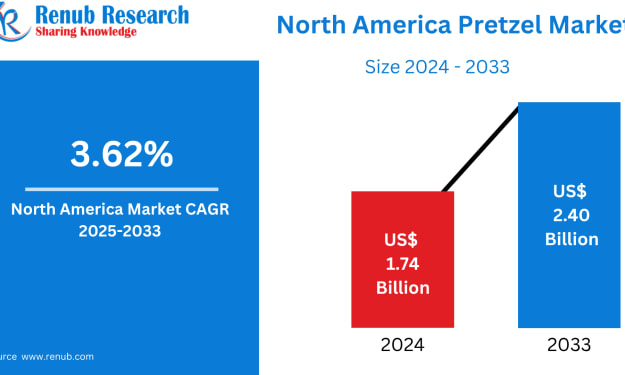
The North America Pretzel Market is expected to reach US$ 2.40 billion by 2033, up from US$ 1.74 billion in 2024, expanding at a CAGR of 3.62% from 2025 to 2033, according to Renub Research. This steady growth reflects the enduring appeal of pretzels as a convenient snack, combined with evolving consumer preferences for healthier, premium, and flavor-forward food products.
By Marthan Sir5 days ago in Longevity



Comments
There are no comments for this story
Be the first to respond and start the conversation.